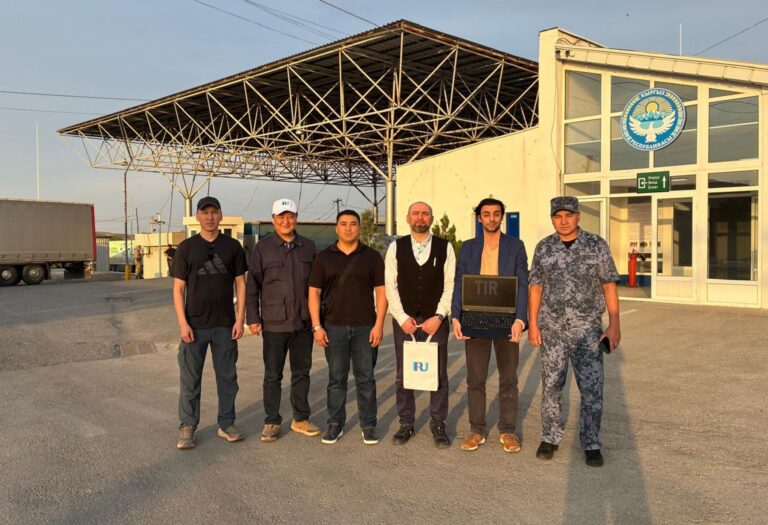



An important bilateral meeting between the customs delegations of Tajikistan and Uzbekistan has taken place at Uzbekistan’s “Jarteppa” border crossing point (BCP), located opposite Tajikistan’s “Sarazm” BCP, the press center of Tajkistan’s Cusotms Committee reported on April 23. The border crossing connects the Urgut district of Uzbekistan’s Samarkand region with the Sarazm jamoat of the Tajik northern city of Panjakent.
The event was reportedly organized by the Customs Service under the Government of Tajikistan.
During the meeting, the First Deputy Head of the Tajik Customs Service, Azim Tursunzoda, and the Deputy Chairman of the Customs Committee of Uzbekistan, Nadir Musamukhamedov, discussed key issues aimed at developing bilateral cooperation in the field of customs affairs.

Special attention was paid to simplifying the procedures for moving goods, products, and vehicles across the border, improving the operation of checkpoints, and strengthening interagency interaction.
An important point of the meeting was the discussion of the digitalization of customs processes. The Tajik delegation presented an innovative vehicle identification and registration system — VIN.TJ, which was introduced into operation on March 16, 2026.
This system has become an important step in the development of the country’s customs infrastructure, providing a higher level of security and transparency at border crossings.

What is the VIN.TJ system?
The VIN.TJ system is designed to simplify the process of vehicle registration and control. It is a unified database that stores all information about vehicles, significantly speeding up the process of document registration and verification. With this system, it is now easier to track the history of vehicles, including their registration, potential violations, or thefts.
In addition, VIN.TJ effectively identifies fake documents and law violators. The system has the potential for integration with other government services, which can significantly facilitate the movement of goods and vehicles between countries, improving interaction between the Customs Services of Tajikistan and Uzbekistan.
How does a VIN code work?
Every vehicle has a unique identification number — a VIN code, consisting of 17 characters. The VIN code provides information about the manufacturer, model, configuration, and year of manufacture of the vehicle. The VIN.TJ system uses this code to automatically obtain data and simplify the registration process, as well as to enhance security and control at the border.
Structure of the VIN code:
WMI (World Manufacturers Identification) — the first 3 characters, indicating the country and manufacturer of the vehicle.
VDS (Vehicle Description Section) — characters 4 to 9, describing the model, modification, and configuration of the vehicle.
VIS (Vehicle Identifier Section) — the last 8 characters, where the last 4 digits are the vehicle’s serial number.
Why is it necessary to register a VIN code?
Registering a VIN code is mandatory for a vehicle to be officially registered and processed for movement through customs checkpoints. This is an important step to ensure the legality and transparency of all procedures related to the movement of vehicles.
The Future of Cooperation
Both parties expressed their readiness to continue developing joint projects in the field of digitalization and further simplification of customs procedures.
The implementation of the VIN.TJ system is expected to contribute to improved interaction and acceleration of the processing of goods and vehicles, as well as have a positive impact on economic cooperation between Tajikistan and Uzbekistan.