Senior experts from Tajik think tank consider that too much freedom of speech is harmful for underdeveloped countries.
In a report released at a news conference in Dushanbe, Khudoberdi Kholiqnazar, the director of the Center for Strategic Studies under the President of Tajikistan, noted on January 9 that enough freedom of speech is provided to journalists in Tajikistan.
According to him, journalists in some other Central Asia’s nations do not have the level of freedom that Tajik journalists have.
Meanwhile, many local media outlets have suspended their operations in the country for economic reasons, Khudoberdi Kholiqnazar said.
“Over the past 10-15 years, many media outlets have closed their doors because they have failed to withstand competition under conditions of market economy,” the head of Tajik think tank said.
He called on journalists to be careful while preparing their materials. “Under conditions of an uneasy world, ‘games’ of democracy may lead to repeated destabilization of the situation in the country,” Kholiqnazar added
Sayfullo Safarov, the first deputy director of the Center for Strategic Studies, considers that too much freedom of speech in unstable societies may harm the state. “In developed countries, the more freedom of speech the better. In those countries, freedom of speech is the factor of stability and peace, activation of citizens. But for nations in transition, too much freedom of speech is harmful,” Safarov noted.
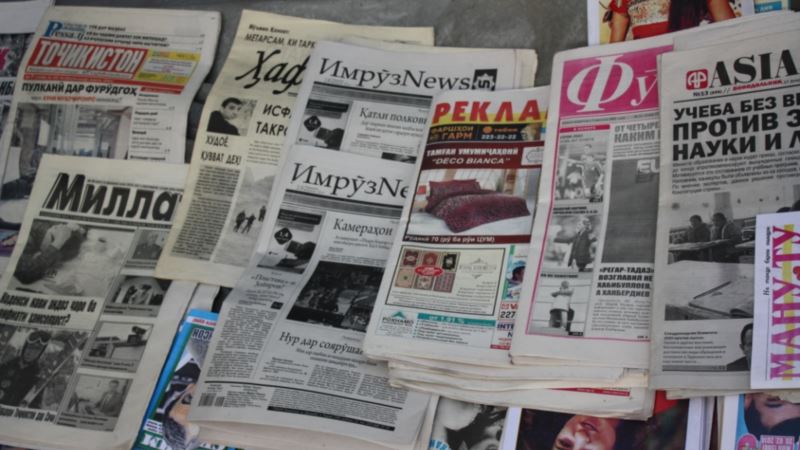
It is to be noted that four media outlets – Vecherny Dushanbe, Dam, Nigoh and Tojnews – have suspended their operations in Tajikistan over the last year. Several other media outlets are on the verge of closure.
Soon after Nigoh’s closure, the National Association of Independent Mass Media of Tajikistan (Nansmit) released a statement conveying its concern and describing the news as a further blow to the country’s media landscape.
“For 10 years operating as a national publication, Nigoh has sought to serve as an alternative news source. But the newspaper’s editorial policy, whose independence was guaranteed under the law, did not suit certain officials and state bodies. We have documented attempts to intimidate the publication’s reporters, harassment of their operations and interference in Nigoh’s editorial output,” Nansmit said in its statement.
“We urge the government of Tajikistan not to limit the operations of independent media that serve a guarantor and conduit of access to alternative sources of information,” Nansmit said.