Fixed-route minivans expected to be removed from Dushanbe streets

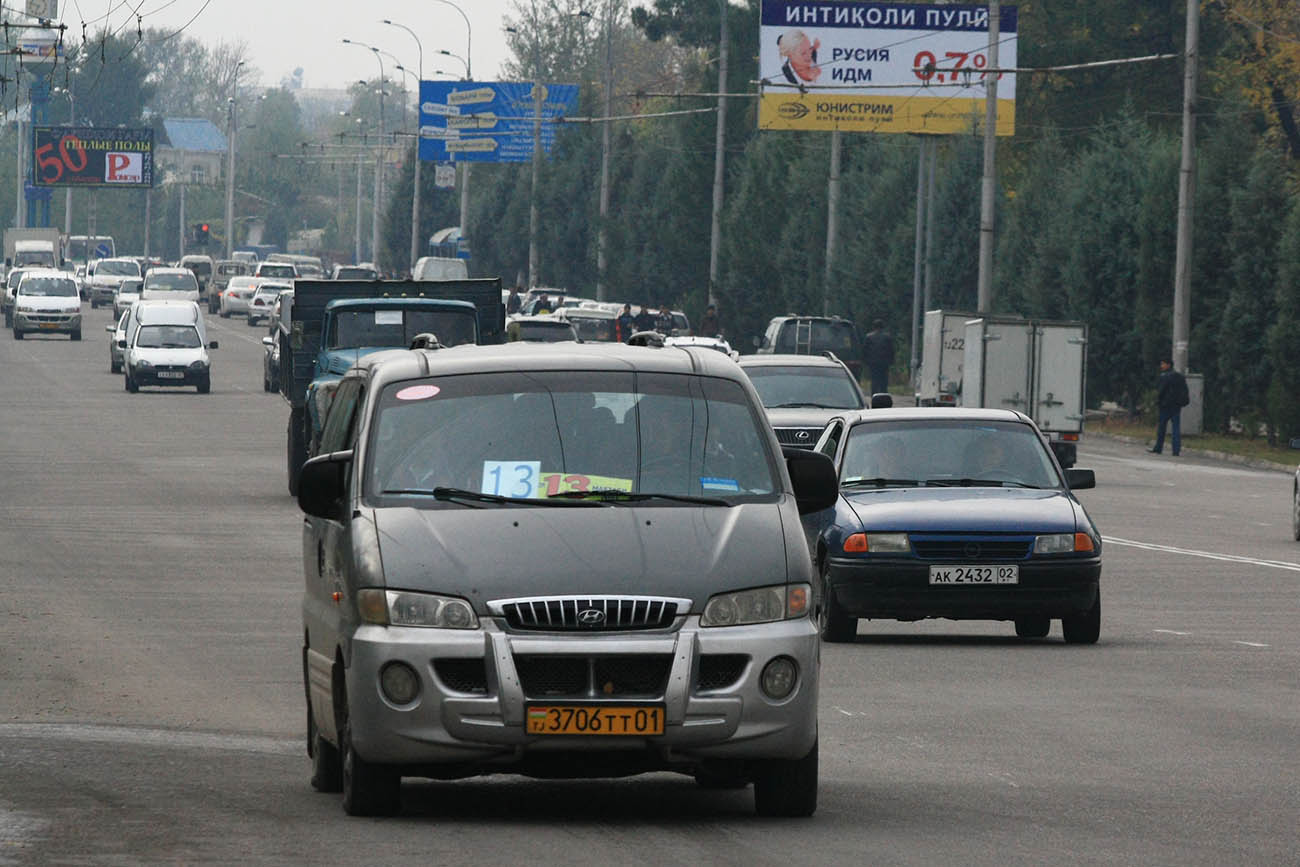
Dushanbe authorities intend to remove fixed-route minivans from the city streets in the first half of 2017. They are expected to be replaced with buses and trolleybuses and private taxies will also remain in the city, Ghayurbek Iskandarov, the head of Dushanbenaqliyotkhizmatrason (public transport service), told Asia-Plus in an interview. “This decision is aimed at […]

Dushanbe authorities intend to remove fixed-route minivans from the city streets in the first half of 2017.

They are expected to be replaced with buses and trolleybuses and private taxies will also remain in the city, Ghayurbek Iskandarov, the head of Dushanbenaqliyotkhizmatrason (public transport service), told Asia-Plus in an interview.

“This decision is aimed at reducing traffic flow and traffic jams in the city,” Iskandarov said, noting that more than 3,031 minivans are currently running in the city.  

“We intend to replace eight minivans with one bus or trolleybus,” said the Dushanbe transport official.  “The new buses and trolleybuses are expected to arrive in Dushanbe in April or May.” 

He further added that the Dushanbe administration would announce an international tender for selection of passenger transport supplier.  

For many Dushanbe drivers, these minivans became an important source of income.  Many of them took out loans to buy the vehicles while others leased them.

Recall, the Tajik authorities in 2010 banned drivers of eight-seat Chinese Hafei minivans from carrying passengers in the capital Dushanbe, putting out of work hundreds who used these relatively affordable vehicles to ferry residents around the Tajik capital.  The authorities said the ban was motivated by passenger safety concerns, contending that the minivans were a source of frequent traffic accidents.

But in tandem with the ban, more spacious, comfortable and safe Hyundai and Mercedes vans replaced the Chinese minivans.

When the Chinese minivans first appeared on the streets of Dushanbe around 2006, drivers and passengers affectionately dubbed them the Tangem, named after a female Korean soap opera star popular on local television. 

Join us on social media!

Article translations:

Related Article

Оби зулол
Оби зулол
Tenisi

Most Read

Коммерсбонк Точикистон

Recent Articles

President of Tajikistan instructed to develop measures for stabilizing the cement market within a week

Despite the increase in the production of this building material in the country, the domestic market faced a shortage, supply disruptions, and a sharp rise in the price of the building material.

Gusty winds and mudslides damage houses, roads, and cars in Dushanbe and some other regions

At least 9 vehicles were damaged, including three in Dushanbe and six in Vahdat.

The US struck military facilities in Iran. Trump expressed dissatisfaction with Tehran’s proposals and threatened Oman.

Earlier, Iran's state TV reported receiving a draft unofficial framework agreement between Tehran and Washington to settle the conflict.

How much did Tajikistan’s budget earn from the “Google tax”?

The law is already 5 years old, but the Tax Committee provided data only for the last 2 years.

The bilateral trade between Tajikistan and Iran increased by 8% in Q1 2026

Another meeting of the joint intergovernmental commission of the two countries took place in Dushanbe.

Russia and Taliban government sign military-technical cooperation agreement

The document may open up opportunities for the exchange of weapons, military technologies, and other types of defense cooperation.

“Hit with fists on the lower back and abdomen.” A teacher from Nurobod, claiming he was beaten by a student’s brother, details the attack

According to him, he is being threatened with murder, and law enforcement agencies have not yet detained the attacker.

International internet starts coming back in Iran after long shutdown 

Western media reports says Iranians ​isolated by a long...

Tajikistan listed among countries with low generative AI usage

Among the Central Asian countries, Kazakhstan has the highest rate.

Prices in Tajikistan rise almost 2% in January-April: apples, fuel, and utilities become particularly more expensive

In April, inflation was 0.6%: food products became more expensive, non-food products increased in price comparatively less, and tariffs for paid services remained unchanged.