Tajik authorities publishes brochure regulating funeral and mourning rites

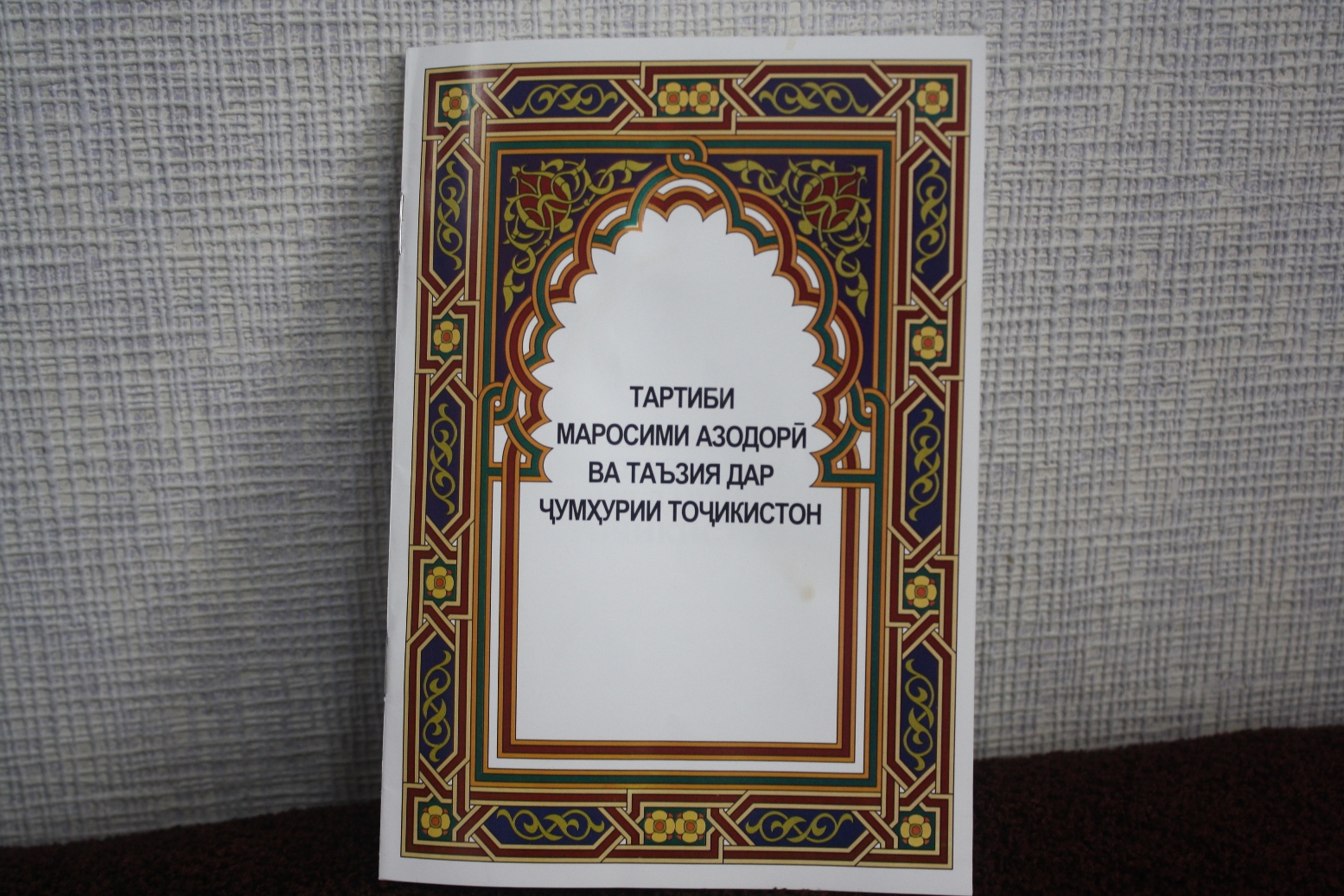
The Committee on Religious Affairs under the Government of Tajikistan together with the Council of Ulema Islamic (the country’s highest Islamic institution issuing fatwas and religious guidance to Islamic religious organizations) and the Center for Islamic Studies have published a brochure regulating funeral and mourning rites. 500,000 copies of the brochure were printed. The brochure […]

Asia-Plus

The Committee on Religious Affairs under the Government of Tajikistan together with the Council of Ulema Islamic (the country’s highest Islamic institution issuing fatwas and religious guidance to Islamic religious organizations) and the Center for Islamic Studies have published a brochure regulating funeral and mourning rites. 500,000 copies of the brochure were printed.

The brochure consists of eight parts.

Part 1, in particular, tells general rules of funeral and mourning ceremonies.  It, in particular, notes that funeral and mourning rites must be carried out in accordance with the norms of the Hanafi madhhab (school), which is an official madhhab in Tajikistan, and Tajikistan’s legislation.  

Part 2 describes the mourning ceremony and includes instruction on when the funeral prayer (janoza) should be performed, depending on when a person died.  

Gravediggers’ fees are paid by the deceased relatives in the presence of the authorized persons. 

Part 3 is about the preparation of the deceased for a funeral services (ablution, wrapping a body in a shroud, etc.). 

It is prohibited to sprinkle earth on head and cry loudly at a funeral ceremony.  It is also prohibited to order special mourners.

Only children and immediate relatives may stay in the deceased home in the night.  The deceased immediate relatives may in mourning during three days.

Private feasts that commemorate the dead are restricted only to relatives of the deceased and it is not allowed to involve the slaughter of livestock.  

Recall, Tajikistan's laws on religion restrict the locations of Islamic prayer and prohibit children under the age of 18 from taking part in public religious activities.  Private religious ceremonies, including funerals and weddings, also are increasingly regulated by state officials.

Two provisions in the latest legislation would impose further restrictions on religious ceremonies.  The bill outlaws celebrations marking the return of Muslims from hajj pilgrimages in Saudi Arabia. Private feasts that commemorate the dead also would be restricted only to relatives of the deceased and would not be allowed to involve the slaughter of livestock — a practice that currently is common.

Tajikistan’s government argues that its strict controls on religion are necessary to prevent the growth of what it calls Islamic "extremist" organizations and terrorist groups.

Religious groups banned in Tajikistan as "extremist" organizations include Salafis, the Muslim Brotherhood, the Islamic Movement of Uzbekistan, Islamic State (IS), Jindullah, Ansarrullah, and Hizb ut-Tahrir.

About 90 percent of Tajikistan's 8.3 million citizens are Muslims, and the majority are followers of the moderate Hanafi school of Sunni Islam.
Join us on social media!

Article translations:

Related Article

Оби зулол
Tenisi
Оби зулол

Most Read

Коммерсбонк Точикистон

Recent Articles

Major global investment companies show interest in Tajikistan’s economy

Among them are J.P. Morgan, Loomis Sayles & Company, Morgan Stanley Investment Management, and Global Evolution.

President Rahmon awarded UN University for Peace Certificate of Recognition

He is awarded for "significant contribution to establishing peace, developing regional cooperation, and strengthening mutual understanding between peoples."

Starlink satellite internet becomes available in Kyrgyzstan

And in Tajikistan, it was launched in February of this year.

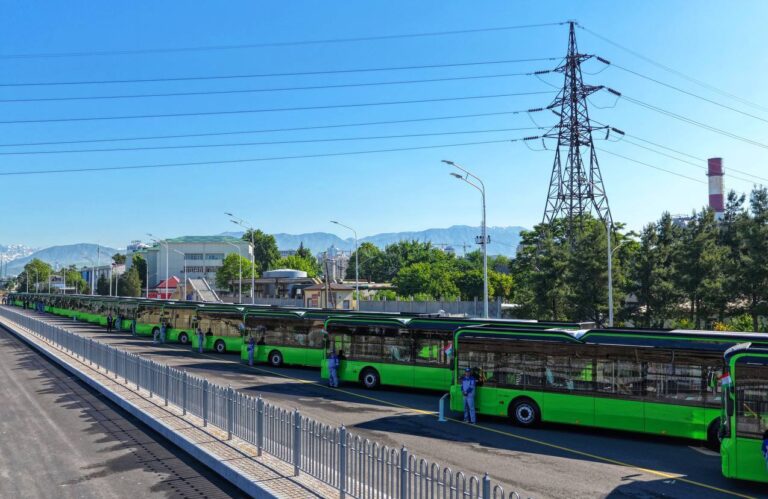
In Dushanbe, 30 more new electric buses start operating

Each is designed to carry 100 passengers and can travel up to 300 kilometers without recharging.

Who is the man who “increased the Aryan race” and told the President of Tajikistan about it?

Kozie Koziyev, a folk craftsman, built dozens of houses, participated in the construction of a mosque and a kindergarten in Matcha, raised 11 children, and created a true dynasty of builders.

Tajik leader discusses water, climate, and global security issues with UN Deputy Secretaries-General

The parties paid special attention to the "Dushanbe Water Process," parliamentary diplomacy, and the peaceful resolution of conflicts.

Tajikistan completes the spring military draft target ahead of schedule

There is still a week left until the end of the conscription campaign.

Custodian of non-written languages and builder of academic bridges; philologist Khusrav Shambezoda turns 70

He could have devoted himself exclusively to the study of classical heritage, but he chose the challenging path of preserving the living word — and Tajik-Russian science gained in him a brilliant sociolinguist whose name became synonymous with dedication.

Tajikistan ranks among the top three leading trade reformers in Europe and Central Asia

The country has shown progress in the digitalization of trade procedures, the reduction of paper barriers, and the enhancement of transparency for exporters.

China to send workers to Tajikistan for modernization of the Kulma BCP

This is the only land border crossing point between Tajikistan and China.