Dushanbe’s Shohmansour Bazaar expected to be closed down this week

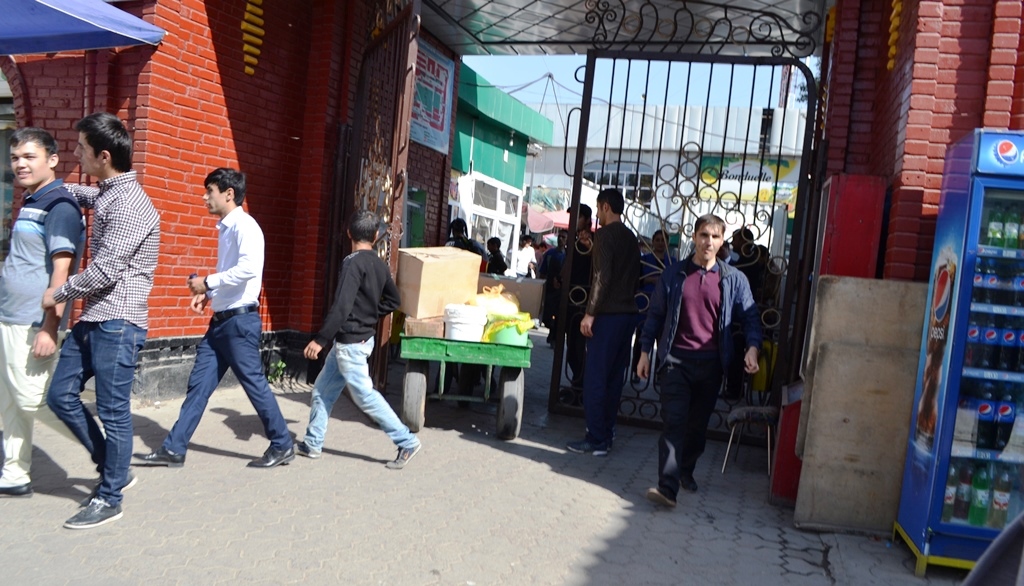
Dushanbe’s Shohmansour Bazaar, locally known as Zeleyony Bazar (Green Bazaar), is expected to be closed down this week. The Shohmansour Bazaar director Mashrab Qarayev reportedly told merchants running their shops at the bazaar that they should move to the Mehrgon Bazaar (formerly Poytakht-90) until the end of this week.   Qarayev said new places had already […]

Asia-Plus

Dushanbe’s Shohmansour Bazaar, locally known as Zeleyony Bazar (Green Bazaar), is expected to be closed down this week.

The Shohmansour Bazaar director Mashrab Qarayev reportedly told merchants running their shops at the bazaar that they should move to the Mehrgon Bazaar (formerly Poytakht-90) until the end of this week.  

Qarayev said new places had already been prepared for merchants at the Mehrgon Bazaar and they should sign contracts with Mehrgon owners.  

The Poytakht-90 Shopping Complex was opened in September 2014.  The Dushanbe budget allocated 202.6 million somoni (equivalent to some 40 million U.S. dollars) for construction of that complex.


Join us on social media!

Article translations:

Related Article

Оби зулол
Оби зулол

Most Read

Акика Алиф

Recent Articles

Tajikistan hosts FAO regional conference for Europe and Central Asia

Agasi Arutyunyan: FAO Conference — an opportunity to showcase Tajikistan's potential

Tajik leader discusses strengthening strategic partnership with Chinese high-ranking state officials

Rahmon met with Premier of the State Council of China Li Qiang and Chairman of the Standing Committee of the National People's Congress Zhao Leji.

In Tajikistan, the workforce has increased, but not everyone is employed

Statistics show a significant gap between men and women in the labor market.

Amin Qobilov and Marvori Nasriddinzoda become chess champions of Tajikistan

The national chess tournament, which brought together the strongest players, has concluded in Dushanbe.

How to tame snow avalanches: how many houses and roads in Tajikistan are at risk?

Large avalanches can occur on average once every 40 years, causing residents to eventually consider dangerous areas safe and build houses on them.