The first deputy head of the National Bank of Tajikistan (NBT), Jamoliddin Nouraliyev, has reportedly proposed the International Monetary Fund (IMF) to boost cooperation to a new level. Tajik central bank, in particular, asks the Fund to provide assistance to Tajikistan.
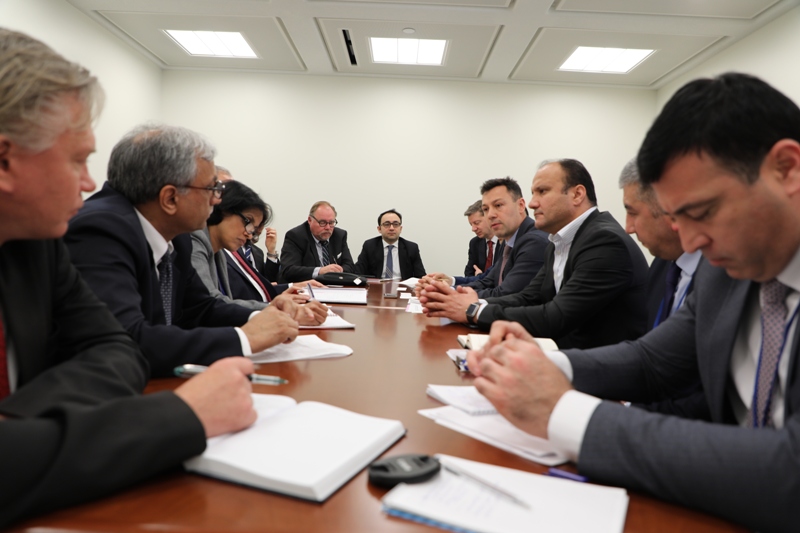
These issues were discussed at a meeting of Nouraliyev with Dr. Jihad Al-Wazir, Assistant Director of the IMF Monetary and Capital Markets Department, which took place in New York on April 17.
Ms. Padamja Khandelwal, the head of the IMF mission to Tajikistan, also attended the meeting, according to the NBT press center,
Nouraliyev reportedly called the attention of the IMF representatives to the implementation of the joint projects and providing technical assistance for carrying our reforms in the field of monetary policy.
Dr. Jihad Al-Wazir noted that the IMF is ready to provide technical assistance to the NBT in the future, but it is necessary to point out specific sectors of the banking system that need assistance, the NBT press center said.
He reportedly further noted that after receiving a list of those sectors they would study it and then develop the technical assistance project.
Recall, negotiations on providing the next loan to Tajikistan within the framework of a new IMF program are being protracted.
The previous three-year Extended Credit Facility (ECF) program ended in Tajikistan in July 2012.
The ECF provides financial assistance to countries with protracted balance of payments problems. The ECF was created under the Poverty Reduction and Growth Trust (PRGT) as part of a broader reform to make the Fund’s financial support more flexible and better tailored to the diverse needs of low-income countries (LICs), including in times of crisis. The ECF is the Fund’s main tool for providing medium-term support to LICs. The ECF may also help catalyze additional foreign aid.
The ECF supports countries’ economic programs aimed at moving toward a stable and sustainable macroeconomic position consistent with strong and durable poverty reduction and growth.
In autumn 2012, the Tajik authorities have applied to the IMF for a new three-year arrangement under the extended credit facility.
The IMF representatives that time reportedly raised hopes of coordinating the next three-year program. However, the negotiations on this subject are still continuing and now specific agreements have been reached so far.
Within the framework of the new program Tajikistan intended to attract a $500 million preferential loan from the IMF for supporting the country's economy.
Consultations between the Tajik authorities and the IMF were held in Dushanbe in November last year.
“Approval of a new program with the IMF is a long-term process practically in all countries because all conditions and preliminary measures of the program should be coordinated in view of possible risks and factors that prevent a quick achievement of consensus,” NBT specialists noted.
According to them, Tajikistan to date has achieved substantial progress “in implementing the preliminary measures of policy offered by the IMF.”
“The new IMF program is aimed at supporting Tajikistan in carrying out its economic strategy, achieving macroeconomic and financial stability as well as sustainability along with economic growth and alleviation of poverty,” they said, noting that the new IMF program will also be aimed at supporting payment balance and sustainability of the country’s international reserves.