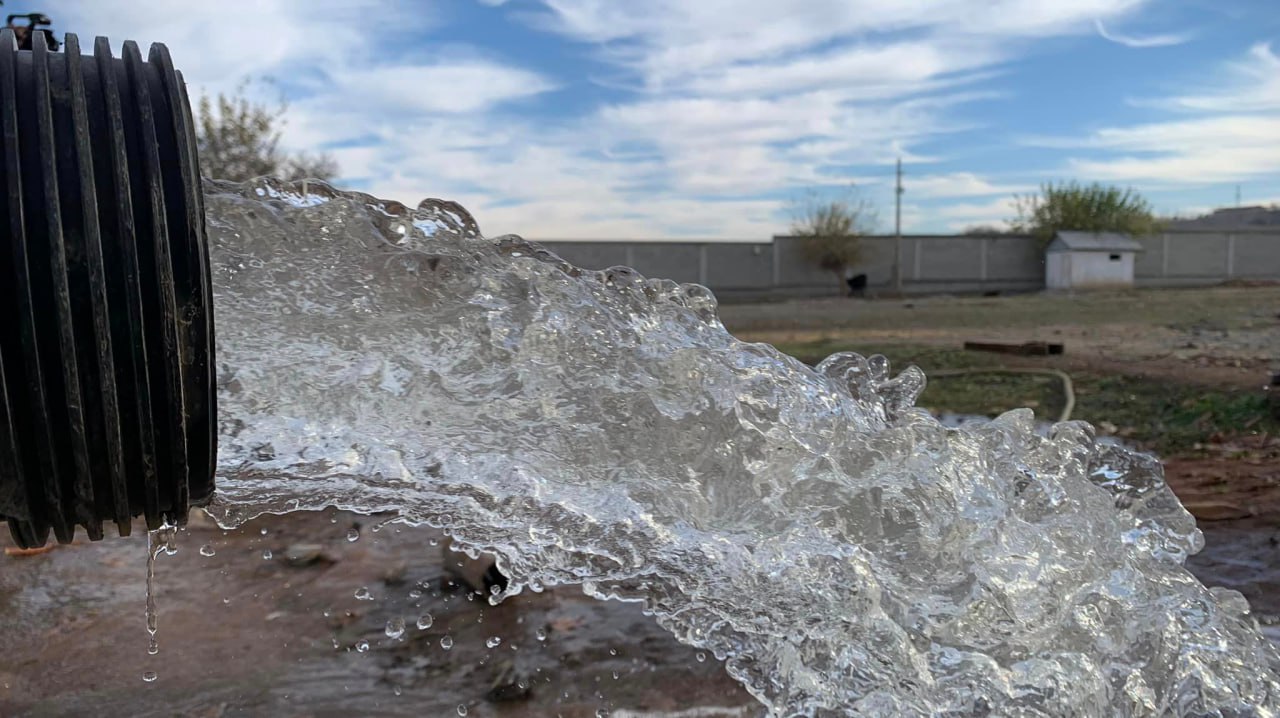
Water as oil. The discussion on paid water use intensifies in Central Asia

Central Asia may reconsider its previous agreements.

Saifiddin Qarayev, Asia+

The introduction of paid water use is being actively discussed in Central Asia as a way to ensure the region’s water security. Kyrgyzstan has become one of the leaders in this initiative, approving the principles of economic assessment and paid use of water resources.

What happened?

The President of Kyrgyzstan Sadyr Japarov proposed that Central Asian countries return to a system of mutual compensation in the water-energy sector. He made this statement at the Regional Ecological Summit (RES 2026), which was held in Kazakhstan’s capital, Astana, on April 22-24.

Japarov emphasized that in recent years, the number of emergencies in Kyrgyzstan has significantly increased – landslides and floods have become three times more frequent, and the annual damage amounts to about $16 million. In addition, the glacier area has decreased by 16%, and by the end of the century, the republic could lose up to 80% of its glaciers.


According to him, Kyrgyzstan plays a crucial role in supplying water to the region: annually, about 50 billion cubic meters of water resources are formed here, of which only about 12 billion are used within the country.

In this regard, Japarov suggested revisiting approaches to cooperation and returning to a system of mutual compensation in the water-energy sector.

“We propose to resume the implementation of a mutually beneficial economic compensation mechanism in the water-energy sector under modern conditions. It is necessary to find a balance of interests and develop mutually acceptable solutions based on a comprehensive approach,” Japarov said.

Earlier, in February 2026, a member of the Kyrgyz parliament, Umbetaly Kydyraliyev, stated that about 80% of water resources from Kyrgyz reservoirs are used for the needs of neighbors. He also noted that Kyrgyzstan bears significant costs for maintaining hydraulic structures but does not receive direct economic benefits from the use of its water resources.

The Minister of Water Resources, Bakyt Torobayev, stated that countries such as Kazakhstan and Uzbekistan are actively involved in the construction and operation of hydro facilities like the Kambar-Ata-1 HPP. Moreover, Kyrgyzstan, together with Uzbekistan, manages the Kempir-Abad reservoir, while the remaining reservoirs are under the balance of Kyrgyzstan. Despite this, Kyrgyzstan does not receive economic compensation for the water sent to neighboring countries.

Kyrgyzstan changes its approach to water resources

Kyrgyzstan has already moved from words to deeds – as of January 1, 2026, a new Water Code came into force in the country, changing the approach to the use of water resources. Water is now recognized as a commodity, and a fee will be charged for its use, both for domestic and foreign consumers.

This marks a shift away from the old system of “water in exchange for electricity” to a market model of water use. The new code regulates not only the domestic use of water but also its distribution among neighbors such as Kazakhstan and Uzbekistan.

The main changes include the introduction of paid tariffs for all water users, except in cases where water is used for firefighting or in emergencies. Irrigation systems are being transferred to state ownership, which will ensure stable water supply.

The code also introduces strict rules for the protection of water bodies, prohibits construction along canals and drainage systems, and promotes the development of fish farming.

The reasons for introducing water fees are related to the need to compensate for the costs of maintaining dams and other hydraulic structures, which, as noted, have long not provided financial benefits to Kyrgyzstan.

“A logical step towards efficient resource use”

Professor Yarash Pulodov, a renowned Tajik scholar in the field of water resources and ecology, supports the introduction of fees for water use in Kyrgyzstan. He argues that water is a key factor in the economic stability of the state.

According to him, the water deficit is becoming increasingly tangible due to increased consumption and global climate changes, despite Central Asia possessing significant water resources.

Pulodov noted that the transition to market mechanisms, where water is regarded as a commodity, is a logical step. The introduction of water fees, in his opinion, aims to modernize water resource management, increase transparency and efficiently distribute water resources, which is especially important for water-deficient regions.

– Although water is a gift from the heavens and its use can be seen as a legal right for everyone, in a developed society, the infrastructure for delivering this water requires significant costs. Ultimately, all water users and consumers should pay for the supply, — he notes.

Pulodov also recalled that in Kyrgyzstan, a law recognizing water as a commodity in international relations was adopted back in 2001. Under this law, the cost of water, fuel oil, electricity, and other resources was always indexed. But despite its strict nature, the law did not work properly, and all water-energy issues continued to be resolved through bilateral agreements, both before and after its adoption.

At the same time, the Tajik scholar noted: “The Water Code is an internal norm of the country and operates on the territory of Kyrgyzstan for the subjects of this country. External water relations will be based on interstate agreements. Interstate agreements are the norm for the parties, and they usually prevail over the internal norm.”

Paid water use in Central Asia is realistic and necessary, but it requires phased implementation, noted Professor Yarash Pulodov. He emphasized that the transition to paid services is possible through the digitization of water accounting, irrigation modernization, and the introduction of justified tariffs.

It is important to modernize canals to reduce water loss and to implement innovative irrigation technologies.

Pulodov also noted that the experience of other countries in the region confirms the applicability of the system, but the transition should be gradual to avoid harming the economy of farming households. The introduction of water fees should be accompanied by measures to combat soil salinization, which will require investments, he says.

Kazakhstan and Uzbekistan concerned

The Ministry of Water Resources and Irrigation of Kazakhstan commented on the situation with the introduction of fees for transboundary water, stating that Kazakhstan does not pay for water to neighboring states. The ministry noted that “volumes are determined annually depending on water availability and agreed reservoir operation modes. Kazakhstan does not pay for water to neighboring states and does not purchase it.” It is also emphasized that “the introduction of fees for transboundary water is not provided for or considered by the existing contractual and legal framework.”

The Advisor to the Minister of Ecology of Uzbekistan, Rasoul Kusherbayev, stated back in September 2025 that Kyrgyzstan’s decision to make water use fully paid “could undermine the ‘water in summer – electricity in winter’ exchange system that has operated in Central Asia for decades.”

He noted that the new Water Code of Kyrgyzstan elevates water to the rank of a valuable resource comparable to oil and gas.

Thegovernment-to-government agreement between Kazakhstan, Kyrgyzstan, and Uzbekistan on the use of water-energy resources in the Naryn-Syr Darya river basin was adopted back in March 1998, and Tajikistan joined a year later.

In subsequent years, changes were made to the agreement, but as Professor Pulodov noted, “this did not solve the problems, as in the national legislations of these countries, water is positioned as a state-owned resource.”

Even then, according to him, the system of free water use, based on the barter exchange of “water in summer – electricity in winter,” began to fail. Fortunately, Central Asia has so far managed to avoid full-scale water conflicts, the expert notes.

According to Pulodov, Tajikistan has not yet officially designated water as a strategic resource akin to oil and gas, due to reasons related to the peculiarities of water relations in the region. However, the country’s position is clearly reflected in the new water code (2020) and the “National Water Strategy for the period until 2040.”

President Emomali Rahmon emphasized the importance of water resources, stating: “The value of water is no less than that of oil, gas, coal, and other fuels for the sustainable future of the country and the region.” Tajikistan actively promotes water as a strategic resource, more important than hydrocarbons, and actively participates in the International Decade for Action on Water (2018-2028), calling for the rational use of water resources in Central Asia.

Global practice of water compensations

Professor Pulodov says that in global practice, there are examples of compensation for the use of interstate (transboundary) water resources. This often occurs through the payment for ecosystem services, joint infrastructure management, or the purchase of water rights.

According to the Tajik scholar, a successful example of cooperation and compensation is the Columbia River (USA and Canada), where Canada receives compensation for building dams that regulate water flow, preventing floods and increasing electricity production on the American side.

Another example of successful cooperation is the Indus River basin (India and Pakistan), where, despite political differences, the countries operate within a treaty that includes financial mechanisms and data exchange.

An example of successful cooperation in Central Asia is agreements where upstream countries (Kyrgyzstan, Tajikistan) receive energy (coal, gas) or financial compensation from downstream countries (Uzbekistan, Kazakhstan) for regulating river flows of the Amu Darya and Syr Darya for irrigation purposes.

Although these agreements are not always fulfilled, they serve as a compensation mechanism for joint water-energy resource management.

Success often depends on whether water is considered a shared resource that brings mutual benefits rather than a subject of conflict.

Join us on social media!

Article translations:

Related Article

Оби зулол

Most Read

Recent Articles

In Tajikistan, the preliminary date for Idi Qurbon has been announced

The Mufti said when and by whom the exact date will be determined.

U.S. President rejects Iran’s peace proposals and announces continued blockade

Iran offered the United States to end the war by opening the Strait of Hormuz and its ports, with negotiations on nuclear weapons to be held later.

Trump and Putin discuss the situation in the Middle East and Ukraine over the phone

Putin announced readiness to declare a ceasefire in Ukraine on May 9.

Emomali Rahmon summarizes the government’s work since the beginning of the year

The Government of Tajikistan summed up the results of the first quarter of 2026.

Mudflows and dust storms expected in Tajikistan

Citizens are urged to protect themselves from dust.

Russia doubles temporary stay duration for truck drivers from CIS and Georgia

Tajik drivers will have their term increased from 90 to 180 days a year.

How a guide dog project could help people with visual impairments in Tajikistan

In Tajikistan, there is an enthusiast who can build such a school, but he urgently needs help, primarily financial.