
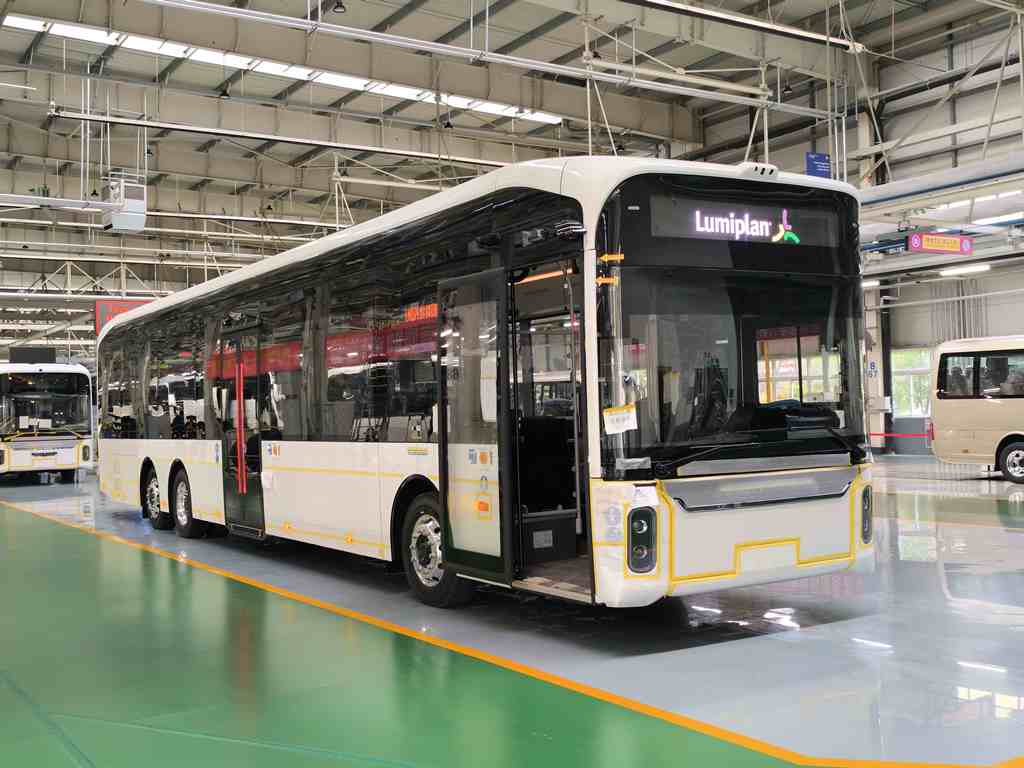
Central Asia is increasingly updating its public transport, and Chinese manufacturers have taken a key role in this process. One of the main players in this market is Yutong, which has supplied thousands of buses to the region in recent years and is now selling not just vehicles, but an entire model of transport modernization: adapted to local conditions, with service, digital monitoring, and a wide range of buses from diesel to hydrogen.
This was evident at the Yutong plant in Zhengzhou, China, where journalists, transport operators, dealers, and officials from Central Asian countries were invited in April.
The trip was intended as a demonstration of the company’s production capabilities, but in essence, it answered a more important question: why are Chinese buses becoming the foundation for updating urban transport in the region today?
Figures that explain everything
Yutong is not just a large factory. It is a manufacturer that has already shaped market reality. In 2025, the company sold 49,518 buses. Its share of the global market was 11.6%, while within China, the company has controlled about 36% of the national market for several years.
Total exports exceeded 230,000, of which more than 210,000 were passenger buses sold on new energy sources — electric buses and hybrid technology.
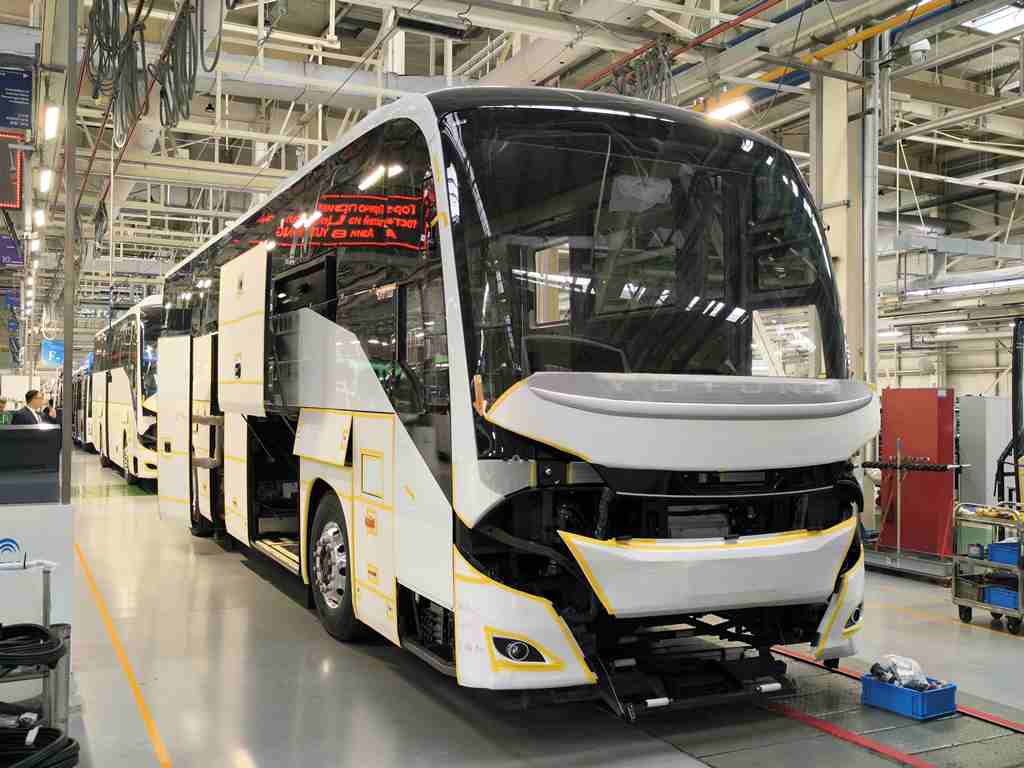
For Central Asian transport departments, which need to quickly update their worn-out fleets and do so in large batches, these figures are the main argument. Yutong can produce what others cannot deliver in the required volume and within the required timeframe.
Central Asia: who bought how much?
Yutong highlights the region as a separate strategic direction. The company sold about 15,000 buses of various ranges in this market: Kazakhstan – 10 700, Uzbekistan – 2 158, Turkmenistan – 1 029, Kyrgyzstan – 970, Tajikistan – 43.
The gap between Kazakhstan and the other countries is several times. For Yutong, Kazakhstan has long been a systemic market: localized production operates there, and hundreds of buses are sold annually. Uzbekistan is following the same trajectory – during the April event, entrepreneurs from Uzbekistan and Kazakhstan signed contracts for approximately 500 buses of various models.
Tajikistan: 43 buses and an open question
Compared to its neighbors, Tajikistan’s position looks different – only 43 buses. Out of this number, 40 electric buses will be supplied as part of an EBRD grant.
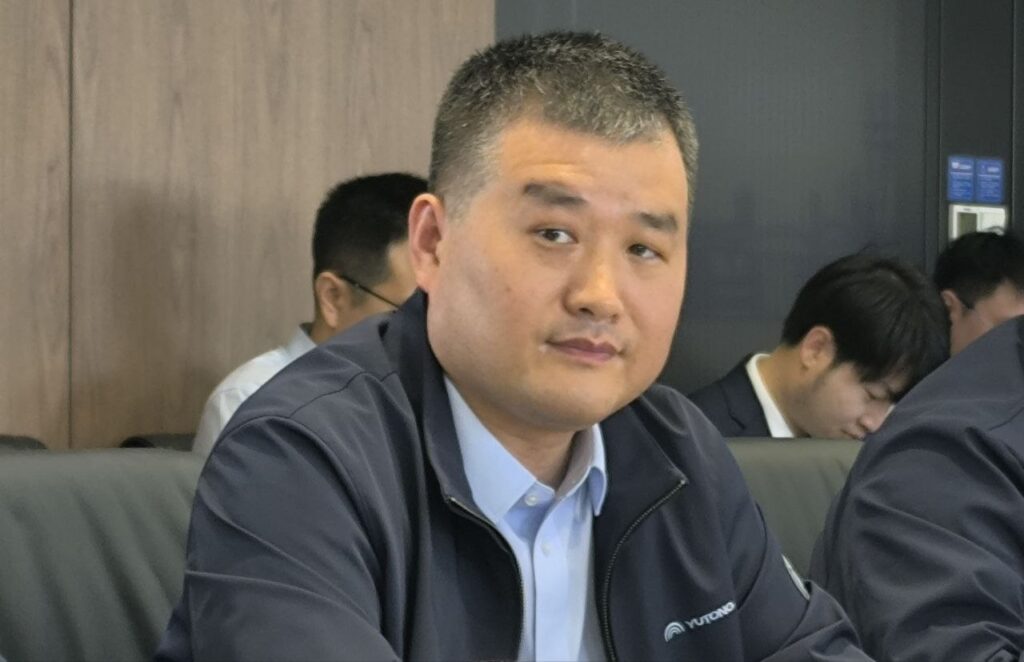
We asked Yutong’s Director for Central Asia, Yuri Li (Li Haifeng), why Tajikistan purchased so few buses and whether negotiations for supply are ongoing.
“The sale of buses depends on the demand from the other side and the market volume. Currently, the public transport fleet in Dushanbe is actively being updated, and they are transitioning to electric buses. For us, this is a good opportunity. We have held negotiations with local authorities, entrepreneurs, and transport operators. We will continue to work with them to expand our presence in your country. We are ready to provide the local population with comfortable, adapted, high-quality buses and electric buses of various ranges,” he noted.
Adaptation: not a “standard bus,” but a tailored solution
One of the key points made in the presentations was that a bus for a specific city needs to be not just produced, but adapted.
Before delivering to a new region, Yutong specialists go on-site to study the climate, roads, terrain, traffic intensity, and operation mode. Only after this are the vehicle parameters determined: body reinforcement, battery compartment insulation, heating systems, and ground clearance.
For example, for Astana – one of the coldest capitals in the world – a special modification of an electric bus was developed with an independent water heating system and enhanced thermal insulation of battery blocks.
For Central Asia with its heat, dust, altitude changes, and complex road infrastructure, this approach is not marketing but a practical necessity.
How is a bus tested before dispatch?
A separate and important part of the visit was the testing complex. Before a bus is delivered to the buyer, it undergoes several types of stress tests.
In special climate chambers, vehicles are tested at temperatures from −40 to +40 degrees — precisely the range encountered by operators in Kazakhstan and the mountainous regions of Kyrgyzstan and Mongolia. Then, buses are run through rain installations to check the body’s water-tightness. The final test involves water obstacles: the vehicle drives into a pool so that the engine is underwater. If the bus continues to operate normally after this, the test is passed.
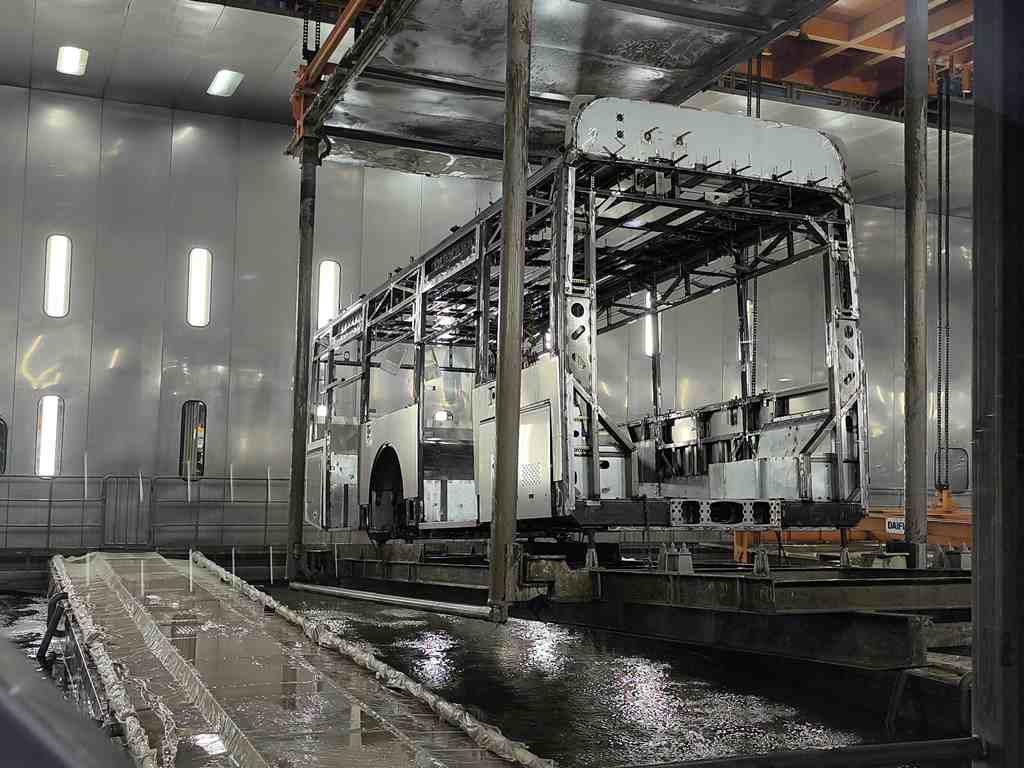
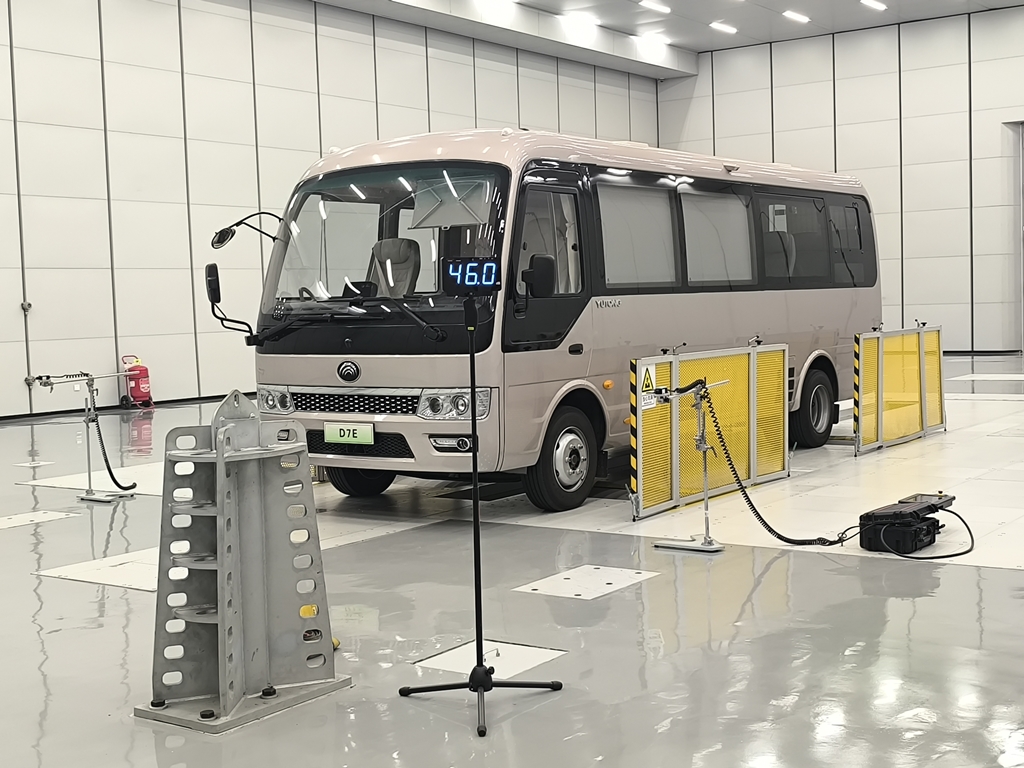
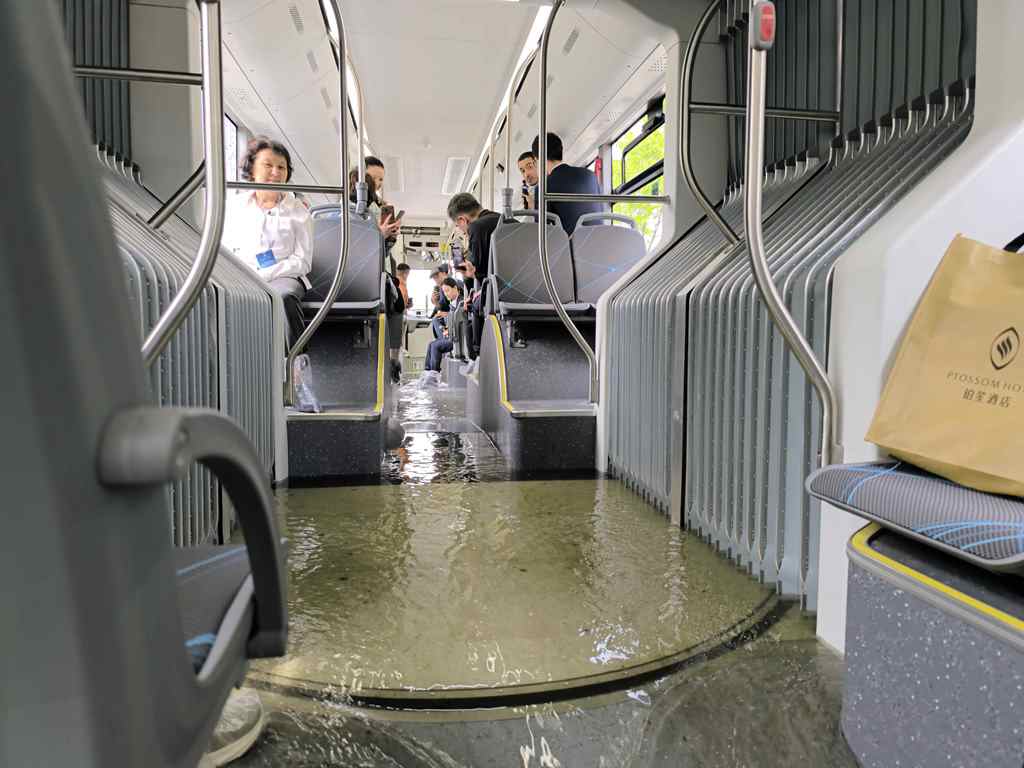
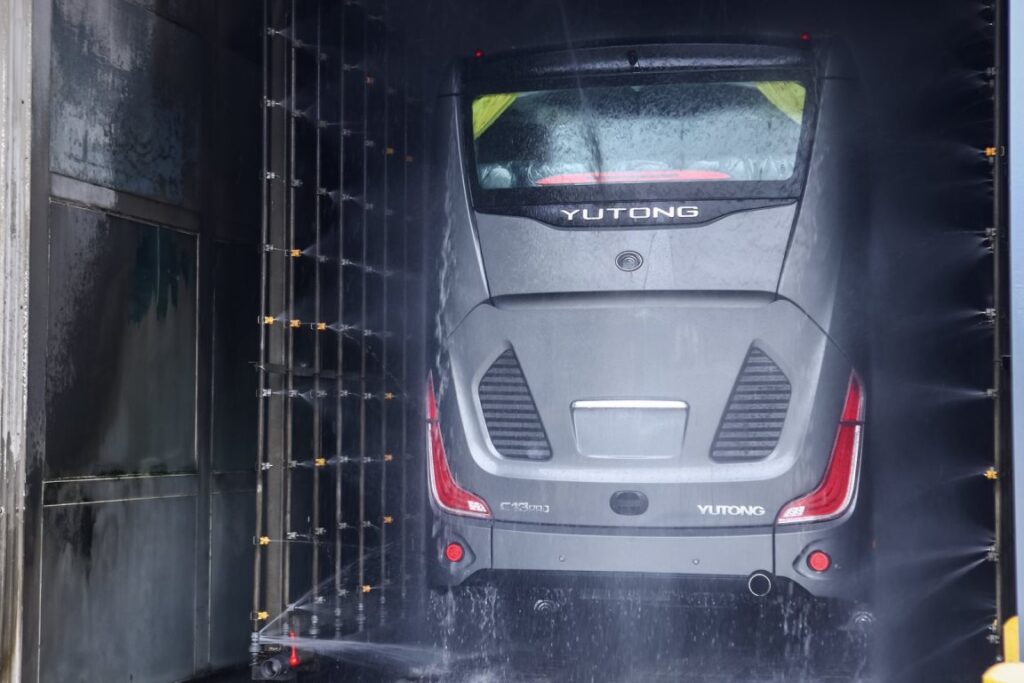
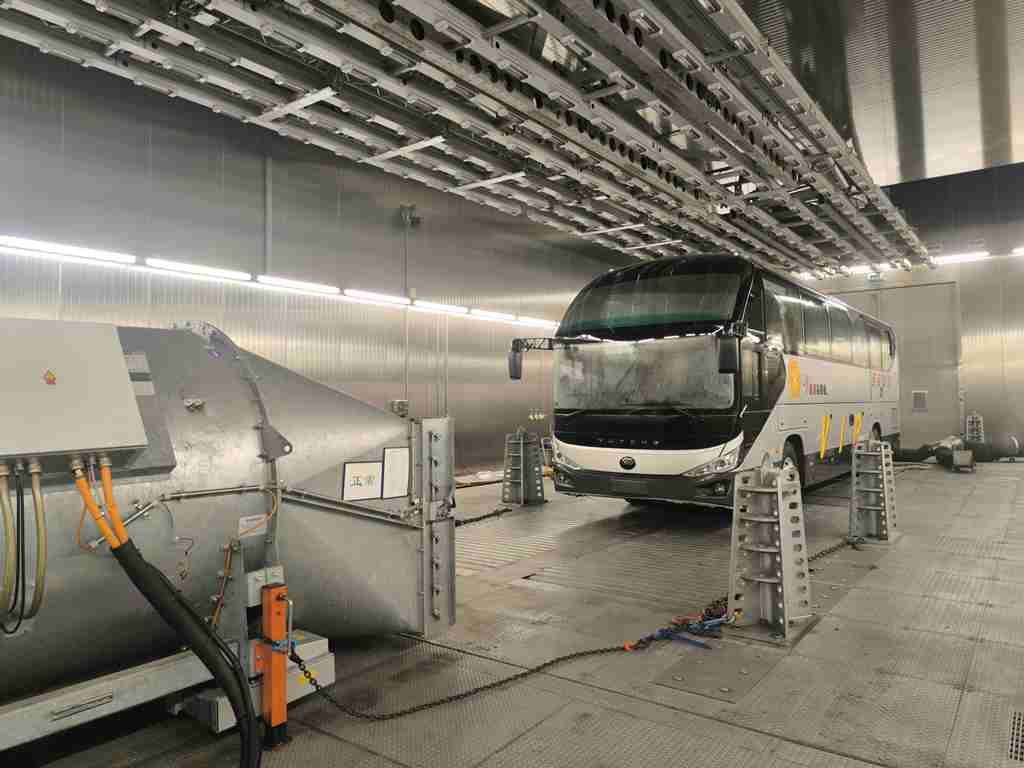
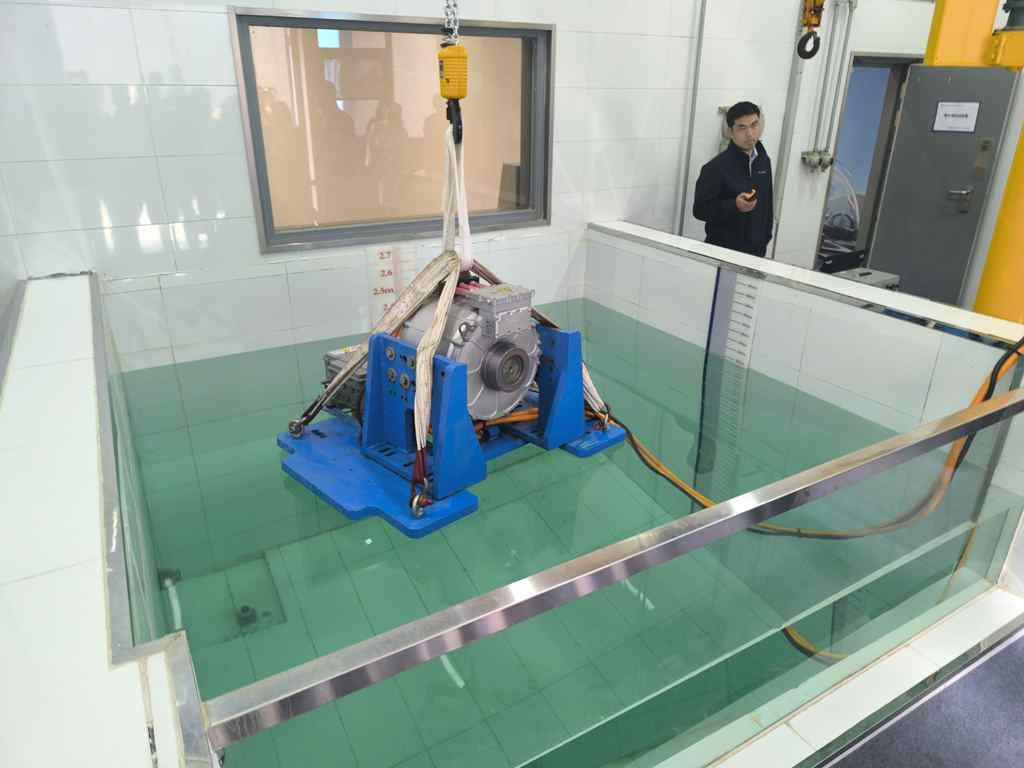
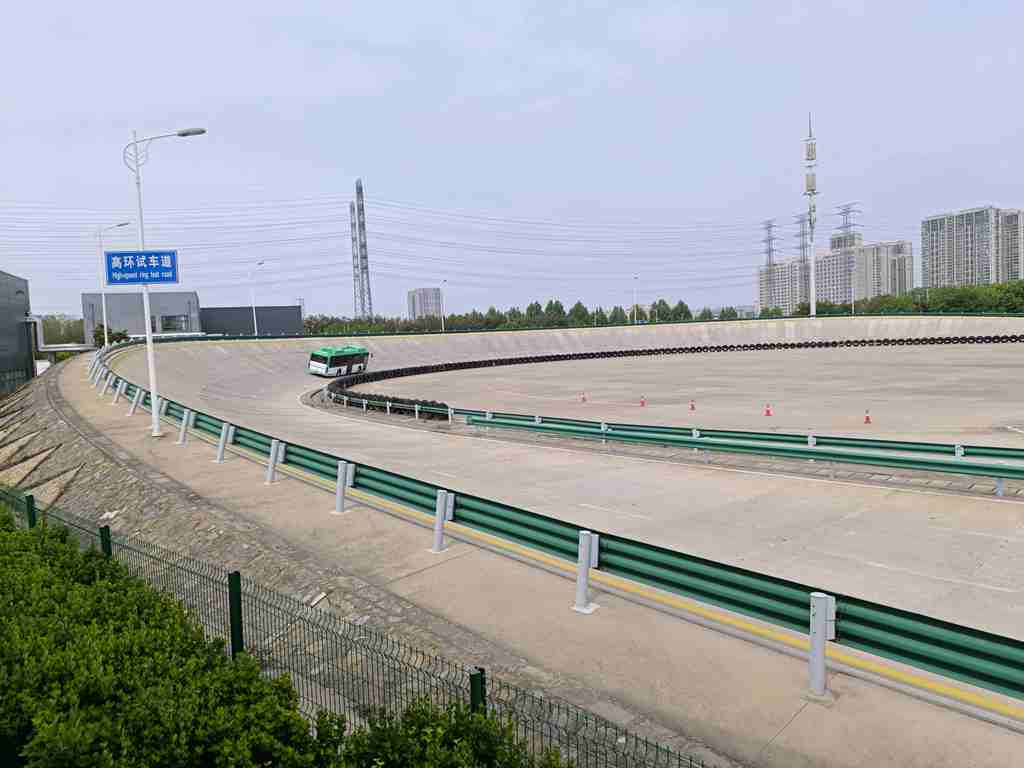
A state testing workshop operates on the plant’s premises: all units and components undergo state examination. This is not internal quality control but external verification – a requirement that Yutong meets without fail.
Service as part of the deal
The region has long understood: the key is not only to buy but also to maintain afterwards. This is why Yutong talks in such detail about its after-sales model.
The company offers 24/7 online support, a network of spare parts warehouses worldwide, service centers, and mobile teams. A fundamentally important condition: when ordering over 100 buses, Yutong is ready to send its representative to the city of operation at its own expense. This specialist works on-site and promptly fixes issues — without waiting for a response from China and without additional costs for the buyer.
In addition, the company uses a digital fleet management system, Link+—a platform for real-time monitoring of bus conditions. At Busworld Europe 2025, Link+ won the Gold Prize in the Busworld Digital Award category, surpassing systems from ZF and Bosch.
Recognition in Europe
The scale and ambitions of Yutong are confirmed not only by sales figures but also by evaluations from the international professional community.
At the world’s largest specialized exhibition, Busworld Europe 2025, held in Brussels in October 2025, Yutong received seven awards out of twelve possible. The city bus U15 won the Grand Award Bus, surpassing Mercedes-Benz eCitaro and Ebusco 3.0. The tourist electric coach T14E received the Grand Award Coach. The electric intercity bus IC12E was awarded the Label of Excellence Ecology Coach. Furthermore, the U15 was honored with awards in safety, ecology, and design categories.
The chairman of the Busworld jury, Marc van Houtte, commented directly on the result: “Yutong has been closely observing what the European market needs.”
The victory of the Chinese manufacturer in a competition traditionally considered European sent a clear signal to the industry: this is no longer about a regional plant but a global player.
A factory where there’s no dust
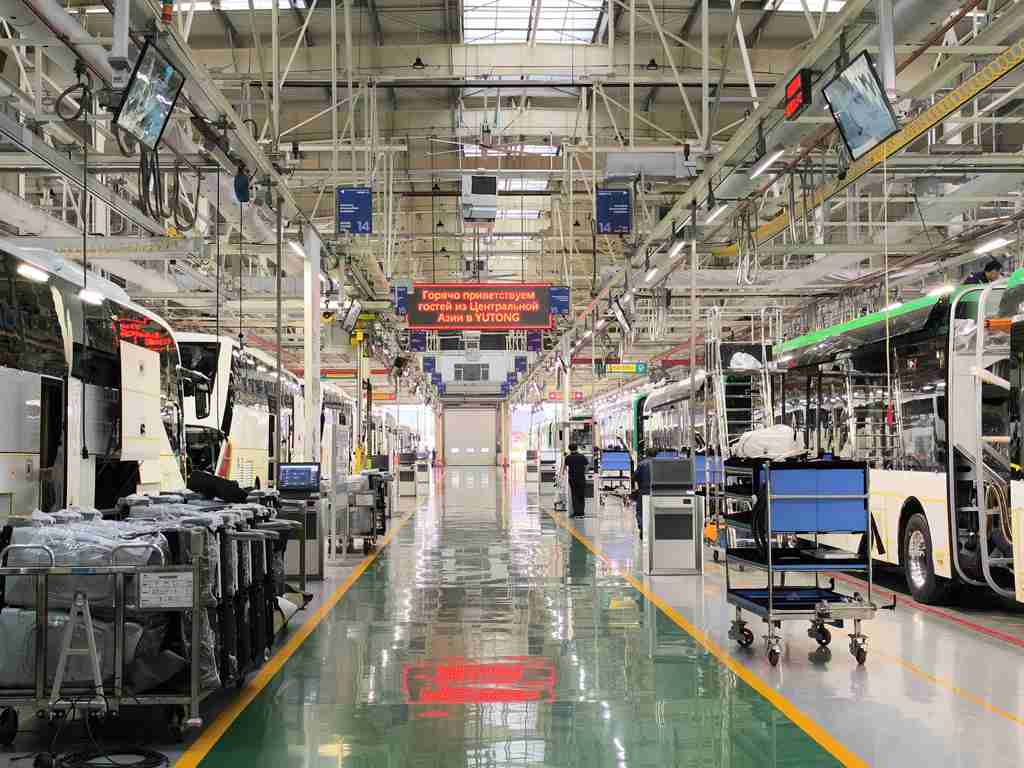
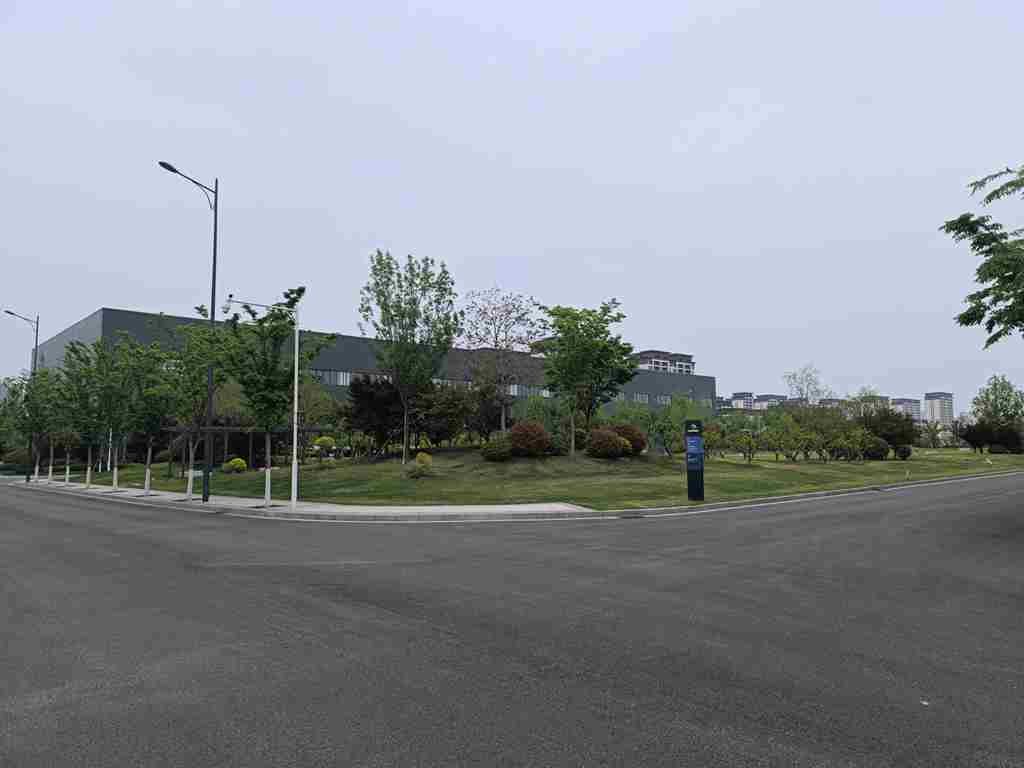
And yet – the first thing you notice on Yutong’s territory is cleanliness. Not conditional, not “for guests,” but systemic. The production complex, covering more than 1.1 million square meters, is immersed in greenery: trees, shrubs, flower beds. The paths between the workshops are so clean that it seems inappropriate to even drop a piece of wrapper.
Inside the factory – not a spot of oil, nor metal shavings on the floor. Workers in uniform, machines arranged with geometric precision. Environmental friendliness here is not a marketing slogan but part of the production culture.
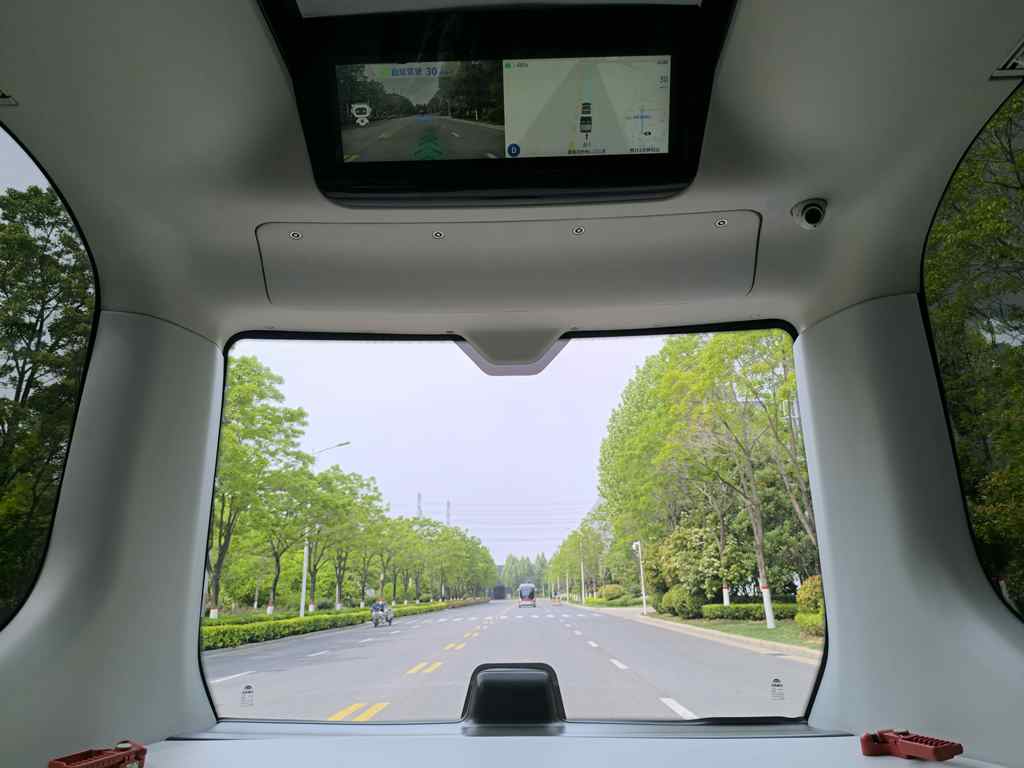
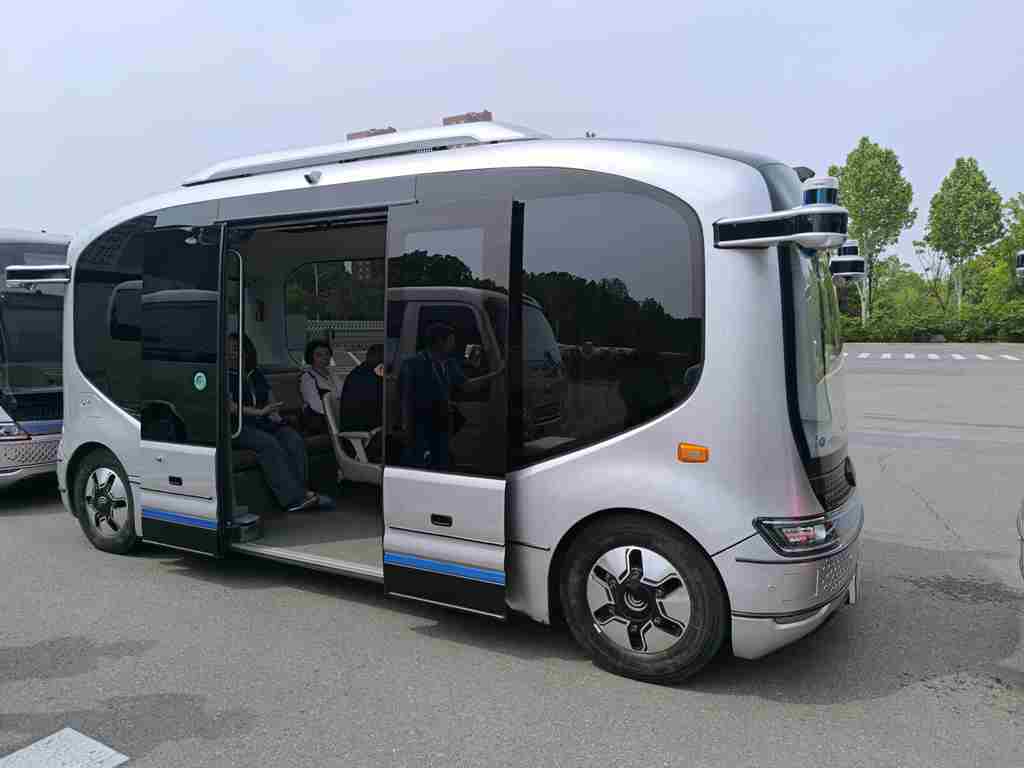
Guests are transported around the territory on a small driverless shuttle from Yutong. It glides silently between buildings, without a driver, without a steering wheel. The company clearly shows: this is not just about today’s market. It’s about the next stage – autonomous transport and urban equipment automation. Incidentally, similar buses have already been launched in several cities in China as an experiment.
Yutong is not only about passenger transport. The company produces trucks and special equipment, including solutions for municipal services. One example is driverless municipal equipment that operates at night: cleaning streets, watering trees, and performing other urban tasks without a driver, already actively working in Zhengzhou.