Igor Shatalov, the head of the office of Gazprom International (an affiliate of Russia’s state-controlled company Gazprom) in Tajikistan, says Gazprom has decided to give up licenses for exploration of Sariqamish and Western Shohambari gas fields but the work on exploring new gas fields in Tajikistan is going on.
He did not comment on a statement by the deputy head of the Main Geology Directorate of Tajikistan, Rahmonbek Bakhtdavlatov who told reporters in Dushanbe on July 18 that Gazprom has scaled down work in Tajikistan.
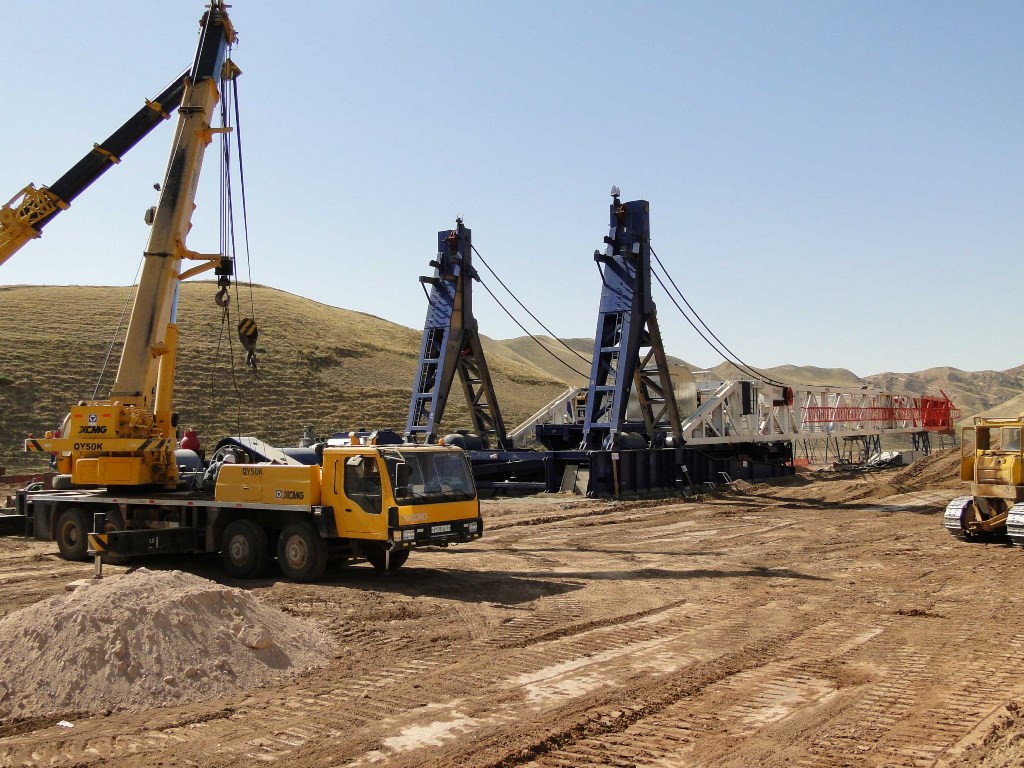
“As far as the wildcat well at the Sariqamish gas field is concerned, it has fulfilled its mission confirming the presence of hydrocarbons in the deep-seated sediments,”
“However, development of this deposit under the current economic conditions is inexpedient, therefore, we have stopped drilling. All calculations confirming the inexpediency of further exploration and development have been submitted for consideration to relevant bodies of Tajikistan,” Shatalov noted.
According to him, a meeting of the Oversight Committee on Controlling the Implementation of the Government-to-Government Agreement between Russian and Tajikistan on the Basic Principles of Geological Exploration of Oil and Gas Deposits in Tajikistan that took place in Dushanbe in March this year made a decision to set up a working group that will give recommendations on further operations of Gazprom in Tajikistan. The group should prepare its recommendations before the end of this year.
Meanwhile, the deputy head of the Main Geology Directorate under the Government of Tajikistan, Rahmonbek Bakhtdavlatov, told reporters in Dushanbe on July 18 Gazprom is leaving Tajikistan.
According to him, existing technologies do not allow Tajikistan extracting its oil and natural gas reserves.
“We have counted on Gazprom and thought they will able to do anything using their facilities. Gazprom has drilled only one hole and says that there is no gas or oil in Tajikistan. They should have drilled not one but two or three holes. We will still wait for better times,” Tajik geologist said.
Recall, Gazprom received licenses for exploration of the Western Shohambari and Sariqamish fields on September 15, 2009 and the licenses expire on September 18, 2018.
Meanwhile, Gazprom International gave up licenses for exploration of the Sargazon and Rengan fields in 2014.
Gazprom received licenses from the Tajik government to explore the Sargazon and Rengan fields in 2006. According to Gazprom, the Rengan field, located 20 kilometers from the Tajik capital, Dushanbe, reportedly has possible gas reserves of 35 billion cubic meters; Sargazon, located in Khatlon province 150 kilometers from Dushanbe, has possible reserves of 30 billion cubic meters.
Gazprom justified its decision to give up the licenses for exploration of the Sargazon and Rengan fields by saying that it decided to concentrate its efforts on exploration and development of the Sariqamish and Western Shohambari fields.
The Sariqamish field reportedly has possible gas reserves of 18 billion cubic meters, possible oil reserves of 17 million tons and possible reserves of dissolved gas of 2 billion cubic meters.
During his visit to Tajikistan, Gazprom chief Alexei Miller told journalists on September 18, 2013 that his company is interested in obtaining more licenses to explore natural-gas fields in Tajikistan.
According to Miller, Gazprom has invested some $150 million in two major natural-gas fields in Tajikistan’s north since 2010.
In August 2013, Gazprom reportedly announced an additional $15 million investment in its operations at the Sariqamish gas field.
Cooperation between the Tajik government and Russia’s state-controlled company Gazprom is regulated by a long-term (till 2028) agreement on strategic cooperation in the gas industry signed between Gazprom and Tajikistan’s Ministry of Energy in Dushanbe on May 15, 2003 and a memorandum of intent on launching joint Tajik-Russian enterprises of March 28, 2006. Gazprom has been working in Tajikistan on providing the beginning of geological explorations since July 2006.
According to expert estimates, the aggregate raw-materials resources of the oil and gas bearing areas in Tajikistan amount to about 1,000 billion tons of reference fuel. At the same time, production work at oil and gas fields require considerable expenditure, since hydrocarbon deposits occur at depths ranging from 6.5 to 8 kilometers.