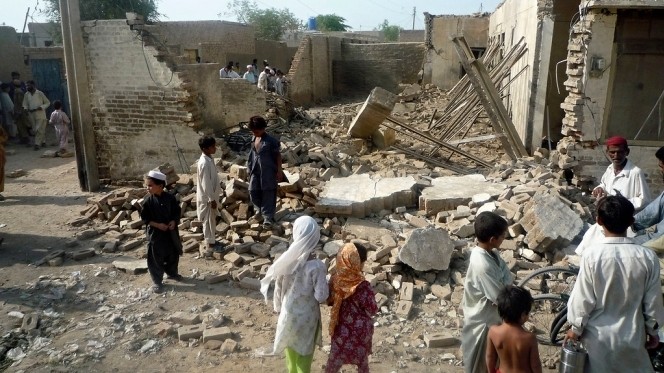
UNAMA report documents 8.050 civilian casualties in Afghanistan in 2018

The figures released by the United Nations Assistance Mission in Afghanistan (UNAMA) on October 10 show continuing high casualty rates being inflicted on the Afghan civilian population, especially by antigovernment elements. Covering the period from January 1 to 30 September 2018, the report documented 8,050 civilian casualties (2,798 dead and 5,252 injured), reflecting the same extreme […]

Asia-Plus

The figures released by the United Nations Assistance Mission in Afghanistan (UNAMA) on October 10 show continuing high casualty rates being inflicted on the Afghan civilian population, especially by antigovernment elements.

Covering the period from January 1 to 30 September 2018, the report documented 8,050 civilian casualties (2,798 dead and 5,252 injured), reflecting the same extreme levels of harm to civilians in comparison to the same period in 2017.

The report indicates that the leading cause of civilians killed and injured from the armed conflict remained the combined use of suicide and non-suicide improvised explosive devices (IEDs) by antigovernment elements.

The report furthermore documents how the use of suicide IEDs increased in  frequency and in lethality, causing record high civilian casualty levels in the first three quarters of 2018.

The Mission found that ground engagements were the second leading cause of civilian casualties, followed by targeted and deliberate killings, aerial operations and explosive remnants of war.

Of grave concern, the report notes that anti-government elements increasingly directed attacks specifically against the civilian population, including ethnic and religious minorities.

In addition to detailing civilian casualties caused by search operations, elections-related violence and fighting in the city of Ghazni, UNAMA’s latest findings indicate that Nangarhar, Kabul, Helmand, Ghazni and Faryab were the provinces most impacted by the conflict.  For the first time, Nangarhar surpassed Kabul as the province with the most civilian casualties in the first nine months of 2018, more than double the number recorded during the same period in 2017.

In verifying civilian casualty data, UNAMA reportedly not only relies on a strict methodology requiring at least three different and independent source types, but also frequently conducts dozens of interviews, including with first-hand sources and victims, to determine the veracity of any claims.

The United Nations reiterates its call for anti-government elements to immediately cease the deliberate targeting of civilians, particularly with the use of illegal and indiscriminate IEDs, and maintains that all parties to the conflict must uphold their obligations to protect civilians from harm and must strictly adhere to their obligations under international humanitarian law, at all times.


 

Join us on social media!

Article translations:

Related Article

Оби зулол
Оби зулол

Most Read

Recent Articles

The only GPW veteran in Dushanbe allocated more than 80,000 somoni

The mayor's office of Dushanbe allocated him 25,000 somoni.

GITEX AI Kazakhstan 2026: how Almaty became the main AI hub of Central Asia

More than 300 companies and startups, over 200 speakers and 100 investors from 50 countries — the region is entering the global stage.

A trade and economic park to be built at the border junction of Tajikistan, Kyrgyzstan, and Uzbekistan

President of the Kyrgyz Republic Sadyr Japarov familiarized himself with the project.

A project to protect soil from degradation to be developed in Central Asia

The initiative is of great significance for the mountainous countries of the region, including Tajikistan.

Mudslide, death, and destroyed homes: hundreds of families in Tajikistan left homeless

A correspondent from "Asia-Plus" visited Kulob and spoke with the families of those who died and were affected by the disaster.

Spring 2026 bright event: new issue of VIPzone now on sale

This issue is about people and ideas that change everything: from business and investments to fashion, food, and urban environment.

Godfrey Sullivan: “Tajikistan is a promising market for Visa to develop digital payments”

The Vice President of Visa explained why Tajikistan is becoming a promising market for digital payments and how artificial intelligence is influencing the future of finance.

Seven students in Dushanbe were threatened with expulsion for arriving at universities in personal cars

The materials for each case have been sent to the Ministry of Education and Science for appropriate actions.

India’s blockchain push and lessons for the global south

The Indian Government has started pushing aggressively its agenda...

India’s blockchain push and lessons for the global south

The Indian Government has started pushing aggressively its agenda...