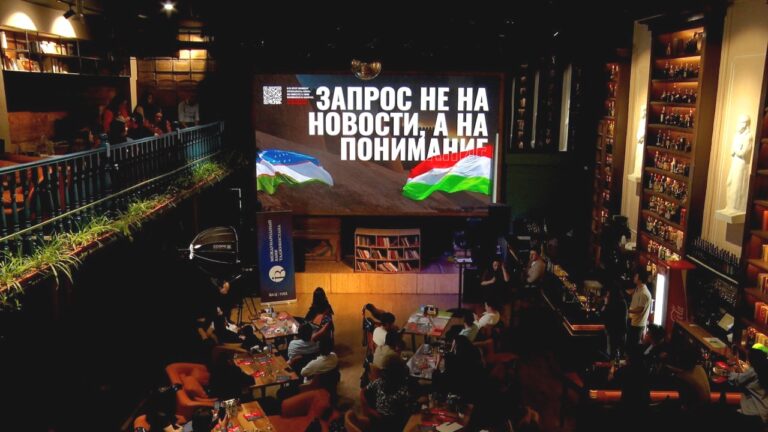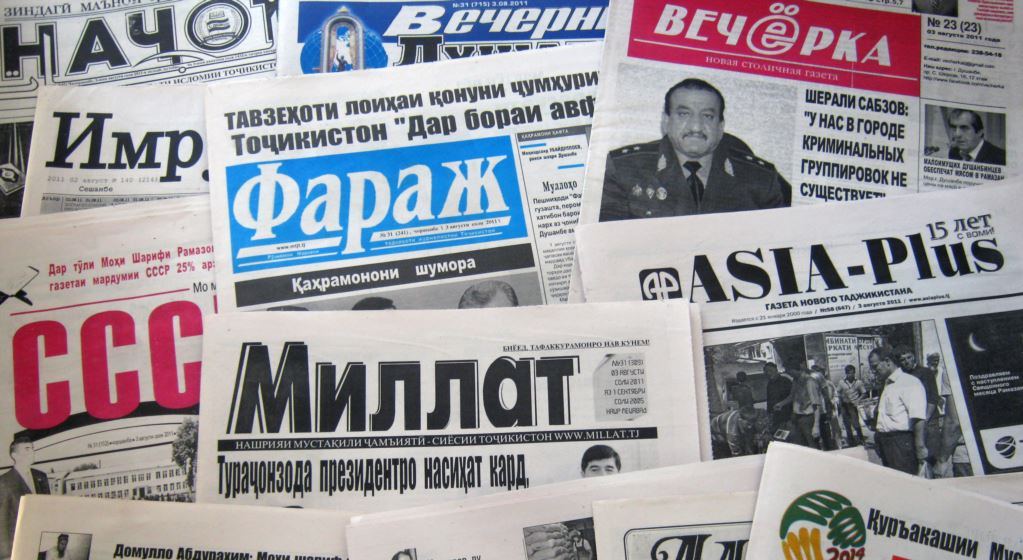
The Institute for War and Peace Reporting has prepared a research entitled The Status of Media and the Role of Social Media in Kazakhstan, Kyrgyzstan, Tajikistan and Uzbekistan. The research was reportedly designed and developed within the framework of the IWPR project, Giving Voice, Driving Change – from the Borderland to the Steppes – Cluster III: Central Asia, under the financial support of the Norwegian Ministry of Foreign Affairs.
The research notes that press releases are still the major information source for journalists’ news reports in Tajikistan followed by websites. News conferences are the third most popular source of information for news reports of journalists in Tajikistan followed by people as source of information for journalists.
Among social networking sites Facebook is the most frequently used source of information for journalists’ news reports in Tajikistan. It is followed by YouTube, Odnoklassniki.ru, Twitter and Instagram.
According to in-depth interview results, journalists get information mostly from state agencies, government bodies, official sources, government representatives, and official websites. They also get information from people, friends, colleagues, from Internet resources. Mostly Editorial Board of media choses the topics which should be covered by media. They do selection of topics according to relevance to their society and importance for their community.
As for the fact checking methods, most journalists in Tajikistan check given information from people followed by publications in the media and Internet.
Concerning the collaboration of media with experts, government, NGOs and other civil society organizations, respondents believe that their media is collaborating with “Experienced experts”, “National government bodies”, “Local government bodies”, “Regional public authorities” and “Civil Activists”.
In-depth interview results showed that most journalists do not collaborate with civil society organizations. They state that it is difficult for them to get NGOs to talk in media because they refrain from communicating with journalists. They say that NGOs are not interested in collaboration with In-depth interview results showed that respondents think that journalists in Tajikistan have no role in solving social, economic and political problems in the country because state do not react to their publications and does not answer their questions.
They think that the media have lost their role in society and journalists refrain from covering serious topics and stay on the sideline. Journalists think that NGOs are not willing to give interviews to them. Also there are few experts in the environmental issues and economic issues. Local experts are not specialized in a specific field but try to be experts in every field.
Tajik journalists say that today it becomes difficult for them to find an opportunity to talk with NGO representatives. They prefer to refrain from communicating with the media.
In-depth interview results showed that respondents think that journalists in Tajikistan have no role in solving social, economic and political problems in the country because state do not react to their publications and does not answer their questions.
They think that the media have lost their role in society and journalists refrain from covering serious topics and stay on the sideline.
For the past years the media has lost its role in society, according to the research. Today, journalists reportedly refrain from covering serious topics while staying on the sidelines.
Unlike in previous years, the situation has changed. Previously, the words of the journalist could be said to be decisive.
Almost half of journalists are neither optimistic nor pessimistic about the future of quality journalism in Tajikistan, quarter are pessimistic about the future of quality journalism in Tajikistan. Few journalists are optimistic about the future of quality journalism in their country.