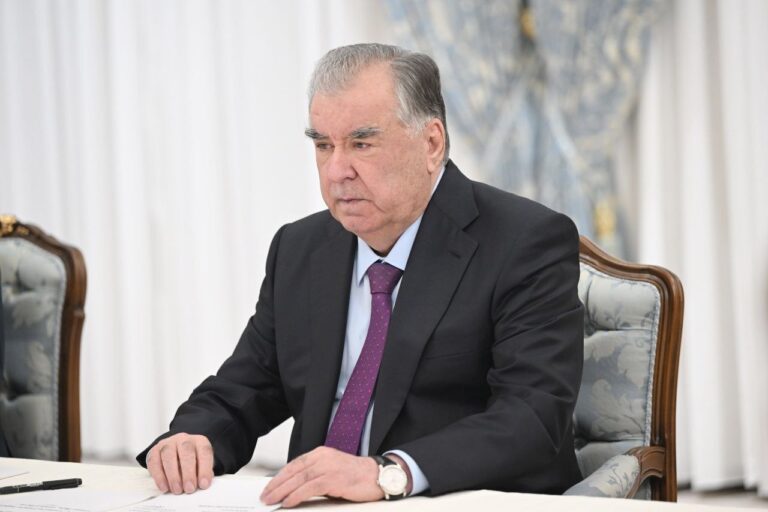
DUSHANBE, April 4, Asia-Plus – On Tuesday April 3, during his working trip to the Qubodiyon district in Khatlon, President Emomali Rahmon also visited the site of an ancient settlement Takhti Sangin, which is located some 34 kilometers from Qubodiyon at the confluence of the rivers of Vakhsh and Panj.
Archeologists began excavation on the site of the ancient settlement in 1976 and the stone settlement turned out to be really unique. In the very center they found an ancient temple, which got a name “the Temple of Oks” (Amudarya used to be called Oks during Greek period). It used to be devoted to the Divinity of the river whose cult had existed there since the old days.
The amazing findings were discovered in the temple dated from 4th – 3rd centuries B.C. and which continued to exist in the first centuries of our era. Most likely those were the gifts of church-goers to the temple: the image of Alexander the Great as Hercules, the sheath with the image of a lion holding a fallow deer, chests facings made of ivory and decorated with carved drawings, the biggest collection of arrow tips in the Central Asia (more than 5 thousand), etc.
“The Temple of Oks” has survived in a good condition and President Rahmonov gave a commission to researchers to take measures to provide further preservation of this unique cultural relic.
Presidential press service said that Rahmon also charged to take necessary measures to return objects of the Amu-Darya treasure, which are currently kept in the British Museum in Landon.
This treasure, which is a pride of the British Museum, was found in 1877 on the right bank of the Amudarya River. The find consisted of a large number of gold and silver coins and gold pieces dated back to the 4th – 2nd centuries B.C. Local residents who had found the treasure sold it to Bukhoro merchants traveling to India. The merchants sold the treasure to Rawalpindi. According to some sources, in 1877, Sir August Frank gave it as a gift to the British Museum.
During his stay in Qubodiyon, Emomali Rahmon also met with local farmers to discuss the spring sowing campaign, according to presidential press service.