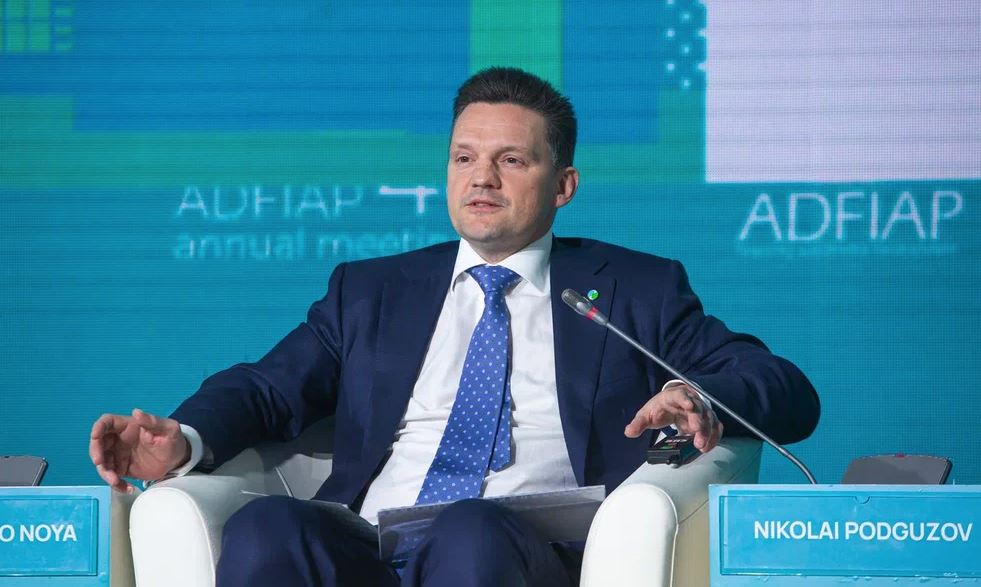
In the presentation made at a forum of the Association of Development Financing Institutions in Asia and the Pacific (ADFIAP) in Almaty, Kazakhstan, Nikolai Podguzov, Chairman of the Eurasian Development Bank (EDB)’s Management Board, yesterday emphasized four key challenges facing the Central Asian countries: the lack of access to the sea; insufficient coordination in the water and energy complex; and the impact of climate change.
The forum reportedly brought together 240 CEOs from banks, investment funds, and development institutions representing 40 member countries of the ADFIAP. The plenary session discussed the role of investment in driving sustainable growth in Central Asian countries, including Kazakhstan.
The EDB chairman noted that the lack of access to the sea constrains the trade and economic potential of Central Asia. “Due to high transportation costs, the GDP of landlocked countries is growing on average 20% slower than it could,” Podguzov said, calling on global businesses to step up concerted action to mitigate these risks.
To address this issue, the EDB Chairman proposed an expansion of the region’s transport infrastructure in all directions. “New rail routes and container traffic could foster more effective integration into global supply chains and reduce transport costs. For this reason, Central Asia still needs foreign investment in this sector,” he added.
According to the presentation, the Eurasian transport network is currently expanding with the construction of new railways and highways. Caspian seaports, airports, transport and logistics hubs, and border crossings have been built.
Podguzov highlighted that the number of container trains between China and Europe has increased more than 200-fold over the past decade.
However, the dynamic development of regional and foreign trade reportedly still requires simplification of customs and border procedures.
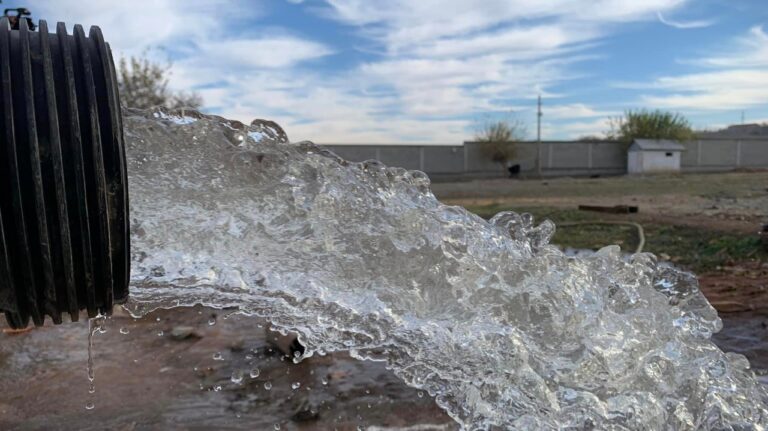
Furthermore, Central Asia faces one of the world’s lowest levels of water use efficiency. The average water use efficiency in the region is estimated at US$2.5 per cubic meter, significantly below the global average of US$19.01.
“Rapid population growth, urbanization, and agricultural and industrial development require more water. The Bank’s stance is that Central Asia should adopt a collective approach to water management in the region. According to the EDB’s estimates (that correspond to those of the World Bank and other institutions), addressing current shortcomings through cooperation could boost regional GDP by an additional 1.5% per year,” the EDB head said.
Podguzov reportedly also raised concerns about the threats posed by climate change. Central Asian countries are among the most vulnerable areas globally in this regard. “Water stress is high and is expected to increase 2.8 times in certain areas of Central Asia by 2040. Moreover, the region will experience higher temperature increases compared to the global average. This can lead to accelerated glacier melting, reduced snow cover, greater desertification, land degradation and salinization, biodiversity loss, and increased deforestation,” he stressed.
In conclusion, Podguzov highlighted that the EDB’s current five-year strategy, effective since 2022, positions the Bank as the number one financial institution in Eurasia, promoting sustainable development and ESG projects in Kazakhstan and Central Asian countries.
The Association of Development Financing Institutions in Asia and the Pacific (ADFIAP) was established in 1976. ADFIAP is a major international business association comprising 90 member institutions in 39 countries, including non-regional members such as Canada, Germany, and France. Its mission is to promote sustainable economic, environmental, and social development and growth in the region.
The Eurasian Development Bank is an international financial institution investing in Eurasia. For more than eighteen years, the Bank has worked to strengthen and expand economic ties and foster comprehensive development in its member countries – Armenia, Belarus, Kazakhstan, Kyrgyzstan, Russia, and Tajikistan. The EDB's charter capital totals US$7 billion. Its portfolio mainly consists of projects with an integration effect in transport infrastructure, digital systems, green energy, agriculture, manufacturing, and mechanical engineering. The Bank’s operations are guided by the UN Sustainable Development Goals and ESG principles. The Eurasian Development Bank has observer status in the UN General Assembly.