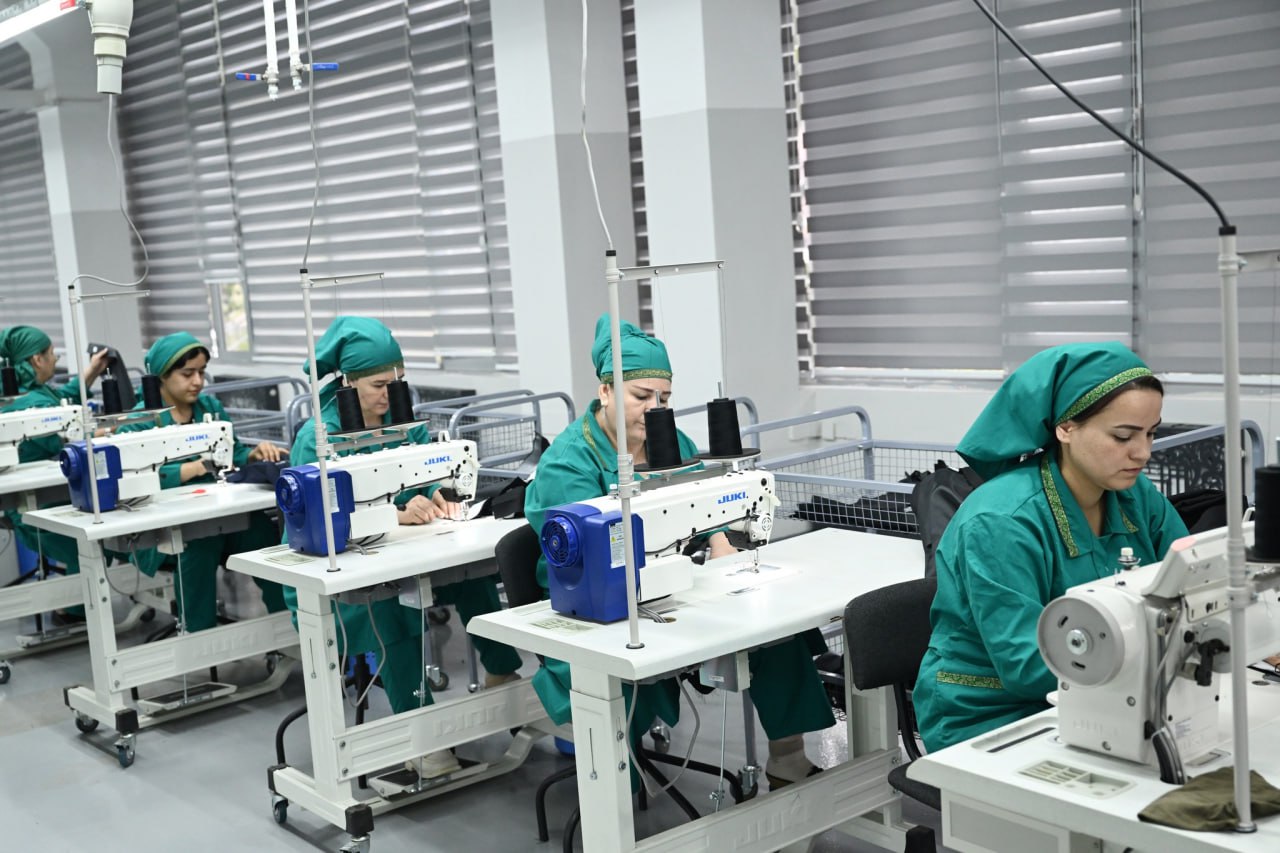
Tajikistan has given priority to the development of the textile industry in order to achieve its goals of industrialization of the country. This is due to the availability of local raw materials and the labor intensity of the industry, which contributes to the creation of more jobs.
To minimize the export of raw cotton
The National Strategy for the Development of cotton production, processing and Textile industry for 2024-2040 was adopted at the end of 2023. The amount of investments for its implementation is 2 billion 750 million somoni (about $256.6 million at the current exchange rate), which is provided at the expense of funds allocated by domestic and foreign investors and the private sector.
In particular, the Strategy provides for a reduction in exports of cotton fiber and an increase in the processing of raw cotton within the country.
According to forecasts of the Ministry of Economic Development, fiber exports should be reduced to 35 thousand tons per year by 2025. However, in the first half of 2024, Tajikistan has already managed to sell more than 54 thousand tons of fiber worth $95.5 million. In the case of exporting cotton products from them, the amount of revenue could be several times more.
According to the government's plans, due to the processing of raw cotton, Tajikistan by 2025, compared with 2022, should increase the export of yarn from 32 thousand tons to 52 thousand, finished cotton products – from 1.1 thousand tons to 1.8 thousand, hosiery – from 0.7 thousand tons to 2.6 thousand.
To increase exports, first of all, it is necessary to increase cotton production within the country. Thus, fiber production should reach from the current 114 thousand tons – 138 thousand by 2025, yarn – from 27 thousand to 57.5 thousand tons, fabrics – from 11.6 million m2 to 32.7 million m2.
Why has the textile industry become a priority?
Tajikistan has given priority to the accelerated development of the textile industry – the final processing of cotton – in comparison with other sectors of the real economy.
The priority of light industry is due to the availability and accessibility of local raw materials, the lack of dependence on imports of industrial goods, the characteristic labor intensity that contributes to the creation of more jobs, the ability and ample opportunities to provide the population with finished products.
The production capacity of cotton fiber processing enterprises in Tajikistan currently amounts to more than 60 thousand tons of cotton fiber per year.
The textile and clothing industries provide only 10 percent of the needs of the domestic market, while in order to preserve the economic security of the country, the volume of domestic production must meet at least 30% of the needs of the domestic market.
According to the plans, in the period 2023-2026, the volume of textile industry production will increase from 13 to 20 percent, and in 2027-2033 – up to 30 percent, approximately 90 percent of the fixed assets of the industry will be subject to technological and innovative renewal.
Small businesses are unprofitable
The modern structure of the textile industry includes up to 80 percent of small enterprises. Due to limited financial resources, such enterprises are not capable of technical and technological development and modernization, they are unable to produce competitive products in domestic and foreign markets.
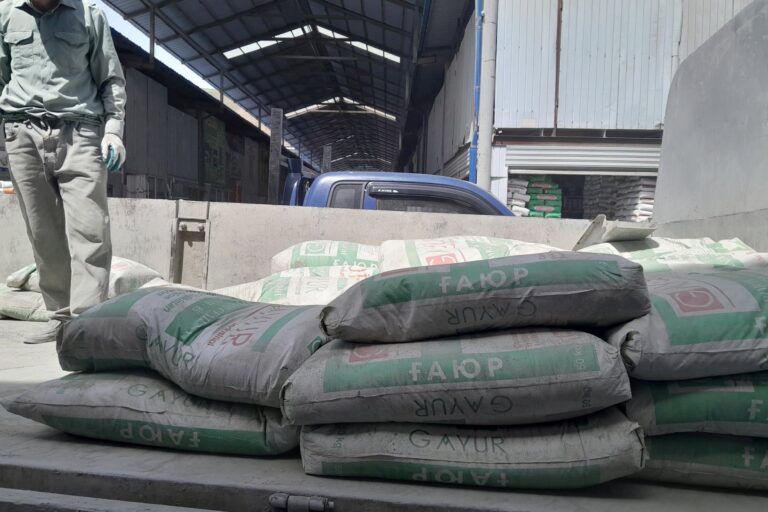
Due to the growing number of small cotton gins and the production of low–quality cotton fiber, as well as the mixing of this type of low-quality products with cotton fiber from large cotton gins and cotton spinning enterprises, Tajik cotton is losing its value in the export market, which is the result of a reduction in exports and the accumulation of large stocks in the warehouses of enterprises.
Low-quality cotton fiber affects the quality of cotton yarn, which leads to idle spinning devices and equipment.
However, Tajikistan does not intend to completely abandon small and medium-sized enterprises in the industry – they will be developed in all regions, especially in mountainous and remote areas by the private sector.
High energy costs
It is worth noting that 10-15 percent of the initial cost of cotton yarn is energy costs.
The high cost of electricity for spinning enterprises leads to a decrease in the development of the industry, attracting investment in this area and using their capacities, subsequently reducing employment.
Full utilization of production capacities can contribute to a significant decrease in cotton fiber exports and a corresponding increase in gross domestic product, a significant increase in incomes of enterprises and the population.
To address this issue, a draft government decree is being developed, which provides for the provision of a 50 percent preferential electricity tariff for textile enterprises. The resolution is due to be released this year.
What is provided for?
In the next decade (2023-2033), in order to provide the textile complex under construction with cotton raw materials and compliance of the construction process with international standards, it is planned to build and put into operation 6 textile complexes for the final processing of cotton.
They will be built:
– in the city of Kulyab – the center of the complex (Kulyab city, Hamadoni district, Vosei and Farkhor districts);
– in Kubodien district – the center of the complex (Kubodien district, Shakhritus district and Nosiri Khusrav district);
– in Jalaliddini Balkhi district – the center of the complex (Jalaliddini Balkhi district, Jaihun district and Dusti district);
– in Dushanbe – the center of the complex (the cities of Gissar, Tursunzade and Vakhdat, Rudaki district and Shakhrinavsky district);
– in Kanibadam – the center of the complex (the city of Kanibadam, Ashtsky and Bobojon Gafurov districts);
– in Zafarabad district – the center of the complex (Spitamen district, Zafarabad and Jabbor Rasul districts).
The Government of Tajikistan has instructed local executive bodies of the state power to provide the textile industry with cotton raw materials. The Ministry of Industry has been instructed to create technology parks at enterprises in the textile industry.
These measures, according to the authors of the concept, should have a positive impact on the development of the textile industry.