At the 87th meeting of the Interstate Coordination Water Management Commission (ICWMC) held in Turkmenistan’s capital, Ashgabat, on November 6, the water intake limits for the inter-vegetative period of 2024-2025 were approved. Recently, detailed information was released on how the countries of the region allocated water among themselves.
Tajikistan to receive nearly 3.3 billion cubic meters
From October 1, 2024, to April 1, 2025, Tajikistan has been allocated 2.941 billion cubic meters of water from the Amu Darya River. As part of the regional water distribution plan, Tajikistan will also receive 365 million cubic meters from the Syr Darya River.
The total water intake from the Amu Darya will be 15.791 billion cubic meters, divided as follows:
- Turkmenistan: 6.5 billion cubic meters
- Uzbekistan: 5.98 billion cubic meters
From the Syr Darya, the total distribution will be 4.247 billion cubic meters, allocated as follows:
- Kazakhstan: 488 million cubic meters
- Kyrgyzstan: 47 million cubic meters
- Uzbekistan: 3.347 billion cubic meters
The water distribution takes into account the needs of the countries for agriculture, industry, and drinking water supply.
Water resource usage results
At the end of the 2024 growing season, Tajikistan emerged as one of the leaders in the efficient use of water intake limits in the Amu Darya and Syr Darya basins. Out of the total limit of 6.326 billion cubic meters, the country used 90.6% of its water intake limit.
Overall, in the Amu Darya basin, the approved water intake limits were used at 85.3%. Of the planned 39.701 billion cubic meters, 33.829 billion cubic meters were actually used.
For comparison:
- Turkmenistan used 13.960 billion cubic meters, or 90.1% of the limit
- Uzbekistan used 13.543 billion cubic meters, or 78.6% of the limit
The Aral Sea receives water 41% less
According to the decision, in 2025, 1.672 billion cubic meters of water are expected to be delivered to the Aral Sea and the surrounding region. This is more than 30% above the actual amount delivered during the previous inter-vegetative period, which was 1.273 billion cubic meters, instead of the planned 2.1 billion cubic meters—meaning only 59% of the planned volume was delivered.
This further emphasizes the need for enhanced coordination among the countries in the region to prevent the continued shrinkage of the Aral Sea.
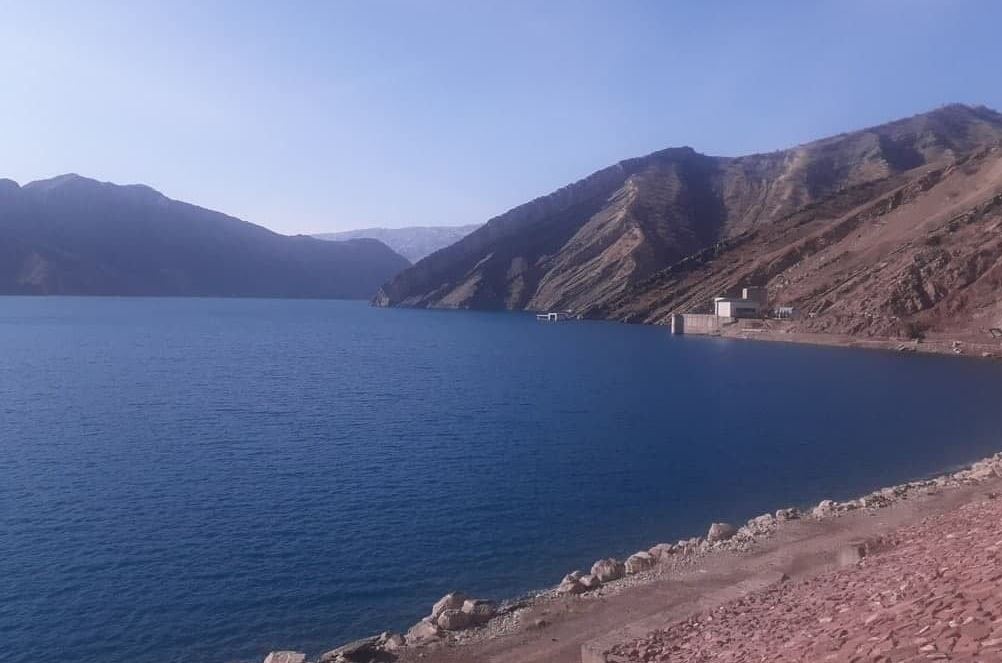
Nurek Reservoir: forecast for the 2024-2025 inter-vegetative period
During the meeting, the forecast operation regime for the Nurek Reservoir during the inter-vegetative period was also approved.
At the start of the period, the water volume in the reservoir will be 10.568 billion cubic meters. Inflows are expected to be 3.696 billion cubic meters, and the outflow will be 7.772 billion cubic meters.
By the end of the period, the water volume will decrease to 6.151 billion cubic meters, corresponding to a reduction (decline in the water level when outflows exceed inflows) of 4.417 billion cubic meters.
In 2024, the inflow to the reservoirs powering the Nurek hydropower plant during the growing season exceeded the forecasts, reaching 16.388 billion cubic meters (109% of the expected), while the outflow was 12.634 billion cubic meters (114.9% of the planned amount). This high level of water flow allowed for the accumulation of the necessary water reserves to meet the needs of downstream water users.
The five main river basins in Central Asia are formed by the Amu Darya, Syr Darya, Balkhash-Alakol, Ob-Irtysh, and Ural rivers.
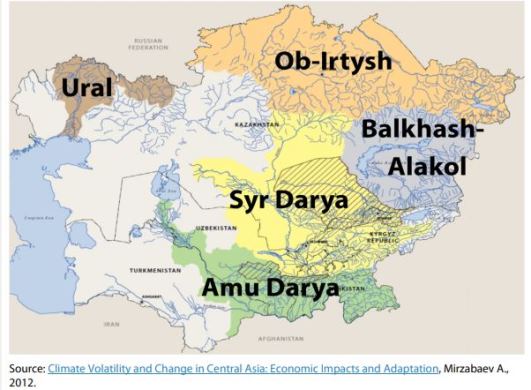
Between them, the Amu Darya and Syr Darya river basins provide 90% of the region's river water and cover 37 % of the land area of ex-Soviet Central Asia, including most of Kyrgyzstan, Tajikistan and Uzbekistan, as well as large parts of Turkmenistan and Kazakhstan and some parts of northern Afghanistan are also within the Amu Darya basin. The Amu Darya and Syr Darya rivers are home to nearly 80% of Central Asia's population.