During the Taliban’s time in power in Afghanistan, Beijing has emerged as one of their key foreign partners. China was the first country to accept credentials from a Taliban-appointed ambassador. In addition to geographical proximity, Beijing and Kabul’s close ties are driven by China’s significant economic interests in Afghanistan.
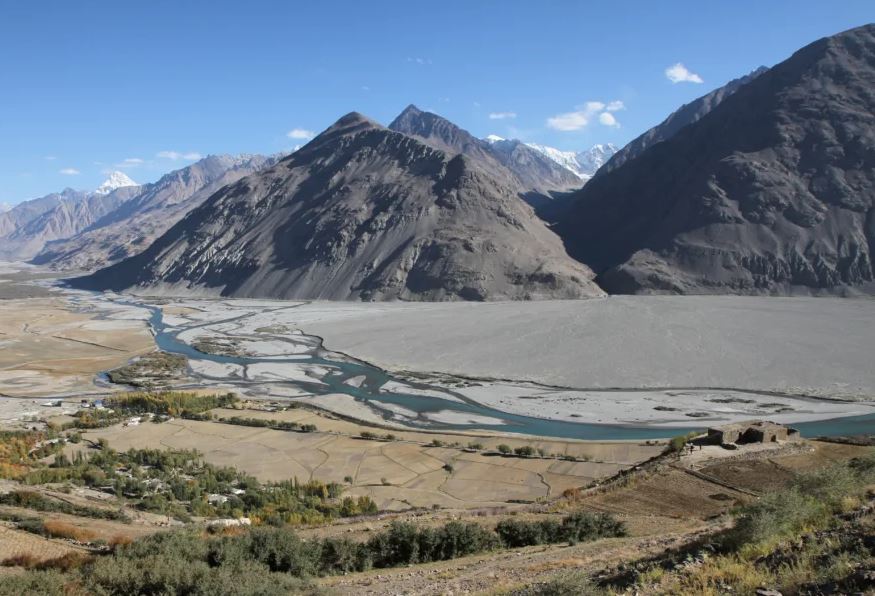
Politik.uz reports that despite sharing a border, a direct road linking the two countries has not yet been built—but it is planned. This road would pass through the 300-kilometer Wakhan Corridor, an area currently home mainly to shepherds and nomads.
Challenges of recognition
In August 2021, China was one of the few countries that did not evacuate its embassy in Kabul when Taliban militants entered the city. Later, China’s Ministry of Foreign Affairs expressed readiness for dialogue with the Taliban’s interim government.
Even under the Islamic Republic of Afghanistan (IRA), Beijing had an economic interest in cooperation with Kabul, driven by shared goals. In 2020, China became Afghanistan’s second-largest supplier of goods, with a trade volume of $986.5 million.
Since September 2021, Taliban government officials and Chinese representatives have held regular consultations. In March 2022, Chinese Foreign Minister Wang Yi became the fifth foreign minister to visit Kabul after the Taliban's takeover.
Although China does not formally recognize the Taliban government, in September 2023, Beijing appointed a new ambassador to Kabul, marking the first official diplomatic appointment since the Taliban came to power. In January 2024, Chinese President Xi Jinping accepted credentials from the Taliban-appointed ambassador, Bilal Karimi, in Beijing—a move widely interpreted as de facto recognition of the Taliban regime by a permanent member of the UN Security Council.
Beyond business
The driving force behind Afghan-Chinese relations remains economic interests, particularly Afghanistan’s vast mineral resources, which attract Chinese companies. Additionally, Chinese goods are widely available in Afghan markets.
By the end of 2023, China had become Afghanistan’s third-largest importer, supplying approximately 15% of the country's imports, behind only Iran (23%) and Pakistan (19%).
In early 2023, the Chinese company CAPEIC signed a 25-year contract with the Taliban to extract oil, committing $150 million annually in investments.
Another potential avenue for Chinese investment is copper mining, with Afghanistan’s reserves estimated at over 4 billion tons.
In July 2024, Taliban representatives and Chinese business leaders held a ribbon-cutting ceremony for a new road leading to a copper mine, which Chinese officials called a "significant step forward."
However, implementing these projects is complicated by security issues. According to the Australian Institute for Economics and Peace (IEP), which compiles the Global Terrorism Index, terrorist attacks in Afghanistan dropped by 75% in 2022 compared to the previous year. Nevertheless, Afghanistan remains the most dangerous country globally regarding terrorism.
Located in the Wakhan district of Afghanistan's Badakhshan province, the Wakhan Corridor is a narrow strip of territory, stretching eastward, connecting Afghanistan to Xinjiang, China. It also separates Tajikistan’s Gorno-Badakhshan Autonomous Region (GBAO) in the north from the Khyber Pakhtunkhwa and Gilgit-Baltistan regions of Pakistan in the south, the latter of which is also part of the disputed region of Kashmir. This high mountain valley, which rises to a maximum altitude of 4,923 m, serves as the source of both the Panj and Pamir rivers, which converge to form the larger Amu Darya River. For countless centuries, a vital trade route has traversed this valley, facilitating the movement of travelers to and from East, South, and Central Asia.
The corridor was formed after an 1893 agreement between Mortimer Durand of the British Raj and Emir Abdur Rahman Khan of Afghanistan, creating the Durand Line. This narrow strip acted as a buffer zone between the Russian Empire and the British Empire (the regions of Russian Turkestan, now in Tajikistan and the northern part of British Raj, now in Pakistan).