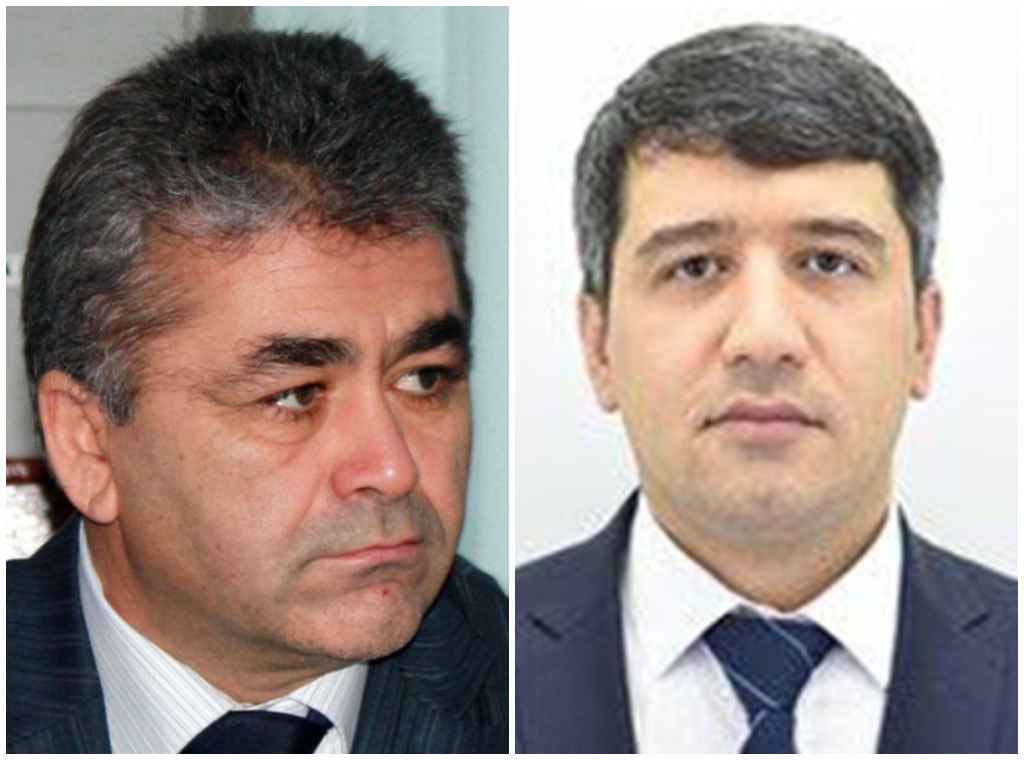
By president’s decree issued on January 23 Beg Sabur was relieved of his post of Head of the Communications Service under the Government of Tajikistan and sent into retirement. The new head of the communications service agency is Isfandiyor Sa'dullo.
Career background
Until now, Isfandiyor Sa'dullo held the position of First Deputy General Director of Teleradiocom, part of the Committee on Television and Radio.
He is a 35-year-old radio engineer and a relatively young specialist.
Born on May 15, 1990, in the city of Kulob, he graduated in 2012 from the A.S. Popov National Academy of Communications in Odessa, Ukraine.
He began his career as an engineer for radio relay line operations at the Radio-Television Wave Transmission Center Teleradiocom in Dushanbe.
By 2014, he became a first-category engineer, and since 2015, he served as the First Deputy Director of Teleradiocom.
What legacy does Beg Sabur leave behind?
For the last 14 years, Beg Sabur (Zuhurov) held senior government positions, 10 of which were spent leading the Communications Service.
His tenure was marked by significant criticism, primarily due to poor-quality services, expensive internet, and the monopolization of the telecommunications sector.
He also became known for his controversial statements. For instance, during events in the Gorno Badakhshan Autonomous region (GBAO) in 2012, when the region lost access to communications and the internet, he claimed the disruption was caused by "a hunter’s bullet completely severing the connection with the region."
Another statement that sparked widespread attention was:
"Does Facebook even have an owner or not? Can he come to Tajikistan? I would meet with him during office hours. If he doesn't have time, we could talk to one of his assistants,” he said, referencing his frustration over critical comments against Tajik officials and entrepreneurs on the platform.
In addition to his government role, Beg Sabur was involved in real estate sales, which drew further criticism. Many argued he should have focused on solving issues in his field rather than managing private business interests.
What problems must the new head of the Communications Service address?
Isfandiyor Sa'dullo is stepping into his role with numerous longstanding issues to resolve. The most pressing problems are the poor quality and high cost of the internet.
Although the Communications Service disputes such claims, Tajikistan has long been considered one of the countries with the most expensive internet in Central Asia, second only to Turkmenistan in the region.
In the past, the Communications Service often dismissed complaints about internet speeds with counter-accusations and what experts deemed implausible explanations.
Another issue Sa'dullo must tackle is the monopolization of the telecommunications sector.
Industry Challenges
Barriers to internet access began to emerge in 2010 when authorities introduced an excise tax of 3% on all communications services. This was later increased to 5%, and then 7%, effectively equating one of the most progressive sectors of the economy with alcohol and tobacco.
In January 2016, the government established the Unified Switching Center at Tajiktelecom, a division of the Communications Service.
All international communication services and internet traffic for operators and providers now pass through this Center. Local providers and mobile operators were prohibited from independently purchasing internet services from neighboring countries.
The government justified the creation of the center as necessary for national security. However, experts believe this move significantly contributed to the high cost of internet services. Tajiktelecom began selling internet access to private operators at twice the price they previously paid when sourcing it directly from abroad.
International organizations and companies repeatedly urged the government to separate the Unified Switching Center from Tajiktelecom, but no action has been taken.
In 2016, the Communications Service also started charging mobile companies 80 dirams for servicing each SIM card, including inactive ones (20 dirams per “dead” SIM card).
During the same period, mobile operators faced a series of tax claims. In 2014, the company Babilon-M was fined 341 million somonis. Although it attempted to challenge the fine in court, it lost every case. In 2016, Tacom (Beeline) was fined 354 million somonis, Tcell 155 million somonis, and Megafon-Tajikistan 151 million somonis.
These fines left operators unable to invest in development. The telecommunications business became less attractive to investors, and the industry began losing revenue.
In spring 2018, the Dutch holding VEON Ltd exited the Tajik market, selling Tacom (Beeline) to local company ZET Mobile Limited. Shortly thereafter, the Swedish company Telia also withdrew, selling its stake in Tcell to the Aga Khan Fund for Economic Development (AKFED).
Official statistics reveal that the revenue of Tajikistan's telecommunications market fell from US$540 million in 2013 to approximately US$360 million in 2023, despite a significant increase in service costs during that decade. This represents a one-third reduction in sector revenue, negatively impacting both the government and society.
According to the Communications Service, revenues from Tajikistan's telecommunications operators amounted to approximately US$237 million in the first nine months of 2024. Full-year data has not yet been released.