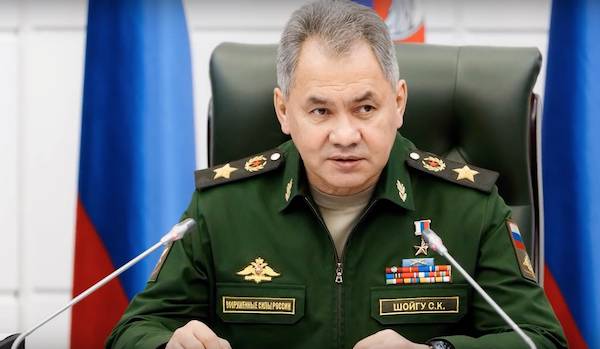
Geopolitical rivalry between major powers on the international stage is intensifying, and the risks of a military confrontation between nuclear-armed states are increasing, the Secretary of the Security Council of the Russian Federation, Sergei Shoigu, stated in an interview with TASS on January 24.
“Against the backdrop of rising tensions and the intensification of geopolitical rivalry worldwide, the risks of military confrontation between major powers, including those involving nuclear states, are increasing,” Shoigu noted.
According to him, Western countries have launched an “ideological and value-based aggression” against Russia and Belarus. They are reportedly not only trying to harm these nations through economic sanctions but are also attempting to destabilize their internal political situations.
"There are ongoing attempts to destabilize the domestic situation, undermine societal foundations, and impose an alien neoliberal ideology," the Secretary of the Security Council of the Russian Federation emphasized.
Political interests at the expense of global security
Shoigu also stressed that such actions by the West affect not only Russia and Belarus but also negatively impact the global situation as a whole.
"There is an active devaluation of international organizations such as the WTO, WHO, OPCW, etc., which are increasingly becoming political tools," he pointed out.
Attempts are being made to undermine international efforts to prevent an arms race in space and to turn outer space into a new arena for armed confrontation, he added.
"These actions are directly aimed at weakening our countries and are driven by the desire to deprive us of sovereignty, the right to freely choose our own development path, and to pursue our strategic interests," Shoigu concluded.