In a report released at a news conference in Dushanbe, the head of the Tax Committee under the Government of Tajikistan, Nusratullo Davlatzoda, revealed on February 13 that the total amount of domestic taxes used by businesses last year as exemptions reached 7.4 billion somonis (around US$680 million).
He emphasized that tax exemptions in Tajikistan are more extensive than in other countries.
It is important to note that this figure refers only to exemptions on domestic taxes, which are collected by the Tax Committee. The government also provides customs exemptions annually to entities engaged in foreign trade operations.
According to the Tax Committee, the country's national budget last year received 20.426 billion somonis (approximately US$1.9 billion) from domestic taxes and other mandatory payments.
Ineffective exemptions
In October of the previous year, the Government of Tajikistan adopted the Medium-Term Program of State Revenues for 2024-2029 and its Action Plan for 2024-2026, aimed at increasing national budget revenues.
The document's developers specifically point out that the legislation provides over 100 tax and customs exemptions to support specific sectors of the economy, but the beneficiaries do not properly report to the relevant authorities, which creates barriers to assessing the effectiveness of these exemptions.
At the same time, the authors acknowledge that "in many cases, tax and customs exemptions are not used effectively and do not contribute to the development of the industries they were aimed at; instead, they become one of the reasons for the decline in budget revenues."
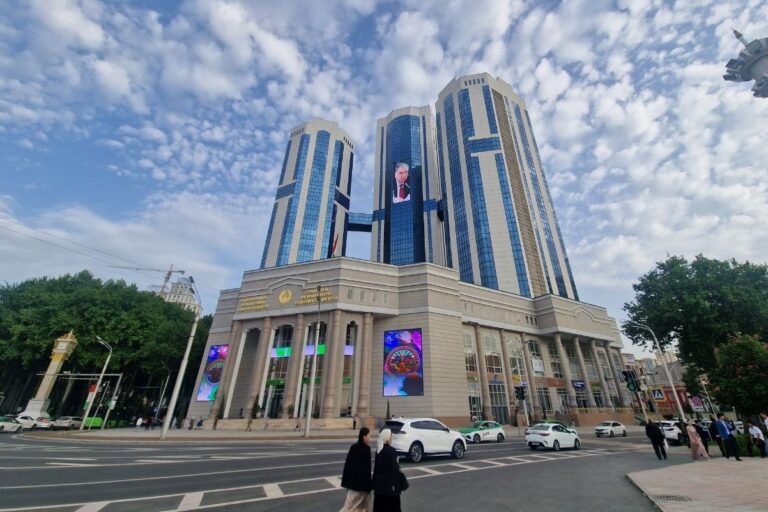
In 2025, among beneficiaries of tax incentives is the five-star Ismoili Somoni Hotel, which has been under construction in Dushanbe for nearly 19 years.
Similar tax benefits will apply to the builders of the National Theater in Dushanbe, the new building of the Ministry of Industry and New Technologies, a 30,000-seat stadium in Dushanbe, the Singapore Management Development Institute branch in Dushanbe and other projects across the capital and regions.
The VAT rate for the import, processing, and sale of products made from wheat (excluding wheat used for producing alcoholic beverages) and pasta manufactured in Tajikistan will be set at 10%, reduced from the standard VAT rate of 15%.
Equipment, special vehicles, spare parts, and buses purchased using funds from the national and Dushanbe city budgets for expanding public transportation fleets will be exempt from 50% of VAT and entirely exempt from customs duties.
The state enterprise responsible for the production, procurement, and sale of essential goods in Dushanbe will be exempt from 50% of VAT on food sales and imports (as approved by the government) and will also be fully exempt from customs duties.
Sangtudinskaya GES-1 and OJSC NBO Roghun will not accrue interest on their tax arrears resulting from electricity supplied to Barqi Tojik (the state-run energy utility).
Importers of low-sulfur fuel oil for the Dushanbe CHP plant will also receive tax relief and certain contractors involved in the Roghun hydroelectricity power project will also be granted tax incentives.
The supplier of biometric passport blanks with electronic data will be exempt from certain taxes and Tajikistan Football Federation (TFF) will benefit from unspecified tax incentives.
Suppliers of specific seeds, evergreen trees, and ornamental plants for Dushanbe parks and streets will receive exemptions and the State Materials Reserve Agency will receive tax breaks on approved imports.
The state enterprise Rohsoz (Road Construction) will be granted incentives for bitumen imports.
These measures reportedly aim to stimulate investment in key infrastructure, public services, and strategic sectors while supporting the development of Tajikistan’s economy in 2025.
Tajik experts have repeatedly spoken out against the widespread practice of granting tax incentives in the country. According to them, the practice of providing tax exemptions makes the country’s fiscal system any less fair, because due to tax benefits, some pay less than others with the same income.
The International Monetary Fund (IMF) has also recommended giving up tax exemptions.