Tajikistan's public utilities sector faces serious challenges—from aging infrastructure to a lack of investment. Many water supply, sewage, and heating systems are outdated and urgently need modernization. Access to clean water remains limited, and centralized sewage systems serve only a small portion of the population. Low tariffs fail to cover maintenance costs, and waste recycling is virtually nonexistent. The sector suffers from chronic underfunding, and investment is slow to come. Addressing these issues requires reforms, infrastructure upgrades, and innovative management approaches.
1. Aging infrastructure – A New Threat
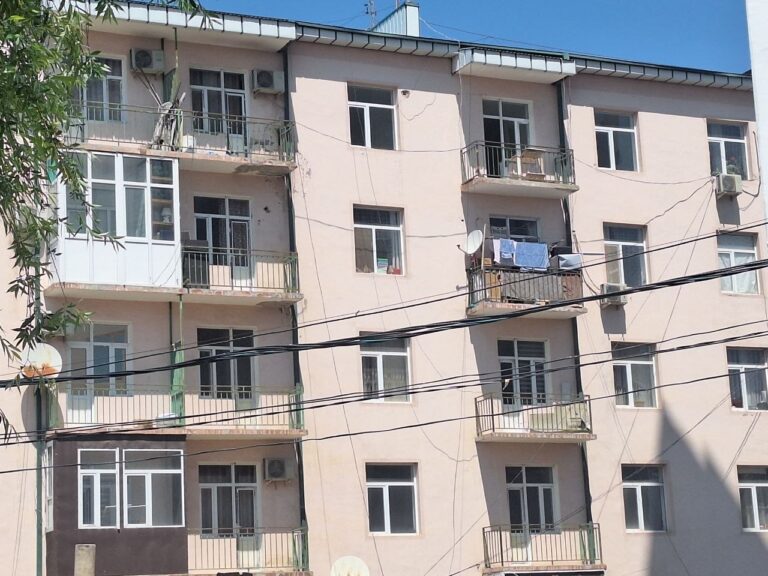
Most water supply, sewage, and heating systems in Tajikistan were built between the 1950s and 1980s. Today, more than half of them are in critical condition or require complete reconstruction.
In urban areas, 32% of utility infrastructure is deemed unfit, while in rural areas, this figure reaches 60%.
The majority of infrastructure, built in the 1970s and 1980s, requires urgent replacement and modernization.
2. A drop in the ocean: Water access becomes a challenge
Despite efforts to improve the situation, access to clean drinking water in Tajikistan remains a pressing issue.
According to the Kumitai Khojagii Manziliyu Kommunali (KMK – the public utilities committee), only 67% of the population has access to safe drinking water and proper sanitation and centralized water supply serves just over 40% of residents.
In urban areas, only 68% of water supply networks are in working condition, while in rural areas, this figure drops to 40%.
Water losses due to leaks reach 30%-40%, exacerbating the crisis.
The national strategy aims to improve water access by 2040, targeting 90% of the population with centralized water supply and ensuring direct household water access in cities and towns.
3. Sewage crisis: A looming environmental disaster
Most rural areas and even some cities in Tajikistan lack centralized sewage systems.
Only 3% of existing sewage facilities meets sanitation standards, posing serious ecological and social risks.
As of 2025, 64% of urban residents, 10% of town residents, and just 0.1% of rural residents have access to sewage systems.
In rural areas, untreated wastewater is often discharged directly into the environment, contaminating soil and water sources.
The lack of proper sewage infrastructure increases the risk of infectious disease outbreaks. The national water strategy aims to provide 50% of the population with centralized sewage by 2030 and 100% by 2040, but significant investments and better water resource management are required to achieve these goals.
4. Winter heating struggles
Centralized heating is available only in certain districts of Dushanbe, with most boiler systems operating on outdated technology. Transitioning to more efficient and environmentally friendly fuel sources is difficult due to several challenges: many central heating facilities are non-operational due to high gas prices, supply interruptions, and poor infrastructure conditions; low tariffs do not cover maintenance costs, forcing heating companies to operate at a loss; 50% of urban households rely on electricity for heating, increasing pressure on the national grid during winter; and over a third of urban families use inefficient coal or biomass stoves, leading to air pollution.
Without infrastructure upgrades and modern energy solutions, the heating crisis will continue to worsen.
5. Utility costs vs. expenses: The tariff dilemma
Despite rising electricity, equipment, and maintenance costs, water supply and waste collection tariffs in Tajikistan remain unchanged, causing major financial strain on the sector.
Current tariffs fail to cover operational costs, leading to chronic underfunding.
Utilities cannot afford to invest in equipment upgrades, pipeline repairs, or infrastructure modernization.
Until tariffs are revised to reflect actual costs, the situation in the sector will continue to deteriorate.
6. A capital-deficient system: Can reform work without investment?
Attracting domestic and foreign investment in Tajikistan’s public utilities sector remains low. Only 10% of planned investment funds have been secured for wastewater projects.
Low public purchasing power, especially in poorer regions, limits the government's ability to raise tariffs due to fear of social backlash.
Comprehensive reforms are essential, including infrastructure modernization, improved management efficiency, and stricter construction quality controls.
Tajikistan’s public utilities sector is at a crossroads. Without urgent investment and policy changes, the country risks facing an escalating crisis in water supply, sewage, heating, and waste management. The government’s ambitious long-term plans require substantial financial backing and a fundamental shift in how infrastructure projects are managed.