The official exchange rate of the Russian ruble against the Tajik somoni, set daily by the National Bank of Tajikistan (NBT), has risen by 8.6% since the beginning of this week—from 0.1221 somoni per ruble on February 24 to 0.1326 somoni on February 27.
The last time these two currencies were at a similar exchange rate was on June 9, 2023. Since then, the ruble had significantly depreciated against the Tajik currency.
Since the beginning of this year, the exchange rate of the somoni to the ruble has fluctuated within the range of 0.110 – 0.120 somoni (plus or minus).
According to NBT data, the local currency strengthened against the Russian ruble by 8.9% in 2024—from 0.122 to 0.111 somoni.
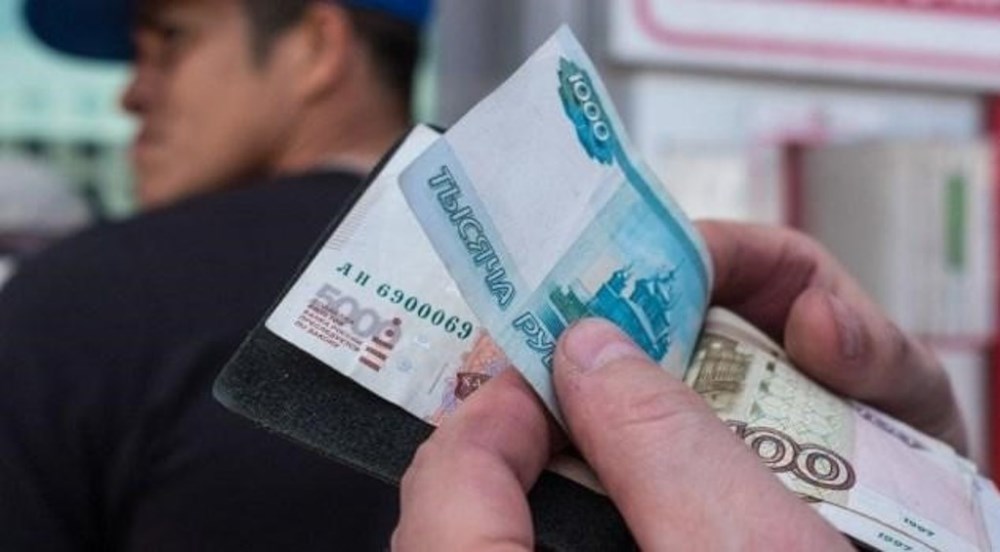
Notably, the rise in the ruble’s exchange rate benefits Tajik migrant workers’ families, as they receive remittances from Russia. At the start of the year, recipients at money transfer points were receiving 111 somonis per 1,000 rubles, whereas today they receive 132 somonis.
Since 2016, an NBT regulation mandates that rubles sent via Tajik banks must be converted into the local currency at the exchange rate on the day of withdrawal (essentially a forced currency exchange).
According to some sources, approximately 1.5 million Tajik citizens live and work in Russia.
What is happening?
The ruble's appreciation against the somoni is occurring amid a sharp rise in its exchange rate against the US dollar, which has increased by 14% since the beginning of February—from almost 100 rubles per dollar on February 4 to 86 rubles on February 27.
The US dollar has fallen below 90 rubles for the first time since September 2024.
The euro has also hit a new low since August last year, with the Central Bank of Russia setting its rate at 90 rubles on February 27—nearly 12% lower than at the beginning of February.
“Obviously, high-level politics have played a role in the ruble's strengthening. This includes the phone conversation between Russian President Vladimir Putin and US President Donald Trump, as well as negotiations between delegations of both countries in Saudi Arabia, which were well received in both Moscow and Washington,” writes Izvestia.
However, there are also purely economic reasons, says Alexander Losev, CEO of Sputnik – Asset Management, in an interview with IA Regnum.
According to him, liquidity stabilization is supporting the ruble—specifically, the fact that exporters can now conduct transactions in various currencies, including Chinese yuan, and the upcoming tax payment period in Russia.
During this period, Losev explains, exporters will convert their foreign currency earnings into rubles to pay taxes to the Russian budget, which supports the national currency's value.
Simply put, the more foreign currency in circulation, the cheaper it becomes.
Additionally, he notes that the ruble had been undervalued for some time, despite Russia maintaining a positive trade and current account balance.
What’s Next?
“In the coming months, we can expect strong fluctuations in the ruble's exchange rate, depending on new developments,” Mikhail Vasilyev, Chief Analyst at Sovcombank, said in an interview with Vedomosti.
He predicts that in the next few months, the ruble will trade within the following ranges:
- 10.9–12.6 rubles per yuan
- 80–92 rubles per dollar
- 84–97 rubles per euro
If there is progress in Russia-US negotiations on conflict resolution, he believes the ruble could strengthen further to:
- 10.9–11.6 per yuan
- 80–85 per dollar
- 84–89 per euro
Alexander Golovtsov, Chief Analyst at PSB Asset Management, suggests that if sanctions relief becomes a clearer prospect, the dollar could temporarily fall to 85 rubles due to capital inflows.
However, he adds that import growth will impact the exchange rate, causing the dollar to return to 90–95 rubles over the year or even higher.
“The balance of exports and imports remains one of the key macroeconomic factors affecting the ruble's exchange rate,” adds Vasilyev.
Alexander Potavin, an analyst at Finam, estimates that based on Russia’s trade balance and current account situation, the dollar should be closer to 100 rubles.
“The rapid increase in the money supply over the past three years will eventually weaken the ruble, as there is no positive shift in Russia's trade balance structure,” he explains.
The expert considers a return to 105–107 rubles per dollar by the end of the year a realistic scenario.