At the 58th Annual Meeting of the Asian Development Bank (ADB), the President of the ADB stated that one of the bank's key goals is sustainable energy. Specifically, the ADB is ready to allocate up to $10 billion for the creation of the ASEAN Transnational Power Grid. What is this grid, and why is it so important?
The ASEAN Power Grid is an ambitious project to create a unified regional energy network across 10 Southeast Asian countries: Brunei, Cambodia, Indonesia, Laos, Malaysia, Myanmar, the Philippines, Singapore, Thailand, and Vietnam. These countries are members of the Association of Southeast Asian Nations (ASEAN).
The main idea of the project is to establish an interconnected power grid that will allow countries to exchange electricity, improve supply reliability, reduce costs, accelerate the transition to clean energy sources, and ensure resilience to external shocks, including climate change.
The project started in the 1990s, but its active implementation has accelerated in recent years with the support of the Asian Development Bank and other international partners.
"We are at the forefront of the energy revolution thanks to initiatives like the ASEAN Power Grid, which will modernize and unite the energy systems of rapidly developing economies in Southeast Asia. The ADB is ready to allocate up to $10 billion to turn this vision into reality," said ADB President Masato Kanda at the opening ceremony of the 58th Annual Meeting.
Currently, there are 13 cross-border transmission lines with a total capacity of about 5.2 gigawatts. For example, Laos, which is actively developing hydroelectric power, exports electricity to Thailand, Malaysia, and Singapore. In turn, Thailand and Malaysia are connected through bilateral energy agreements and maintain stable energy exchanges.
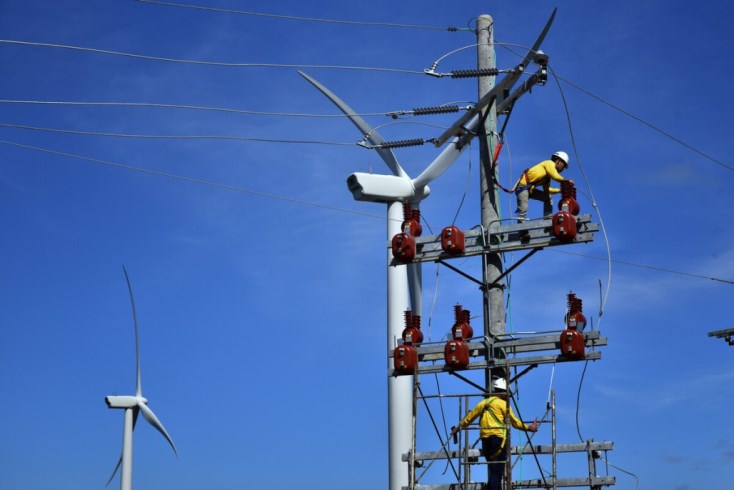
This grid is also important from an environmental perspective: it allows countries with high potential in renewable energy—such as solar or hydroelectric power—to export clean energy to regions where its production is limited. As a result, even small countries with limited resources gain access to affordable and sustainable energy.
The ASEAN Power Grid is being developed in stages. The second phase is currently underway, which involves the development of multilateral energy connections between countries, as well as the modernization of infrastructure and management systems. One of the next steps will be the implementation of the Nusantara Grid project in Indonesia, which will connect the energy systems of different islands in the country—this is particularly important for Indonesia as the largest archipelagic state in the region. Furthermore, the future plan includes expanding the network to 27 physical connections covering the entire region.
However, the project faces a number of challenges. The main issue is the lack of a single regulatory body: each country has its own laws, tariffs, and technical standards in energy. This complicates coordination and synchronization of the power systems. Additionally, significant investments in infrastructure—transmission lines, substations, and management systems—are required, which calls for joint efforts from governments, the private sector, and international organizations.
Despite these challenges, the ASEAN Power Grid is viewed as a key to sustainable economic growth in the region. In the long term, it could become part of a broader initiative—the Asian Supergrid—that would unite the energy systems of East and South Asia, including China, India, Japan, and possibly Russia. This would pave the way for the creation of a unified energy space, enabling the exchange of surplus "clean" energy on an intercontinental level.