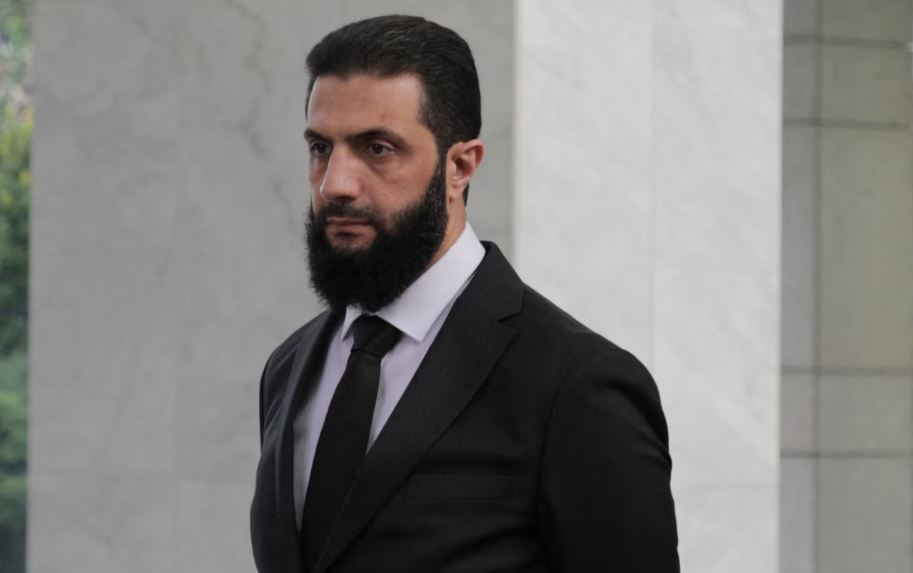
The new Syrian authorities under the leadership of Ahmad al-Sharaa are confidently moving toward international recognition. The first countries to establish active relations with the Islamists who overthrew Bashar al-Assad’s regime at the end of 2024 were Middle Eastern states. Russia, seeking to maintain its military bases, has also started exploring dialogue options. In May, the European Union and the United States joined the process of rapprochement with the Syrian leadership, even beginning to ease sanctions against Damascus.
This recognition is taking place while the Syrian government controls only part of the country and has yet to ensure full stability. Nikita Smagin, an orientalist and author of the Telegram channel “Islamism from a Foreign Agent,” analyzes why al-Sharaa’s figure has become acceptable to many global players who previously competed for influence in Syria, as noted in a Meduza article.
How al-Sharaa broke Syria’s isolation
After Bashar al-Assad’s overthrow, it was clear that Syrian Islamists would not remain isolated. Turkiye, which long supported the group Hayat Tahrir al-Sham (HTS), quickly established contacts with the new authorities. However, Ahmad al-Sharaa did not become a Turkish puppet and sought support from other countries.
In February 2025, al-Sharaa visited Saudi Arabia, and prior to that, the Emir of Qatar came to Syria. This was followed by a visit to Turkey. All these steps were made in his capacity as interim president, since full elections could take up to five years.
Russia also quickly initiated dialogue with Damascus, despite its previous support for Assad and his refuge in Russia. The Gulf states, having lost hope of changing the regime, now back the new authorities, seeing in this an opportunity to weaken Iran’s influence in the region.
Moscow, in turn, recognizes the de facto power on the ground and aims to maintain its military bases in Syria as footholds in the Middle East and Africa.
The subsequent involvement of the West was less predictable. Initially, Europe and the U.S. hesitated: whether to recognize the new authorities who overthrew a hostile regime or to consider the terrorist past of HTS. By spring 2025, signs of a policy shift emerged.
In March, Germany reopened its embassy in Damascus after a 13-year hiatus.
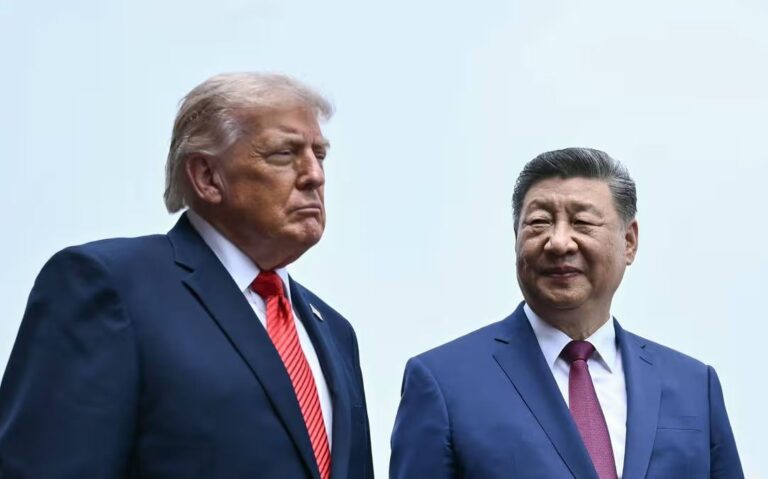
In May, Donald Trump met with al-Sharaa in Saudi Arabia during his Middle East trip. Previously, the U.S. had offered US$10 million for the capture of the former militant, but now the president shook his hand. Trump also announced the lifting of sanctions against Damascus, soon followed by the European Union with plans to remove restrictions.
In the same spirit, Israeli media reported that the government positively received Trump’s initiative to lift sanctions on Damascus. Benjamin Netanyahu’s government is now ready to normalize relations with Syria within the framework of the Abraham Accords.
What made al-Sharaa acceptable to global players
Al-Sharaa became a convenient figure for all global powers for several reasons.
First, his group, Hayat Tahrir al-Sham, differs from radical Islamists such as the Taliban or ISIS because al-Sharaa began pragmatic deradicalization and renounced violent methods, reducing international pressure and enabling dialogue with the West and regional actors.
Second, for the U.S. and Europe, weakening Russia and Iran’s influence in Syria is crucial. Al-Sharaa, hostile to Moscow and its allies, could help push these players out of the region. This makes normalization with Damascus a strategically beneficial move for the West.
Third, amid endless conflicts in the Middle East and the Russia-Ukraine war, world leaders are increasingly embracing realism in foreign policy, where priorities are balance of power and national interests, rather than liberal ideals and human rights. Donald Trump symbolizes this approach, willing to support influential, though controversial, regional actors to achieve his goals.
Thus, a combination of al-Sharaa’s pragmatism, the strategic interests of global powers, and a shift in global political approaches has made him a figure convenient and acceptable to many international forces.
Why current legitimization of Syrian authorities does not guarantee stability
Despite international successes, the position of the new Syrian authorities remains extremely unstable. The main threats come not from outside, but from internal conflicts. In March, an Alawite uprising in Latakia was brutally suppressed with heavy casualties — around 1,500 dead. In April, clashes erupted with the Druze, another religious minority, whose spiritual leader called on international forces to deploy troops.
Ethno-religious contradictions are aggravated by a severe economic crisis: since 2010, the economy shrank by 85%, GDP fell from US$67.5 billion to US$9 billion, and inflation and unemployment continue to rise.
After Assad’s fall, Russia stopped grain supplies, and Iran ceased fuel deliveries, worsening the situation further. There is little information about the real situation, but it is known that at the start of 2025, the average salary of a civil servant was about US$20.
Even countries supporting the new regime are cautious: the U.S. is reluctant to open its embassy in Damascus, fearing a “potential collapse and full-scale civil war,” as State Department head Marco Rubio noted.
Unlike Afghanistan, where the Taliban control the country but are not recognized by the West, Syria is receiving support from Western and Middle Eastern countries despite its instability. There are doubts about the effectiveness of this approach, as the fall of Islamists does not guarantee the rise of more moderate forces.
However, al-Sharaa shows willingness to compromise both domestically and internationally, including renouncing radical rhetoric toward Israel and readiness for peaceful coexistence. This gives normalization supporters hope for change.
If al-Sharaa maintains power, he could become one of the most successful Islamist politicians in recent years, progressing from a radical militant to a pragmatic leader.
His model — seizing power through armed struggle followed by moderation — may become an example for other radicals. Then, instead of hunting him down, world leaders will welcome him as a partner.