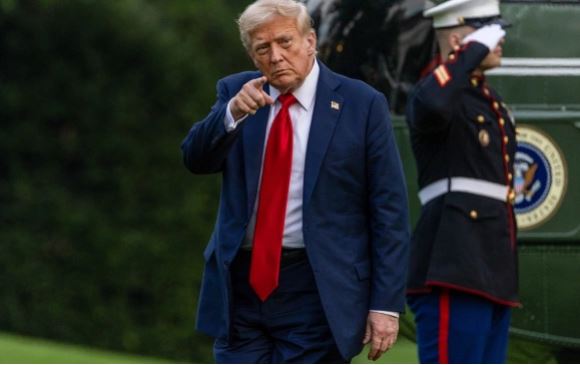
The United States is set to introduce new tariffs of 10-15% on goods imported from more than 150 countries, President Donald Trump announced in an interview with Real America's Voice, as reported by Bloomberg.
“We are going to publish a single rate for the remaining (non-major countries), almost 150 countries. We’ll just put out one number, and it will probably be 10 or 15 percent. We haven’t decided yet; it’s a big deal,” Trump said.
While the exact list of affected countries remains unspecified, letters notifying certain nations have already been sent, and others will receive a general notification indicating the tariff rates. The new tariffs are expected to come into effect on August 1st of this year.
Trump also mentioned the possibility of making separate agreements with individual countries if they offer more favorable conditions.
Earlier, on April 2, the U.S. president had announced the introduction of extensive tariffs on goods from 185 countries and territories. Trump justified this new tariff policy as a measure to "protect American industry, reduce the trade deficit, eliminate unfair trade practices, and restore the U.S. economic sovereignty."
Trump has argued that America’s trade partners are profiting from the U.S. by selling more goods to the U.S. than they buy from it, while their tariffs are higher than America’s.
Initially, basic tariffs of 10% were introduced for approximately 160 countries and territories, including Tajikistan, set to take effect on April 5. For 27 countries, higher tariffs exceeding 20% were planned, with these tariffs set to start on April 9th.
Among the countries facing these higher tariffs are:
- China: 125% (up from an initial 84%, then 104%)
- EU: 20%
- Japan: 24%
- India: 26%
- Vietnam: 46%
- South Korea: 25%
- Kazakhstan: 27%
However, on April 9h, President Trump decided to pause the implementation of the higher tariffs on all countries for three months.
Most Central Asian nations are among the countries facing the lowest tariff rate of 10%, mainly due to the small volume of goods exported from the region, primarily raw materials.
Kazakhstan is the only country from the region that initially faced a higher tariff (27%)—although this has now been temporarily paused. Kazakhstan is a relatively significant trading partner of the U.S. among Central Asian countries.
According to the Agency for Statistics under the President of Tajikistan, a two-way trade between Tajikistan and the United States in year valued at US$147.3 million, which accounted for 1.6% of Tajikistan’s external trade turnover. This consisted of Tajikistan’s exports to the United States estimated at just US$15.3 million and Tajikistan’s imports from the United States worth US$132 million US$1.554 million.
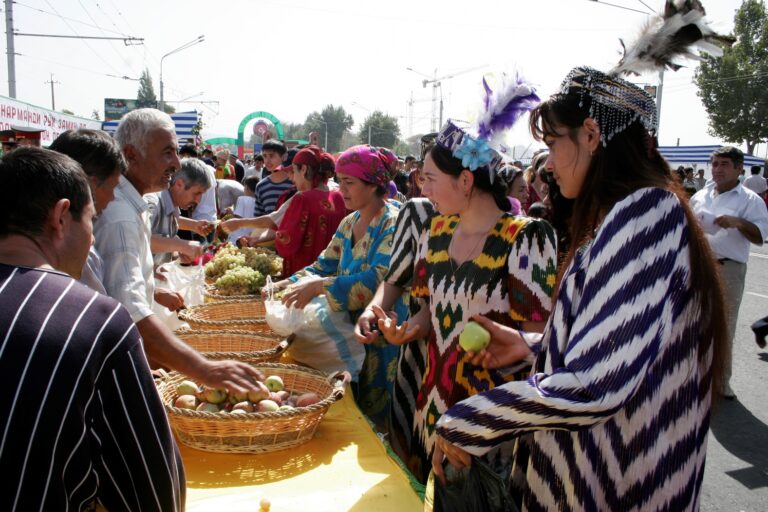
Tajikistan’s exports to the United States consist mainly of small quantities of natural juices, dried fruits, and some mineral products (raw materials).
Earlier, the American publication Defense News reported that the U.S. primarily imports antimony from China, with smaller volumes coming from Russia, while Tajikistan is strengthening its position as the world’s third-largest supplier of antimony.
The article highlighted that antimony is crucial for the U.S. defense industry, being used in the cores of bullets, shells, and even nuclear weapons, as well as for the production of other military equipment such as night vision devices.