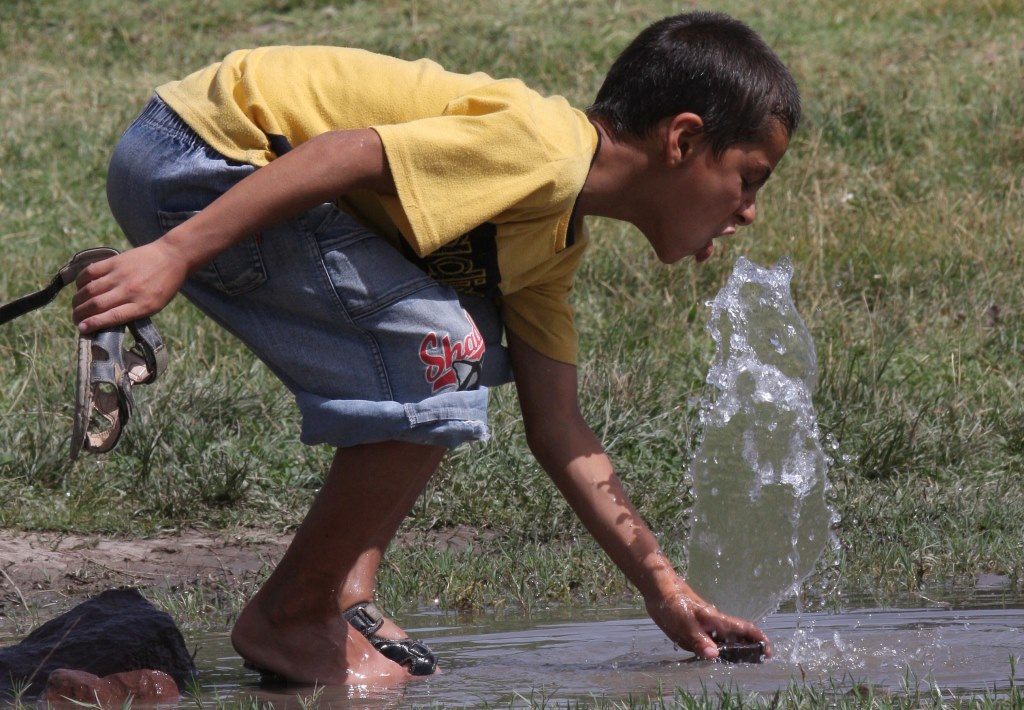
45 degrees in the shade, melting asphalt and nights without respite – Tajikistan has recently faced unprecedented heat, which, according to climatologists, is becoming the new normal. While the townspeople complain about the scorching heat, experts warn: This is not a temporary inconvenience, but a constant challenge that requires urgent adaptation of cities.
Unbearable heat
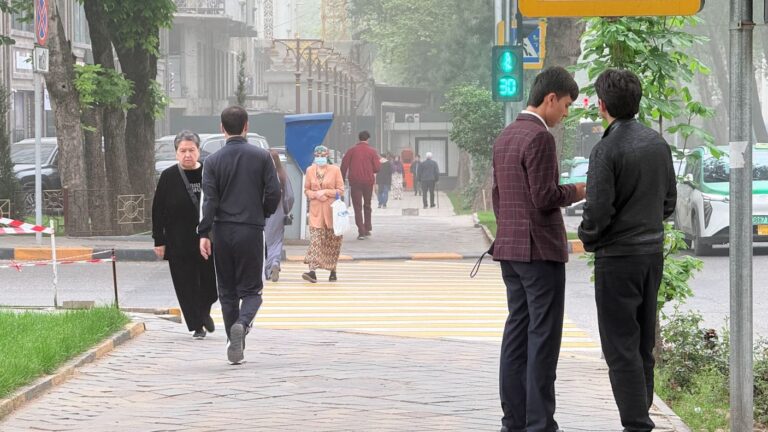
"It feels like a cauldron that is heating up has been covered with a lid, and we are actually stewing in it," Zebo Tadjibayeva, a resident of the capital and editor–in-chief of Your.tj, describes the heat situation in Dushanbe.
"Daytime temperatures over forty degrees are maintained throughout the week. And even at night there is no respite," Musavvara Shukurova, another Dushanbe woman, confirms her words. "I've lived here all my life, but I've never experienced such prolonged and intense heat before."
In the second half of July, Tajikistan was in the grip of an abnormal heat wave – incandescent air masses brought unprecedented heat to the republic. According to the Agency for Hydrometeorology, the thermometer in the southern regions reached 46 °C.
"We seem to be used to the heat in Kulyab, but lately it's been like being in a frying pan," Imomali, an elderly taxi driver from Kulyab, smiles tiredly. – It's better not to go outside in this heat. I recently left the car in an open place, returned an hour later, could not get into the cabin – it was so hot, even a plastic water bottle melted inside. Why, sometimes our asphalt melts."
In Khujand, located on the other side of the republic, the situation is no better. "It's almost impossible to walk in the city on such days: the street space is literally on fire," says local journalist Aliya Khamidullina.
Residents of Tajikistan's cities, whether in the north or south of the country, note that unprecedented heat now occurs almost every summer. Even in Khorog, the administrative center of the Gorno–Badakhshan Autonomous Region, located at an altitude of over 2,000 meters above sea level, there have been many days over the past couple of months when the temperature reached +35°C.
"This is too much for us! – Shakhnoza Fazlonshoeva from Khorog is indignant, – In recent years the heat in Khorog has become especially noticeable. There used to be rains in June, they cooled the air, but now the amount of precipitation is decreasing every year."
This year, the heat has been the topic of constant conversations between friends and neighbors since May, and the media has not had time to come up with new epithets: following the words of forecasters about record temperatures, "abnormal", "extreme", or even "murderous" heat flashes in the headlines.
The new climatic norm
"The heat has changed. It used to be seasonal, but now it has become aggressive and unpredictable. I am sure that these are not just the feelings and assumptions of ordinary people," says Aliya Khamidullina. And she's absolutely right about that.
Abnormal heat, previously a rare phenomenon, is now recurring more often, becoming an alarming trend. Climatologists note that such heat waves are no longer an exception, turning into a new climatic reality in the region.
"The weather is changing every year and it is getting noticeably hotter. The last 3-4 years have been especially hot. Summers used to be more temperate. I think this is the result of climate change," says Lobarkhon Sydykova, who lives in Bokhtar.
The new climatic norm
"The heat has changed. It used to be seasonal, but now it has become aggressive and unpredictable. I am sure that these are not just the feelings and assumptions of ordinary people," says Aliya Khamidullina. And she's absolutely right about that.
Abnormal heat, previously a rare phenomenon, is now recurring more often, becoming an alarming trend. Climatologists note that such heat waves are no longer an exception, turning into a new climatic reality in the region.
"The weather is changing every year and it is getting noticeably hotter. The last 3-4 years have been especially hot. Summers used to be more temperate. I think this is the result of climate change," says Lobarkhon Sydykova, who lives in Bokhtar.
Scientific studies show a significant increase in the number and duration of heat waves in Central Asia, including Tajikistan. Moreover, the increase in the average annual temperature in the region is more intense compared to the global trend.
According to available meteorological data, over the past seven decades, the average annual temperature in Dushanbe has increased by 1.5°C, in Khujand – by 1.7 °C, in Bokhtar the increase was 2.3°C.
"According to our forecasts, the number of consecutive hot days (with temperatures above 30°C) in Tajikistan will increase significantly on average in the coming decades. If there are currently an average of about 16 days per year, then by 2050 this figure may reach 25 days, and by the end of the century it may exceed 45," says Yuli Didovets, a hydrologist at the Potsdam Institute for the Study of Climate Change (PIK).
According to the estimates of the National Meteorological Service, by 2030 (compared with the base period of 1961-1990), a further increase in average annual temperatures of 0.2–0.4 °C is expected in most regions of the country. This trend suggests the establishment of new temperature records and an increase in heat waves.
"Thus, Tajikistan will face a marked increase and increase in extreme heat periods in the coming decades. This highlights the need for timely adaptation measures, both for the population and for urban infrastructure," concludes Didovets.