Hundreds of thousands of migrant children in Russia left outside school system, HRC head warns

Valery Fadeyev, Chairman of the Presidential Council for Civil Society and Human Rights (HRC), has raised serious concerns over the exclusion of hundreds of thousands of migrant children from Russia’s school system.  His remarks were shared by the HRC’s official Telegram channel. Fadeyev stressed that this growing issue cannot be ignored, urging authorities to find […]

Asia-Plus

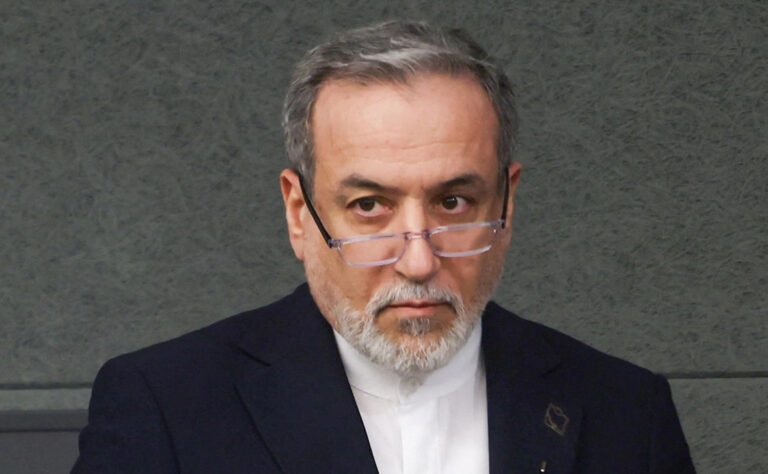
Valery Fadeyev, Chairman of the Presidential Council for Civil Society and Human Rights (HRC), has raised serious concerns over the exclusion of hundreds of thousands of migrant children from Russia’s school system.  His remarks were shared by the HRC’s official Telegram channel.

Fadeyev stressed that this growing issue cannot be ignored, urging authorities to find organizational solutions.  He emphasized the need for early preparation of children planning to move to Russia and assistance in learning the Russian language.

“Sometimes in Russia, we wave it off — as if to say, let them live however they want.  But that’s wrong. We cannot turn a blind eye.  We must work together to find solutions. If parents intend to bring their children here, then preparation must begin in advance.  And if that’s not possible, then we need to figure out how to teach them Russian once they arrive.  These are complex organizational challenges,” he said.

He also called for the development of effective mechanisms for teaching Russian to migrant children—either in their countries of origin or, in exceptional cases, within Russia itself.

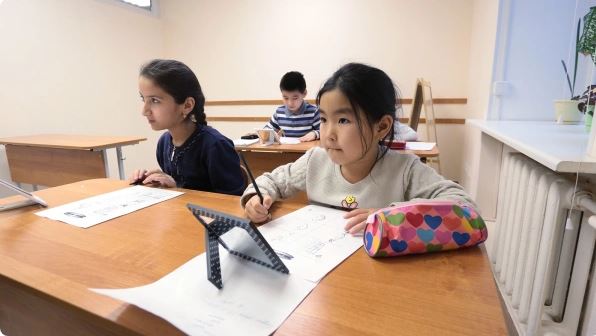
According to the Russian Ministry of Education, 179,600 foreign children were enrolled in Russian schools in 2024.  However, data from the Interior Ministry as of August 2025 indicates that more than 680,000 foreign minors are currently residing in the country—of whom approximately 159,000 are listed in the national registry of monitored individuals.

A new law that came into effect on April 1, 2025, mandates Russian language testing for all migrant children as a prerequisite for school enrollment.

Yet, the implementation has proven problematic. According to the Federal Service for Supervision in Education and Science (Rosobrnadzor), between April and August, 23,600 foreign children submitted applications to enroll in school. Only 8,200 were permitted to take the required language test.

The majority of the remaining applicants encountered issues with documentation. Authorities reported that approximately 87% of migrant children were unable to begin schooling due to not meeting the legal requirements.


Join us on social media!

Article translations:

Related Article

Оби зулол
Оби зулол

Most Read

Recent Articles

The only GPW veteran in Dushanbe allocated more than 80,000 somoni

The mayor's office of Dushanbe allocated him 25,000 somoni.

GITEX AI Kazakhstan 2026: how Almaty became the main AI hub of Central Asia

More than 300 companies and startups, over 200 speakers and 100 investors from 50 countries — the region is entering the global stage.

A trade and economic park to be built at the border junction of Tajikistan, Kyrgyzstan, and Uzbekistan

President of the Kyrgyz Republic Sadyr Japarov familiarized himself with the project.

A project to protect soil from degradation to be developed in Central Asia

The initiative is of great significance for the mountainous countries of the region, including Tajikistan.

Mudslide, death, and destroyed homes: hundreds of families in Tajikistan left homeless

A correspondent from "Asia-Plus" visited Kulob and spoke with the families of those who died and were affected by the disaster.

Spring 2026 bright event: new issue of VIPzone now on sale

This issue is about people and ideas that change everything: from business and investments to fashion, food, and urban environment.

Godfrey Sullivan: “Tajikistan is a promising market for Visa to develop digital payments”

The Vice President of Visa explained why Tajikistan is becoming a promising market for digital payments and how artificial intelligence is influencing the future of finance.

Seven students in Dushanbe were threatened with expulsion for arriving at universities in personal cars

The materials for each case have been sent to the Ministry of Education and Science for appropriate actions.

India’s blockchain push and lessons for the global south

The Indian Government has started pushing aggressively its agenda...

India’s blockchain push and lessons for the global south

The Indian Government has started pushing aggressively its agenda...