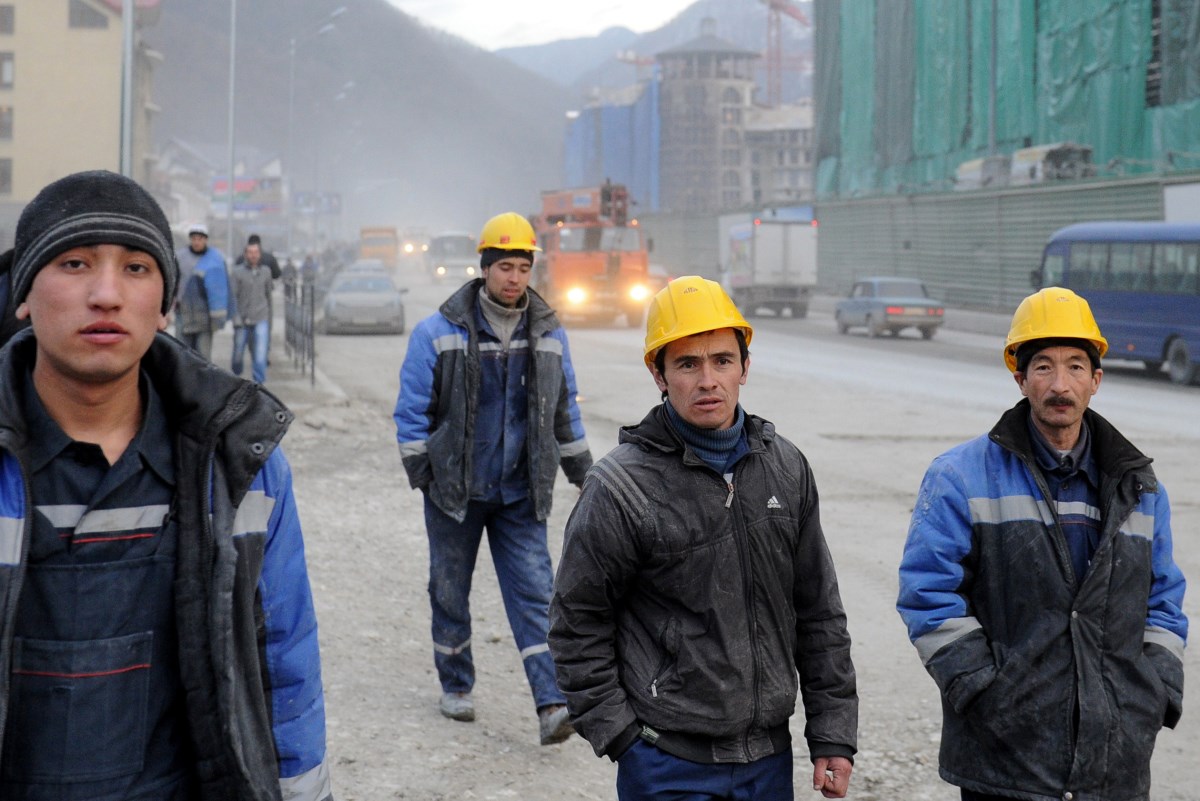
Tajikistan is one of the most remittance-dependent countries in the world. About one-third of the country’s gross domestic product (GDP) comes from its citizens working abroad, primarily in Russia.
Migrant workers, primarily in Russia, send home money that forms a significant portion of national GDP—between 30% and 45% in recent years. For many Tajik families, these remittances are a financial lifeline. However, such dependence on labor migration creates long-term vulnerabilities, particularly for families left behind. It also makes the national economy susceptible to external shocks, such as economic turmoil in Russia.
According to the World Bank, in 2024, remittances sent by labor migrants to the country totaled $5.8 billion—accounting for 45.4% of the national gross domestic product. This is the highest figure in the world in relative terms.
Second on the list is the Pacific island nation of Tonga, where remittances make up 38.2% of GDP. Other developing countries with similarly high reliance on migrant transfers follow.
Remittances play a critical role in Tajikistan’s economy, supporting:
· Domestic consumer demand — funds received from migrants are used to pay for utilities, goods, education, and healthcare.
· Covering the trade deficit — imports are largely paid for using foreign currency sent by migrants.
· Increasing tax revenues — remittances stimulate economic activity, generating income for businesses and, in turn, taxes for the state.