The International Atomic Energy Agency (IAEA) has expressed concern over the condition of uranium tailings sites in Tajikistan, warning of a serious lack of funding for their remediation. The warning is contained in the agency’s new Strategic Programme Document published in January 2026.
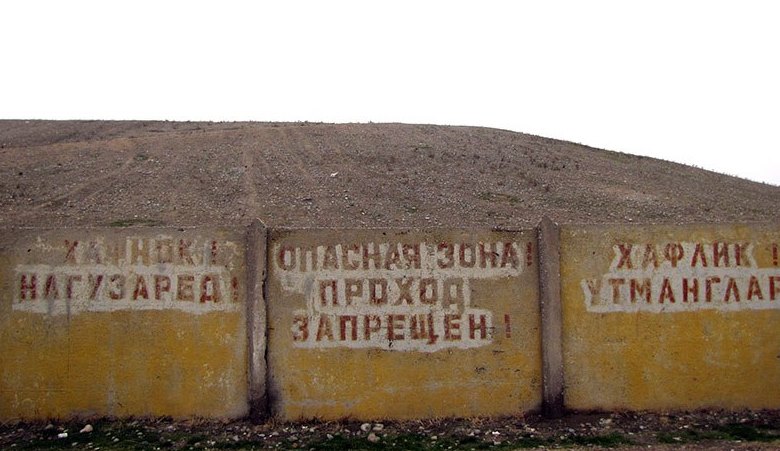
According to the IAEA, 10 uranium tailings facilities remain in Tajikistan’s Sughd province, containing approximately 55 million tons of radioactive waste. The agency has extended its cooperation with Tajikistan, Kyrgyzstan, and Uzbekistan on the cleanup of uranium legacy sites until 2030, but funding remains the main challenge.
The IAEA estimates that about €210 million is required to fully remediate uranium legacy sites across Central Asia. To date, donors have provided only €113 million, leaving a funding gap of nearly €100 million.
The agency notes that radioactive waste in Tajikistan is spread over roughly 170 hectares, with a total radioactivity exceeding 6,500 curies. These large volumes of hazardous materials remain relatively safe only as long as containment structures remain intact.
Deterioration of protective infrastructure, landslides, erosion, or the leaching of radioactive substances into soil and water could cause serious harm to public health and regional ecosystems. The most problematic sites are located near the towns of Istiqlol (formerly Taboshar), Buston (formerly Chkalovsk), the settlement of Adrasman, and areas surrounding Bobojon-Ghafourov district.
The IAEA emphasizes that without additional investment—particularly from the European Bank for Reconstruction and Development (EBRD)—the completion of key remediation projects in Tajikistan remains uncertain.
A Soviet-era uranium legacy
Tajikistan’s uranium legacy dates back to intensive uranium mining and processing that began in the 1940s at the Taboshar and Adrasman deposits. Between 1945 and 1993, more than 55 million tonnes of radioactive waste accumulated in the country.
Following the closure of mining operations, Tajikistan was left with abandoned mines, underground workings, waste rock dumps, and tailings facilities, many of which were constructed without consideration for seismic, hydrological, or climatic risks.
The first major phase of remediation was completed in Taboshar in 2023. Four tailings facilities and the so-called “Yellow Mountain” were stabilized, reducing waste volumes by 7.6 million tonnes and shrinking contaminated areas by 57.6 hectares.
Even so, only about 17.5 percent of the total uranium waste has been remediated. Tens of millions of tons of radioactive materials across 123 hectares still require rehabilitation, along with larger tailings sites where work has yet to begin.
Tajikistan has reached an agreement with Russia to continue remediation work between 2025 and 2028. Russia will allocate 1.563 billion rubles to clean up tailings in Adrasman and a waste dump at Workshop No. 3 at the Taboshar site. These funds will be used to isolate radioactive waste and reduce environmental risks in the most critical areas.
However, the bulk of tailings facilities and the most hazardous sites still require substantial investment and international donor involvement. Experts identify the first through fifth stages of the Taboshar waste dumps, underground tunnels and mines, and the Degmay tailings facility—containing about 36 million tons of radioactive waste—as particularly vulnerable. These sites are highly sensitive to flooding, landslides, and the failure of aging dams and are included in the priority remediation list.
What has been achieved so far
Since 2010, Tajikistan has actively worked with international partners to address its uranium legacy, but financing for large-scale projects has progressed more slowly than needed.
More than 17 percent of the most hazardous sites have been rehabilitated under a CIS interstate target program. However, another key financial instrument—the EBRD-managed Environmental Remediation Account for Central Asia—has yet to become fully operational for Tajikistan.
The Ministry of Industry and New Technologies says the launch of this mechanism has been delayed for objective reasons. Authorities previously indicated that funds were expected by the end of 2025, which would allow new remediation projects to move forward.
In February 2025, Tajikistan approved a new national program for uranium tailings remediation for 2025–2030, along with an action plan for 2025–2027. These documents cover the full cycle of work, from improving regulatory frameworks to post-rehabilitation monitoring of the sites.