Amir Kholmatov doesn’t paint in a studio or exhibition hall. His canvases are stones, his audience is made up of random passersby, and the themes for his artwork stem from fairytales, memories, and conversations with local residents. The artist intentionally steps away from the traditional art format and seeks to create a dialogue with those who rarely visit galleries.
We traveled to the Asht district, Amir's hometown, to see how art emerges on this unconventional canvas.
Why stones?
Amir’s decision to paint on stones came to him only recently. After returning to Tajikistan following a long period abroad, he found himself undergoing an internal reevaluation. Not only had his living situation changed, but his understanding of himself, his identity, and how and what he wanted to express as an artist also evolved.
Drawing had accompanied Amir since childhood. It began with simple sheets of paper, then moved to canvases. Although there were no artists in his family, art was long considered a frivolous pursuit. Therefore, Amir received his degree, with honors, in a completely different field—he became a physical education teacher.
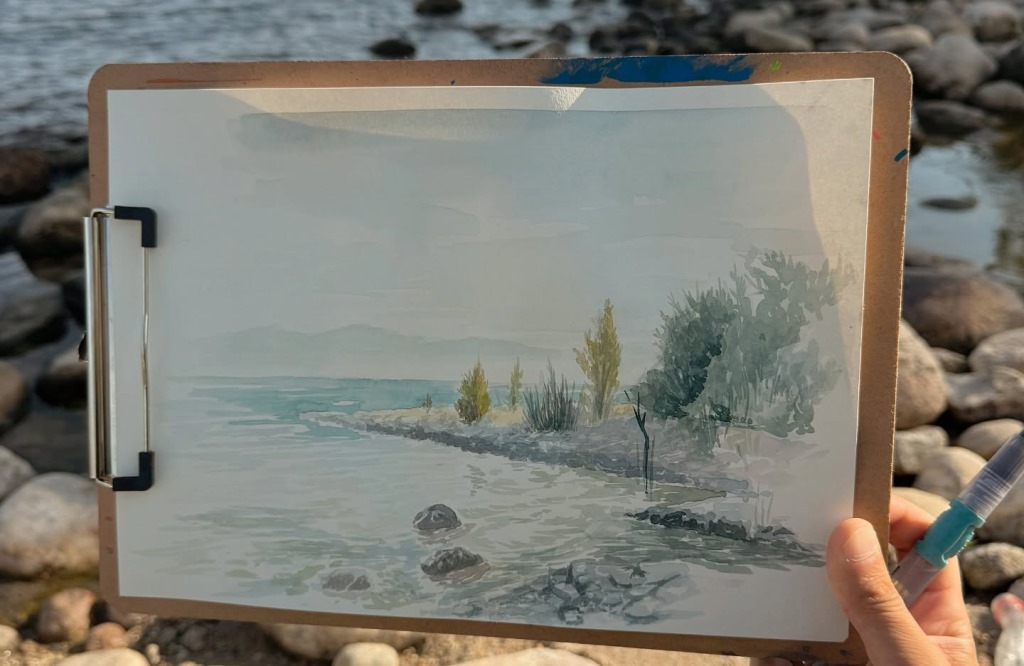
After university, he tried various career paths but never stopped drawing. He began attending art exhibitions, quickly noticing a recurring pattern: the same people—those already involved in the art world—kept showing up.
"If we create art for someone but those people don’t come, then something’s not working. For example, exhibitions about violence—the very people these projects are intended for rarely attend. This raises the question: How can we engage with the audience?" Amir reflects.
The answer turned out to be surprisingly simple—he would go directly to the people. Thus, the idea to paint on stones was born. This choice was not accidental, as painting on stones is one of the oldest forms of art, dating back to petroglyphs.
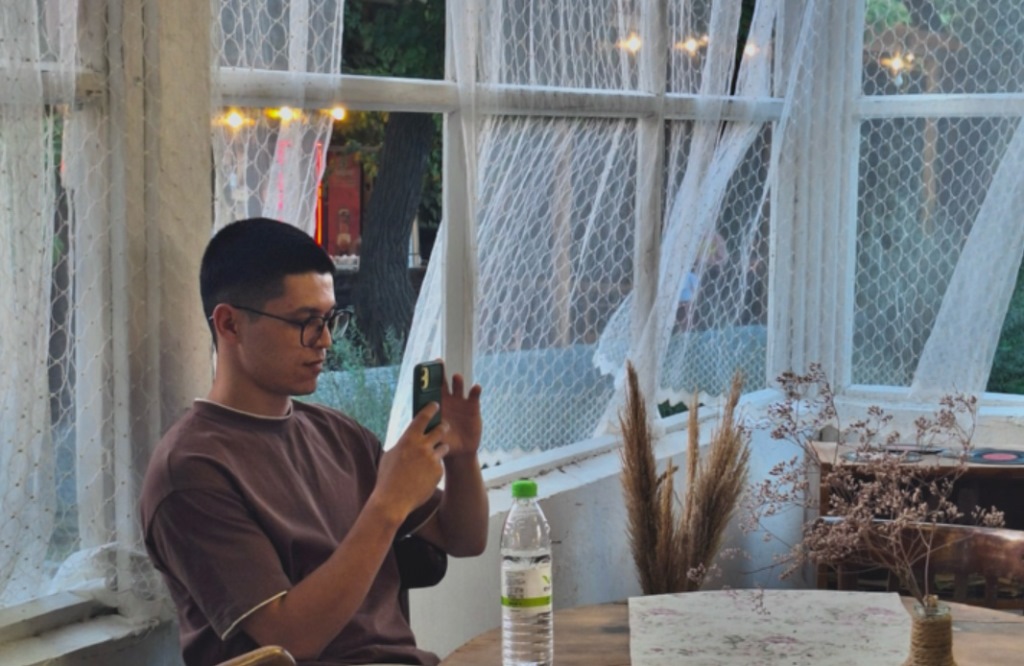
Moreover, stones belong to no one. They are often overlooked, but once an image appears, they start to attract attention.
"Some stop, some ask questions, some don't understand at first but later start thinking about it. The stone seems to belong to no one, but someone will always come over and ask, 'Why are you doing this?'" Amir says.
When fairytales reach the people
Amir painted his first stone artwork relatively recently, when he began working on a project centered around fairytales.
"It’s through fairytales that children learn about good and evil, responsibility, and mutual support. It’s a universal language understood by people of all ages and viewpoints," he explains.
Before starting a new piece, Amir always speaks with local residents, asking about the stories they grew up with, the fairytales their parents and grandparents told them, and the oral traditions passed down through generations.
The artist’s goal is to remind people that fairytales used to be an important part of life but are slowly disappearing today.
"Sometimes, I feel old-fashioned with these eternal truths—about honor, courage, responsibility. But that’s exactly what fairytales teach. And nowadays, it seems like we live as if no one owes anything to anyone—neither parents to children, nor society to individuals," Amir reflects.
In a short time, Amir has worked in various locations. One of the most memorable pieces was created in Hisor, where he painted a local legend on a large stone that the community believes to have healing powers. Women with children gather there every Wednesday.
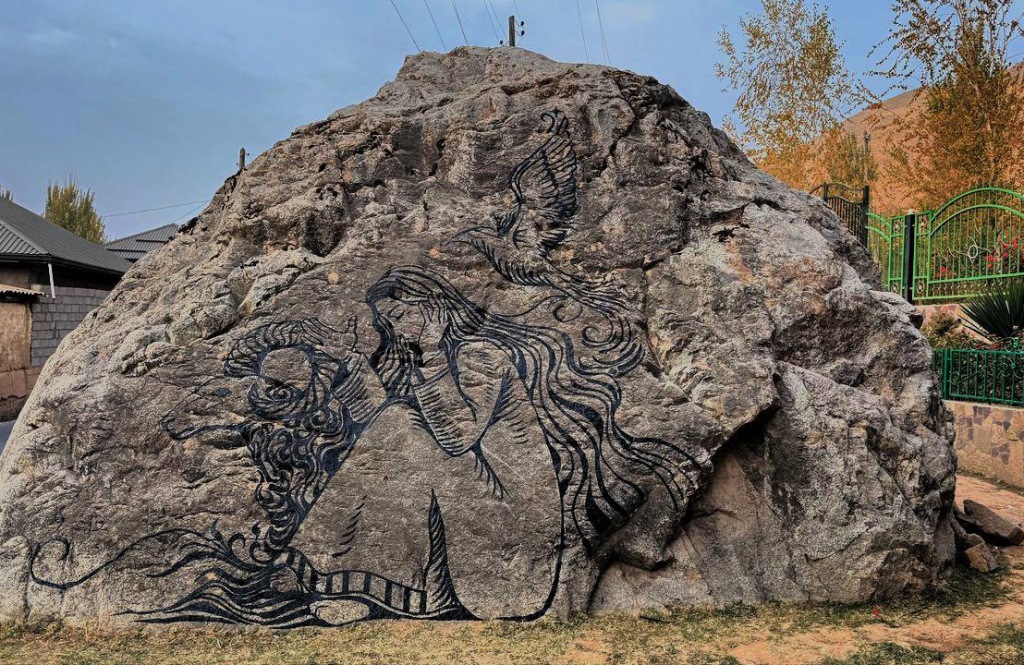
Despite the sacred nature of the stone, the head of the mahalla allowed Amir to paint on it, and he depicted a girl from a local legend. Later, he painted the famous Hisor goat on the same stone.
"The most touching part is when children approach and ask why it's okay to paint on stones. It’s a very important question because we need to understand where the line between art and vandalism is drawn. To work in a public space requires responsibility. Before painting on stones, I ruined tons of paper to make sure I was doing the right thing," Amir says.
For his stone paintings, Amir uses regular enamel or acrylic, which ensures the artwork lasts for years, even through rain and snow.
Amir dreams of working with stones in the picturesque mountain valley of Childukhtaron, a place steeped in legends.
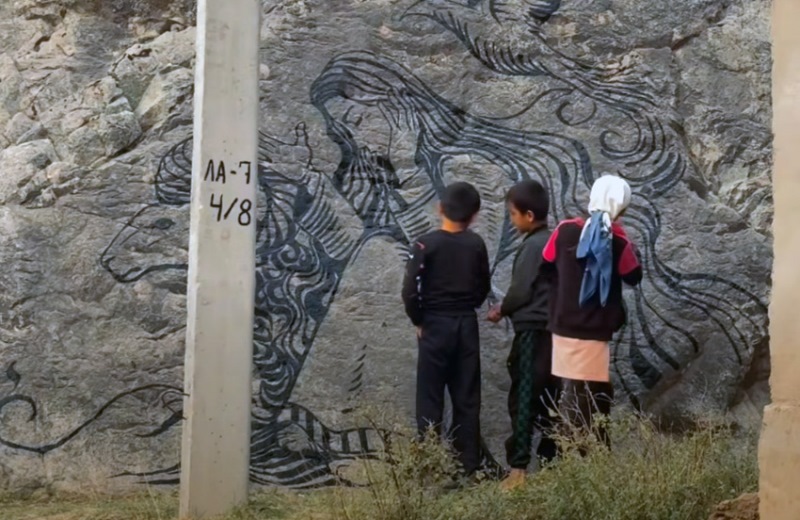
“The weeping willow tales”
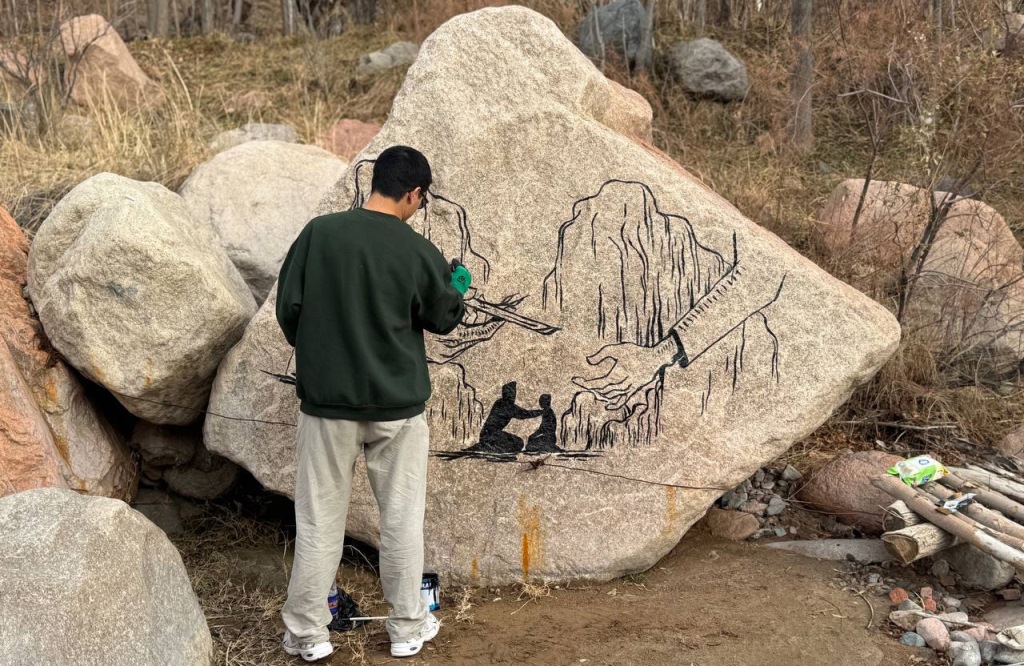
This time, we found Amir working in his hometown of Asht. He chose his stone from among the many boulders scattered across the dried-up wadi near the village of Dahana.
This area holds memories of a tragedy from the late 1990s when a powerful landslide caused by the floods nearly destroyed the village. People died, homes were ruined, and for the locals, these boulders serve as a constant reminder of that horrific event.
The subject for his artwork was an essay titled "Qissahoi Majnunbed" (“Tales of the Weeping Willow”) by the famous Asht journalist and writer Solehomoh Ramhatulloyeva, who wrote extensively about women's lives and advocated for their rights. She passed away at 48, and the street where she was born now bears her name.
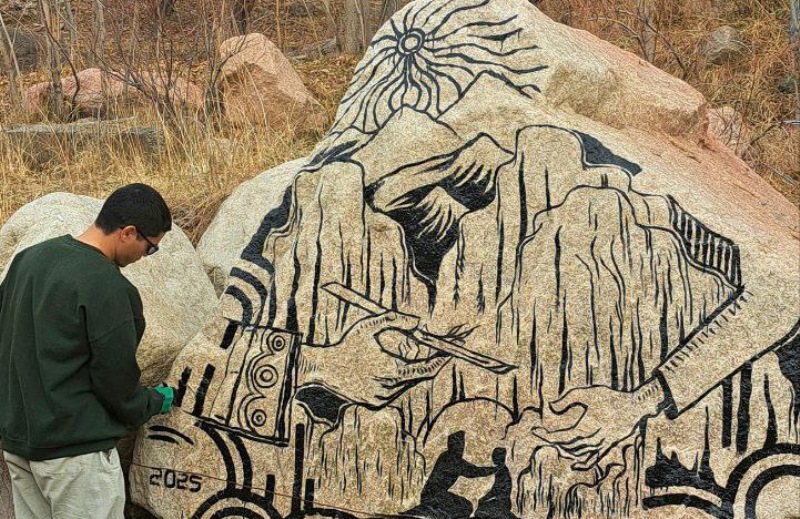
In her essay, the story tells of a woman who had to move repeatedly due to war and natural disasters. Despite the constant relocation, she always took a branch of a weeping willow and planted it in each new place, nurturing gardens and caring for nature.
On the stone, Amir did not depict the literal scene but instead created a symbolic image—depicting the transmission of experience from the older generation to the younger. The artist believes that each viewer will interpret the image in their own way.
Art beyond commerce
Amir makes a point of not turning his stone paintings into commercial art. For him, this is not a way to earn money but an attempt to restore art’s social function and establish a live connection with people.
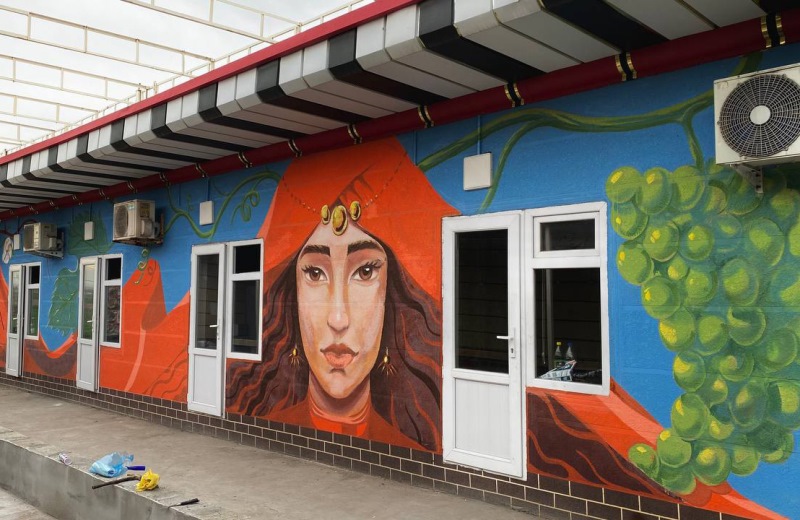
He earns his living through other forms of art—on canvases and murals in urban spaces. As for a solo exhibition, Amir is still unsure.
"Perhaps, from each place where I paint on stones, I’ll take small stones with me and add more drawings to them. Eventually, they will form a small traveling exhibition," he shares.
When he first began painting on stones, Amir thought that society wouldn’t be ready for this kind of art—that people wouldn’t understand it and that it would be too unconventional for Tajikistan. But practice proved otherwise: most people reacted calmly and with interest.
"No one has chased me with shovels or tried to drive me off," Amir laughs. "And it’s not that the audience isn’t ready. Sometimes, I think that we, ourselves, are just not ready to approach people. And if at least one person, walking by a stone with a painting, stops and reflects, then it’s all worth it, and my task as an artist is fulfilled."