Moving to the USA, studying at USC, interning at SpaceX and Disney, receiving offers from Google and Apple – these are just milestones in the journey that changed the life of our fellow countryman, Daler Asrorov. Why did he choose NVIDIA, and what project is he working on now?
Echoes of childhood
Daler grew up in a typical Tajik family, where his father played a crucial role in shaping his character.
“He always encouraged my curiosity and thirst for knowledge. His achievements inspired me to look at life more deeply and thoughtfully. I am very grateful to him for that,” he admits.
Daler became the first in his family to develop a serious interest in technology.
“My father was interested in finance and art, my mother loved cooking and watching detective shows, while I built paper airplanes, glued them with duct tape, invented my own models, and felt like a little inventor,” recalls Daler.
Before moving to the USA in 2011, he studied at the "Tajikistan" gymnasium, where his interest in learning and his desire for new knowledge began to take shape.
A new life
In the USA, Daler had to go through numerous difficulties and procedures. His family settled in Alexandria, Virginia, where Daler began seriously considering his future career.
“It was important to choose a direction that would truly interest me. Although, of course, I also listened to my parents' opinions,” he recalls.
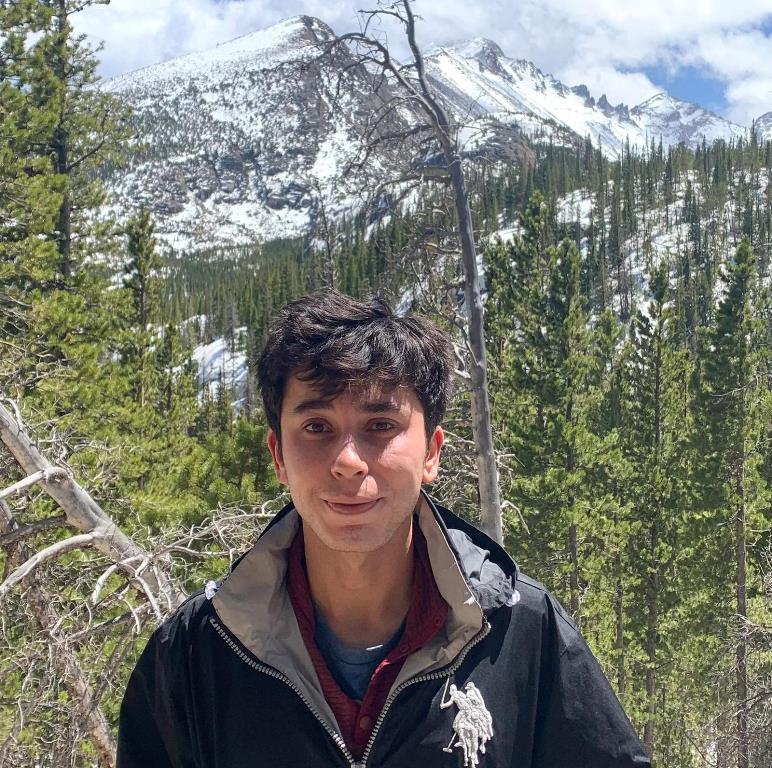
Thus, Daler initially enrolled in Northern Virginia Community College (NoVa), intending to become a lawyer or diplomat. During his studies, an academic advisor suggested he take math courses to provide more opportunities for further education at a university.
“That's how I focused on mathematics and programming,” he says.
Studies and work
These skills helped Daler successfully gain admission to several major American universities, but he chose the University of Southern California (USC) “because it has one of the best engineering and computer science programs in the USA.”
While studying, Daler interned at SpaceX and Disney, gaining valuable experience in the tech industry.
After graduation, he worked at Eventbrite, where he was involved in developing payment systems. He switched jobs several times to find a direction that truly interested him.
During the pandemic, Daler worked as a senior software engineer at Capital One, but he didn't enjoy the nature of the work. So, he “started putting in less effort and began preparing for technical interviews.” This is a familiar path for developers: endless tasks on LeetCode, books like Cracking the Coding Interview, and hours of preparation.
An unexpected offer
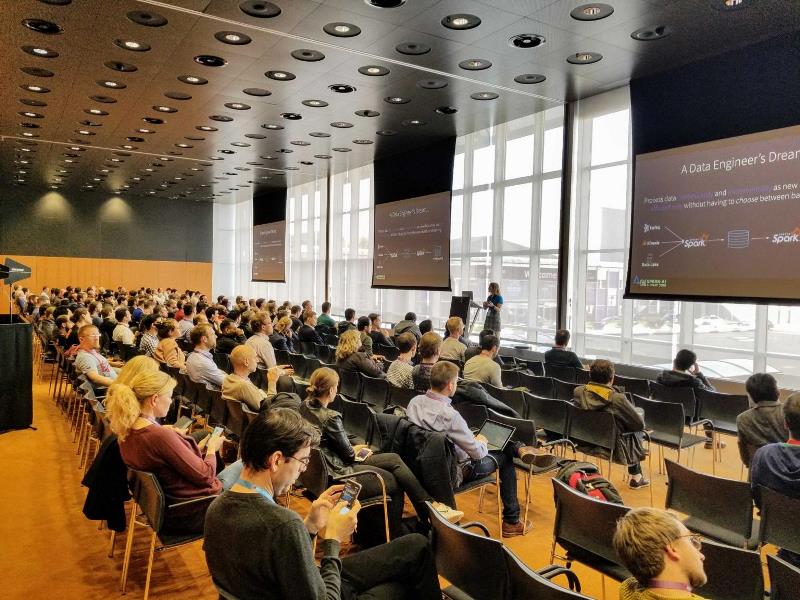
One day, a recruiter from NVIDIA contacted Daler on LinkedIn and offered him an interview. Daler admits that he hadn't originally planned to work at NVIDIA.
“To be honest, I was considering Google and Facebook. But the offer from NVIDIA was a pleasant surprise, as their projects looked incredibly promising,” he admits. “I immediately knew that I wanted to give it a try.”
A lengthier process than Google
The interview process turned out to be lengthy, with several stages: a phone interview with the recruiter, a technical discussion with the manager, testing both practical skills and general knowledge.
Next came an interview with an engineer, which involved solving six programming problems and creating a web component using HTML, CSS, and JavaScript. The final round included five online sessions with additional tasks and creating a React component.
“The process was longer than at Google,” Daler recalls. “Google takes a more academic approach, while NVIDIA focuses on practical skills—they check real abilities.”
Why not Apple or Google?
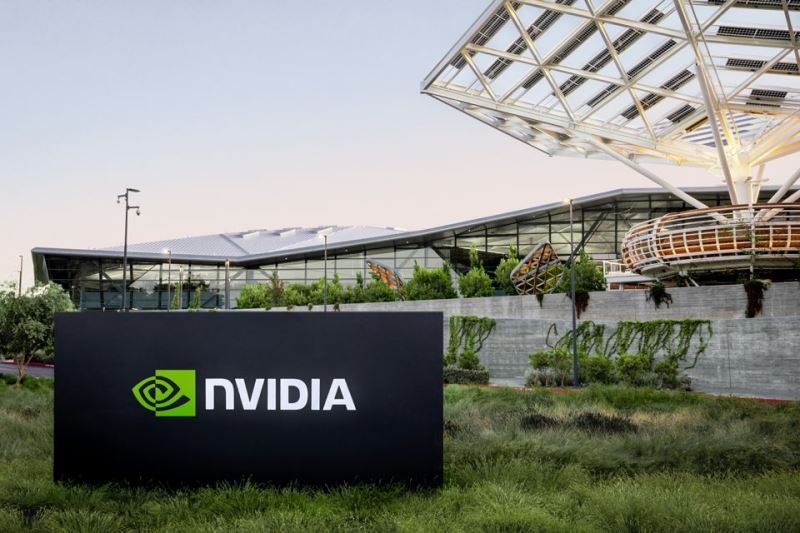
After completing a series of interviews, Daler received offers from both Apple and Google. However, the choice was obvious.
Moreover, unlike the others, NVIDIA offered him permanent remote work, meaning he wouldn't have to relocate to the Bay Area (Silicon Valley) even after the pandemic ended.
According to Daler, NVIDIA's corporate culture is primarily people-oriented.
“Yes, it’s a demanding environment, but the company does everything to make us feel successful and satisfied with our work. Here, they value personality and teamwork, not just technical skills,” he notes.
What does an AI Engineer do?
Since 2021, Daler has been working at NVIDIA, initially as a software engineer, and after two years, as a senior AI engineer.
He works on both the backend (internal part of programs) and the frontend (visible user-facing part). For machine learning, he uses Python and PyTorch, while for interfaces, he works with React and JavaScript.
“We're building a system to simplify the publication of AI models for engineers and scientists,” he explains. “We’re also developing UI components and AI applications for web and mobile devices. It’s important that the models work efficiently, use browser memory optimally, and remain user-friendly.”
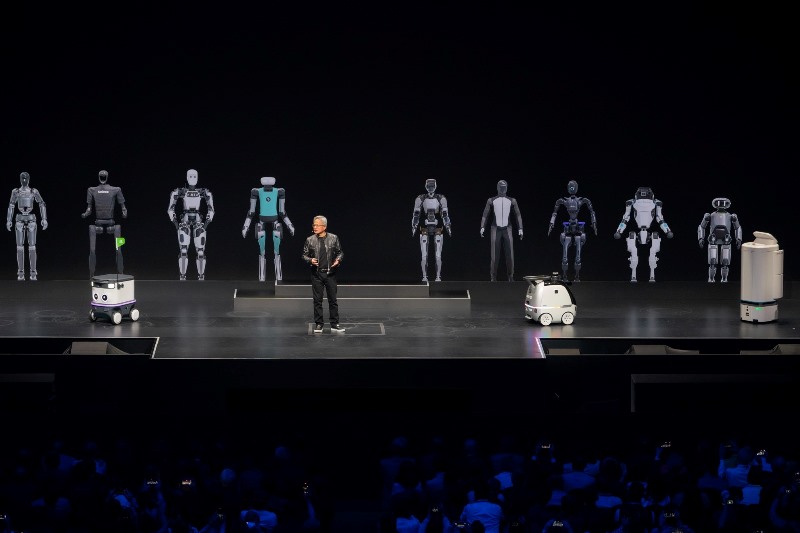
Each week, the tasks can vary: from models removing noise from speech to generating heatmaps for autonomous vehicles or optimizing traffic light systems using AI.
“The work is interesting because every project is unique,” Daler notes. “This is exactly why I chose NVIDIA.”
Flexible work
Daler enjoys a flexible work schedule. Living in Virginia and working on Eastern Time, he starts his day around 10 AM and usually finishes by 4–5 PM, depending on his workload.
For complex projects and tight deadlines, his workday can stretch longer.
There is no fixed number of hours dedicated to coding; sometimes it’s three hours, sometimes five.
The bulk of his time is spent in design and architecture meetings, where decisions are made that will later be effectively implemented into projects.
A challenging but fascinating project
One of Daler's recent projects was developing a user interface for Meta’s SAM-2 model. This system allows for quick and accurate object recognition in images and videos.
“Meta already had its own interface, but the web platform we developed at NVIDIA had extended functionality: text-based object recognition, searching for multiple objects, and real-time visualization of segmentation masks as the user makes changes,” Daler says. “It was a very challenging, but incredibly fascinating project.”
The key lesson
Over the years, Daler has learned that competition is an inherent part of the profession, and the most important thing is to stay competent.
“At NVIDIA, there are outstanding and experienced engineers,” he says. “It’s essential to constantly improve your knowledge, learn from colleagues, acknowledge their brilliance, and be ready to help. Gaining the trust of such specialists is the most valuable reward.”
The future belongs to AI
Daler reflects on this with caution.
“The implementation of AI has both advantages and disadvantages,” he believes. “AI helps humanity achieve outstanding results, especially in medicine, business, and space exploration. But it can also harm society. The future seems less predictable than some think.”
The key to a successful career
Daler advises young people to develop not only scientific thinking and an interest in exact sciences but also to learn communication.
“If you want to work in business or marketing, that’s one thing. But for engineers, networking is the key to a successful career. Be kind and attentive to people—you never know who the person you're talking to will become. Cultivate compassion and learn to be a mindful person,” he says.