Abdughani Mamadazimov, Political Scientist and Chairman of the Silk Road – Path of Consolidation Foundation, notes that a mid the mountainous isolation and natural disasters, creating alternative roads and rail routes in Tajikistan has become a crucial step toward integrating the country into international transport networks and accelerating its economic development.
The much-anticipated rains, which guarantee an abundance of fruits and vegetables this year, have also highlighted the vulnerability of our mountainous region due to the severe lack of alternative ground communications during the winter months. Frequent snow avalanches and landslides on two strategic roads in the Sughd and Gorno-Badakhshan regions, which cause long lines of trucks, illustrate the bottlenecks in the country's communication isolation.
This situation once again emphasizes the urgent need to create alternative land routes that would firmly connect even the most remote mountain villages with the capital.
Therefore, I once again suggest that the relevant authorities and their specialized agencies explore options for two alternative (ring) roads to the remote regions of the republic — Sughd and Badakhshan.
First road: from Dushanbe to Khujand
Alternative (ring) route: Dushanbe — Nourobod — Sarykarr Tunnel (or Navobod) — Mehron — Uguk Tunnel — Devashtich — Khujand.
The completion of the modern Dushanbe-Nourobod road has provided a good foundation for designing and constructing a tunnel under the Hisor Range (7-10 km) leading to the district center of Kuhistoni Mastchoh, the village of Mehron. In the western outskirts of this district, a second tunnel with a water canal (7-9 km) needs to be built near the Uguk Pass. This vital road will strongly link the northern part of our mountainous homeland with its center, despite natural challenges.
With two consistently operational roads, we can focus on constructing rail routes along the “center-north” route.
Second road: from Dushanbe to Khorog
Alternative (ring) route: Dushanbe — Lakhsh — Muksou — Seldara — Karakol — Murgab — Khorog.
In recent years, the vulnerabilities of the only road to the Gorno-Badakhshan region have been compounded by natural disasters (rockfalls, mudflows, etc.) and border incidents along the entire mountain route from Shamshiddin-Shohin to Rushan. As a result, Chinese road builders were forced to halt the reconstruction of this vital road.
This situation revealed the second “Achilles’ heel” of our region's communication isolation. Therefore, it is crucial to radically reconsider the planned routes and direct all efforts and resources toward constructing a second (alternative-ring) road to Gorno-Badakhshan.
The implementation of the fourth national strategy — accelerated industrialization — cannot be achieved without the creation of a nationwide railway network. It is becoming clear that, in addition to hydropower, mountain mining will soon become the driving force behind Tajikistan’s sustainable industrial development.
Therefore, the construction of this alternative road in Gorno-Badakhshan should be viewed not only through the lens of a single sector of the national economy but also through its full integration into transcontinental land freight transport.
Missed opportunities
While all our Central Asian neighbors are rapidly joining or connecting to global rail and road freight networks along the “Central Corridor” from China to Europe and back, we cannot afford to just watch from the sidelines as these shifts unfold.
Looking at the map of vast Eurasia — the world’s leading continent — it becomes clear that our region is situated at the crossroads of the Far East and the Middle East, and northern Eurasia with South Asia. Yet, unfortunately, we have not capitalized on our geostrategic location and remain “hostages” of it.
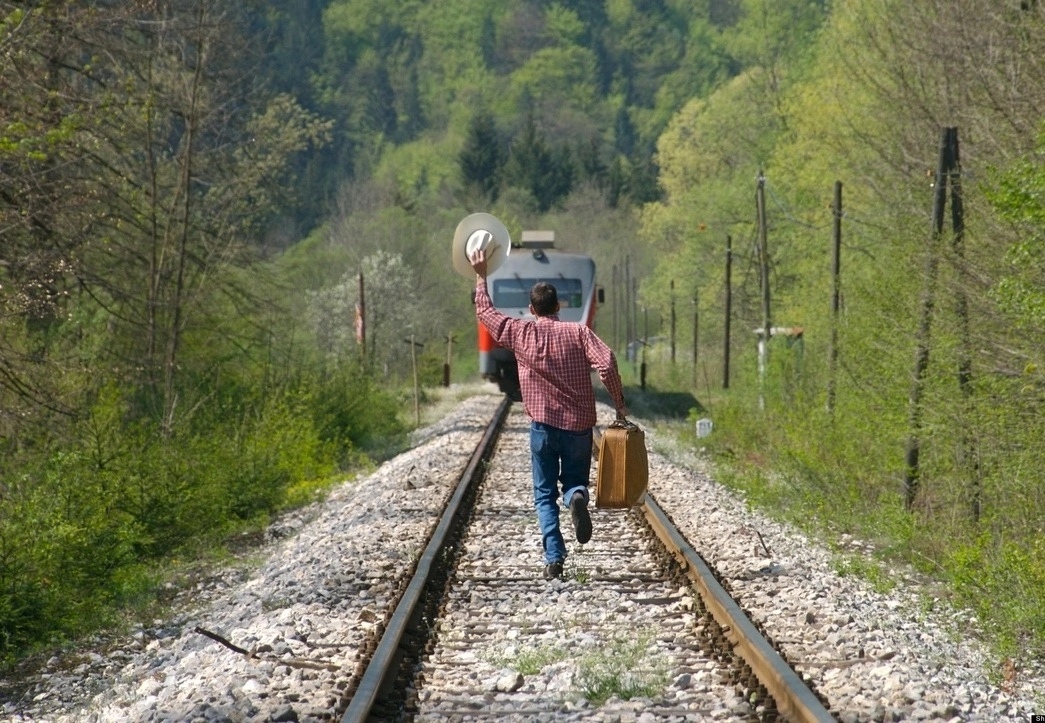
We must not only catch the “last train” of the China-Europe express but also redirect the entire central route of the “Middle Corridor” through Tajikistan by constructing a railway from Dushanbe to Kashgar.
In 2025, China sent 120,000 freight trains through our immediate neighbors (Central Asia) to Europe — that’s nearly 330 freight trains per day — yet none of them pass through Tajikistan.
Wide horizons
At the same time, the shortest and fastest geographical route runs through our territory. The transcontinental railway route from Guangzhou to Kashgar, Dushanbe, Istanbul, and Hamburg passes along the parallel from Kashgar to Dushanbe to Istanbul, without crossing seas, gulfs, or major water crossings. Additionally, adopting the European rail gauge would make this route the champion for fast cargo delivery from the Pacific to the Atlantic.
The revenues from operating this promising cross-border railway route would allow us to start building numerous branch lines within the country, eventually integrating Tajikistan into various international, interregional, and transcontinental routes — both “East-West” and “North-South” across vast Eurasia.
From the mountain periphery to the central caravanserai
While the President of distant America considers a small intergovernmental road in the South Caucasus (Nakhchivan — Zangezur — Baku), calling it the "Trump Route" (or more precisely, “Trump’s Route for International Peace and Prosperity,” TRIPP), why can’t we name our project after our Nation's Leader and begin its construction with urgency?
By doing so, we would truly transform our beloved Tajikistan into the “central caravanserai of vast Eurasia,” just as in the glorious times of the Samanids, instead of helplessly watching as our neighbors compete for their share of global land freight transport.
Transforming Tajikistan from the mountainous periphery of vast Eurasia into its central caravanserai, where millions of tourists and billions of goods pass through our mountainous region, will undoubtedly become one of the most important achievements of our independence. We will not only stop struggling to move from one mountain region to another within a small country but will find our rightful place among the great peoples of Eurasia and the world.