

Trade between Uzbekistan and Tajikistan has surged by nearly four times from 2017 to 2025, growing from $238 million to $912 million, according to participants at a recent international conference in Tashkent. Uzbek exports to Tajikistan have increased 3.7 times, while Tajik exports to Uzbekistan have risen over four times.
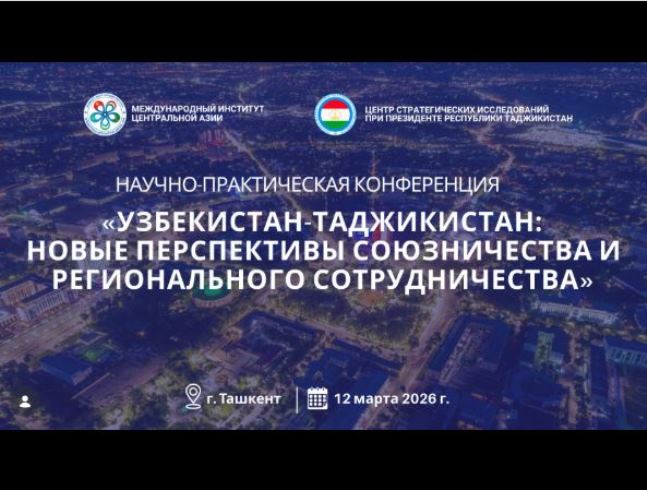
The discussion took place at the international scientific-practical conference "Uzbekistan-Tajikistan: New Perspectives for Alliance and Regional Cooperation," organized by the International Institute of Central Asia and the Center for Strategic Research under the President of Tajikistan. The conference, which took place on March 12, was attended by government officials, diplomats, experts, and academics from both countries.
Khurshed Asadov, Deputy Director of the Center for Economic Research and Reforms (CER), emphasized that a two-way trade between the two nations could increase by an additional 30-40% due to Tajikistan replacing imports from third countries with products from Uzbekistan.
Asadov noted that the development of industrial cooperation, particularly in agriculture, agrologistics, and the improvement of transport infrastructure, would play a vital role in fostering further growth in trade relations between the two nations.
Key topics of discussion at the event included bilateral cooperation across various sectors, such as economy, transport, culture, and education. The primary focus was on deepening trade and economic ties and industrial cooperation.
Akramjon Nematov, First Deputy Director of the Institute for Strategic and Interregional Research under the President of Uzbekistan, proposed the creation of a joint industrial-technological space between the countries. This, he suggested, would reduce dependence on external shocks, replace costly imports, and enhance competitiveness. He also pointed out that joint industrial cooperation could open up opportunities for market access in third countries such as Afghanistan and South Asia.
Nematov further recommended strengthening cooperation in energy, modernizing irrigation systems, and building small hydroelectric power stations to address the challenges posed by climate change. The development of green energy potential, including the construction of solar and wind power plants, along with the digitalization of agriculture in border areas, were also highlighted as key priorities. These efforts would improve water usage and implement precision farming technologies.
According to experts, creating agro-industrial clusters in border regions would significantly boost trade in agricultural products by reducing logistics costs. An important step in diversifying agriculture would be the shift from cotton production to more profitable crops such as nuts, almonds, berries, and greenhouse vegetables.
The conference also discussed the prospects for forming a new model of Uzbek-Tajik relations, based on strategic pragmatism, historical and cultural ties, and long-term developmental goals. Participants emphasized that strengthening bilateral relations would not only benefit the economies of both countries but also contribute to the stability and resilience of the entire Central Asian region.
The conference included three thematic sessions: "Uzbekistan and Tajikistan: Towards New Quality of Allied Partnership," "Prospects for Mutually Beneficial Cooperation in the Fields of Economy, Transport, Education, Science, Culture, and Tourism," and "Strengthening Interaction Between the Two Countries in Multilateral Regional Formats."