



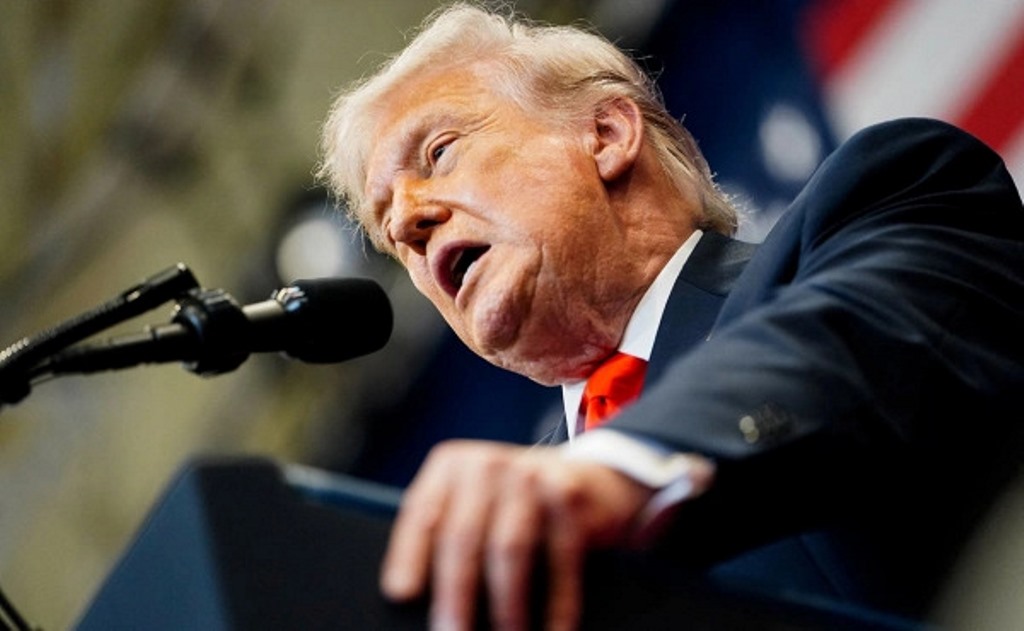
U.S. President Donald Trump stated that an agreement has been reached between Israel and Lebanon to cease mutual attacks, which, according to him, has allowed for the continuation of the negotiation process with Iran.
“Negotiations with the Islamic Republic are proceeding at a rapid pace,” Trump wrote on the social network Truth Social.
However, official representatives of Iran have not yet confirmed the continuation of contacts with Washington.
Earlier, on June 1, the Iranian Tasnim agency reported the suspension of communications between Tehran and Washington following Israeli strikes on Lebanese territory, where facilities of the Iran-backed group Hezbollah are located.
Tehran stated that the situation in Lebanon was one of the conditions of the current ceasefire with the U.S., but hostilities, in their assessment, continue.
The armed confrontation between the U.S., Israel, and Iran began in late February. In early April, the parties managed to agree on a ceasefire; however, issues regarding the final resolution of the conflict remain unresolved, and the parties periodically exchange strikes.
The ceasefire regime also extends to Israel and Lebanon. Nevertheless, on May 31, Israeli Prime Minister Benjamin Netanyahu ordered an expansion of the ground operation in Lebanese territory.
Israel explained this by the increased attacks from Hezbollah on northern areas of the country. Iranian officials called such actions a violation of the ceasefire conditions.
Iran launched missiles and drones, the U.S. shot them down and struck an island in the Strait of Hormuz
The U.S. stated that they shot down Iranian drones and ballistic missiles launched at vessels in the Persian Gulf and neighboring Arab countries, and in response struck Iranian territory in the name of “self-defense,” reports the BBC.
The U.S. Central Command (Centcom) reported strikes on Qeshm Island in the Strait of Hormuz. The agency stated that the operation was a response to Iran’s attempts to attack American facilities and interests in the Middle East.
According to Centcom, Iran launched two missiles towards Kuwait, but they either did not reach their target or were destroyed in flight. Three more missiles were launched towards Bahrain but were intercepted by air defense systems.
In turn, the Islamic Revolutionary Guard Corps reported missile and drone strikes on American bases and helicopters in one of the countries in the region. Iranian media described these actions as a response to the American strike on a communication tower south of Qeshm Island.
The U.S. command also announced an attack on an Iranian military command post on Qeshm Island. Additionally, according to Centcom, three Iranian drones that were allegedly directed against civilian vessels passing through regional waters were destroyed.
The Strait of Hormuz has remained partially blocked for more than three months—since the beginning of the military campaign by the U.S. and Israel against Iran. Despite the ceasefire declared in April, negotiations for a long-term resolution of the conflict have recently faced difficulties again.
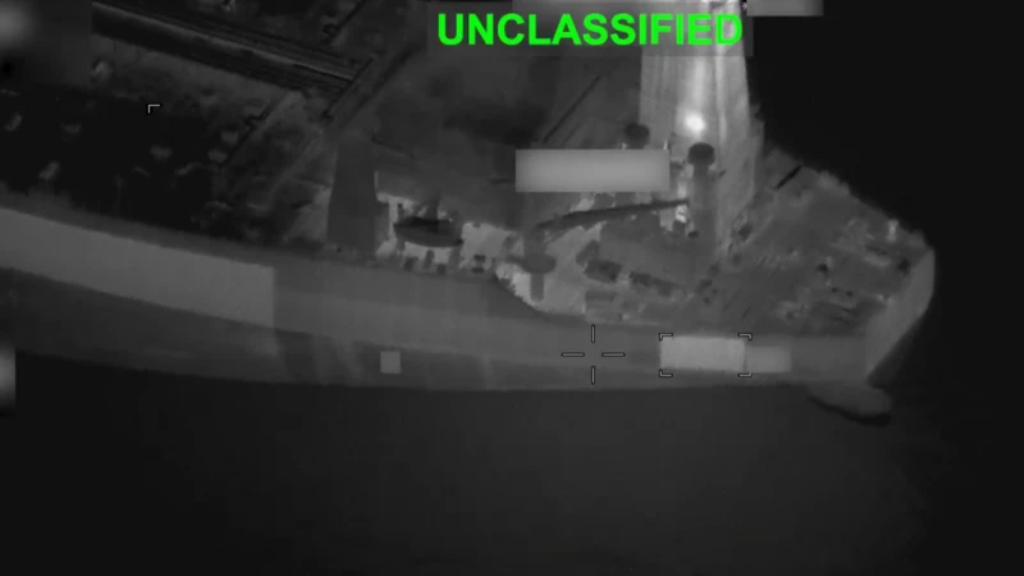
For its part, the United States has been restricting the passage of vessels heading to or leaving Iranian ports since April 13. On Tuesday, Centcom reported a strike by a Hellfire missile on the engine room of the M/T Lexie, a tanker flagged in Botswana, which was heading towards the Iranian island of Hark without cargo. The agency released video footage of the strike and stated that the vessel ignored repeated warnings from the American side.