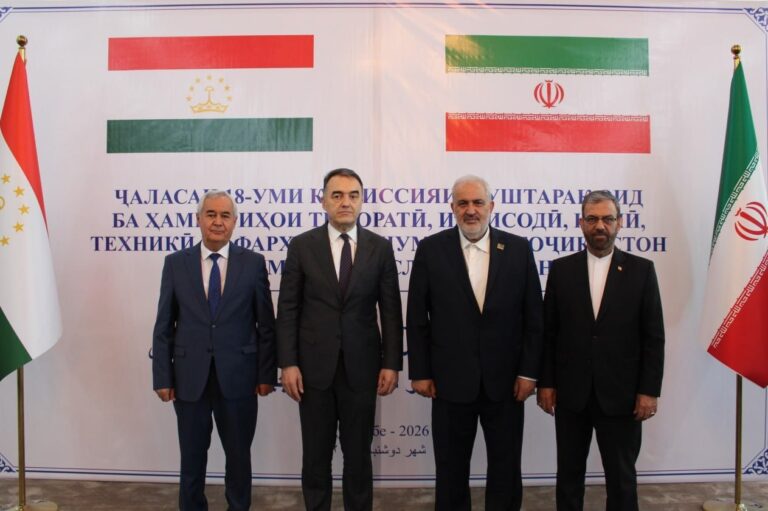
DUSHANBE, August 27, 2009, Asia-Plus — Tajik MFA and German Muhlbauer signed a contract on purchase of blank biometric passports and appropriate equipment for Tajikistan in Dushanbe yesterday, according to the Tajik MFA information department.
The document was inked by Mr. Hamrokhon Zarifi, Foreign Minister of Tajikistan, and Mr. Ludwig Huber, Vice-President of Muhlbauer.
We will recall that Muhlbauer has been granted a contract for purchase of blank biometric passports for Tajikistan. A two-stage tender for purchase of biometric passports and appropriate equipment, announced by the Agency for State Purchases within the Ministry of Economic Development and Trade and the Ministry of Foreign Affairs, was held in June this year.
“The blank passports should meet minimum requirements of the International Civil Aviation Organization (ICAO), containing 48 pages and having contactless chip,” the source said, noting that passport design will be worked out in coordination with customer. At first, they plan to purchase 100,000 blank biometric passports.
A biometric passport, also known as an e-passport or ePassport, is a combined paper and electronic passport that uses biometrics to authenticate the identity of travelers. It uses contactless smart card technology, including a microprocessor chip (computer chip) and antenna (for both power to the chip and communication) embedded in the front or back cover, or center page, of the passport. Document and chip characteristics are documented in the ICAO Doc 9303. The passport”s critical information is both printed on the data page of the passport and stored in the chip.
The currently standardized biometrics used for this type of identification system are facial recognition, fingerprint recognition, and iris recognition. These were adopted after assessment of several different kinds of biometrics including retinal scan. The ICAO defines the biometric file formats and communication protocols to be used in passports. Only the digital image (usually in JPEG or JPEG2000 format) of each biometric feature is actually stored in the chip. The comparison of biometric features is performed outside the passport chip by electronic border control systems (e-borders).