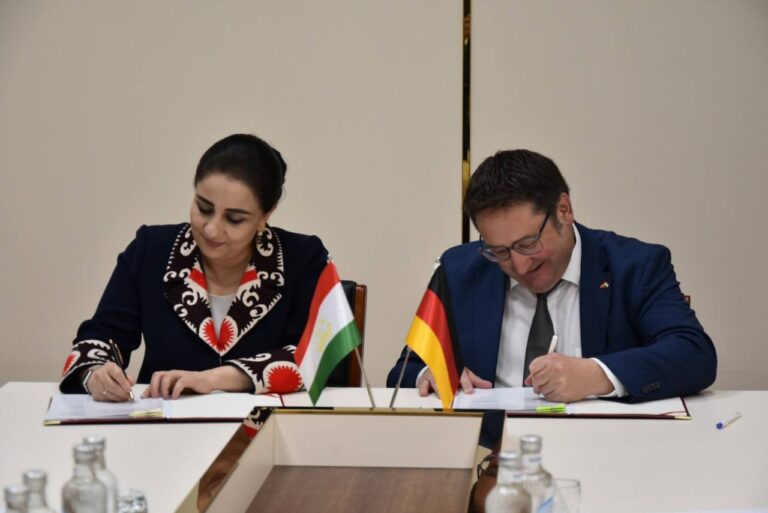
DUSHANBE, June 3, 2009, Asia-Plus — Upstream and downstream countries in Central Asia should have arrangement on exchange of energy and resources as well as compensation measures, Iskandar Mirkhashirmov, Kazakh expert from the Regional Ecology Center of Central Asia (REC CA), said in an interview with Asia-Plus on sidelines of a meeting that was held in Dushanbe in the framework of the European Commission project “Harmonization and Approximation of Water Standards and Norms in Central Asia.”
According to him, such relations are a world practice and had been successfully used between Central Asia’s states in the Soviet time. The regions’ countries could reach an agreement on the basis of mutual interests, Mirkhashirmov said.
“As a rule, there is such a practice in the world that the upstream countries develop hydropower engineering, construct power plants, are engaged mainly in the hydropower sector and it is natural, because they are located in mountain areas, near river heads,” said the Kazakh expert, “In the meantime, the downstream countries are mainly occupied with agriculture and production.”
He also stressed that agrarian sectors of the downstream countries used on average 70-80 percent of waters of the region.
Asked how dangerous construction of large hydropower plants could be for ecology of the region, Mirkhashirmov said that he did not have such data.