DUSHANBE, March 9, Asia-Plus – Specialists from Tajikistan’s Public Association Consumers’ Union and Non-commercial Union GS1 have begun work on the creation and development of a barcode system for Tajik products, according to the Dushanbe Office of the Eurasia Foundation of Central Asia (EFCA).
A source at the EFCA Dushanbe Office said that the work is carried out under the EFCA-support Introduction of Barcode System for Tajik Products and Services project. EFCA has provided more than $16,000 to the Tajik Consumers’ Union for implementing this project.
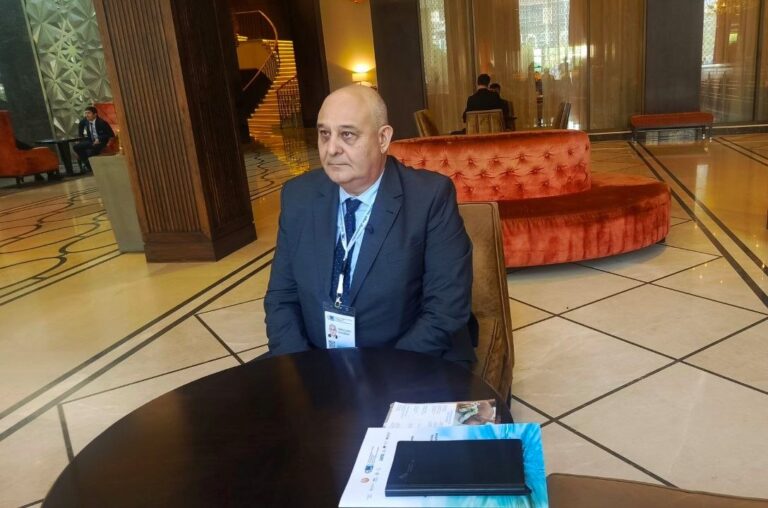
Bahodour Habibov, chairman of the Tajik Consumers’ Union, said in an interview with Asia-Plus that the barcode is a system of machine-readable representation of information in a visual format on a surface. Originally barcodes stored data in the widths and spacings of printed parallel lines, but today they also come in patterns of dots, concentric circles, and hidden within images. Barcodes can be read by optical scanners called barcode readers or scanner or scanned from an image by special software.
According to him, many Tajik entrepreneurs already use the barcode system for their products. “However, it is just a part of decoration of packages ordered in China and entrepreneurs themselves are not quite aware of what it does mean,” Habibov said, adding that Tajikistan and Turkmenistan are the only member nations of the CIS that have not yet joined the GS1 Association and do not have their own barcodes.
In the meantime, experts hold that its own barcode will enable Tajikistan to determine a supply chain and define fake products.
GS1 is a global organization dedicated to the design and implementation of global standards and solutions to improve the efficiency and visibility of supply and demand chains globally and across multiple sectors. The GS1 System of standards is the most widely used supply chain standards system in the world.
GS1”s main activity is the development of the GS1 System, a series of standards designed to improve supply chain management. The GS1 System is composed of four key product areas: Barcodes (used to automatically identify things), eCom (electronic business messaging allowing automatic electronic transmission of data), GDSN (Global Data Synchronization Network which allows partners to have consistent item data in their systems at the same time) and EPCglobal (which uses RFID technology to immediately track an item).
It has headquarters in Brussels (Belgium) and Princeton, New Jersey (USA). There are also member organization offices in over 100 countries globally.