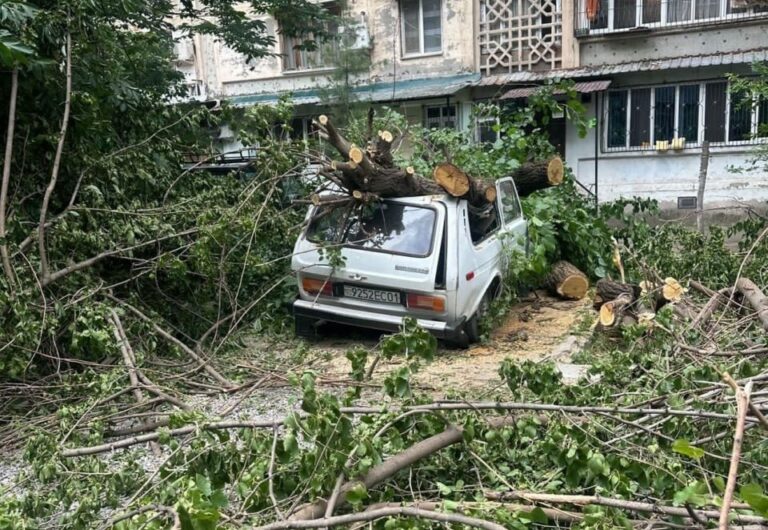
DUSHANBE, February 23, Asia-Plus — Many individuals of rare species of animals and birds perished after extreme winter weather hit Tajikistan, Shavkat Mustafoqulov, the deputy head of the environmental conservation service within the Ministry of Agriculture and Environmental Protection (MoAEP), said.
According to him, in the Tigrovaya Balka (Tiger Gully) reserve alone, dozens of individuals of rare species of animals and birds (jangle cat, nutria, cormorant, duck, etc) perished because of unusually cold weather.
Mustafoqulov noted that the service had organized delivery of feed for them. 10 special places have been organized in the reserve, he said.
Besides, some 35 tons of feed grain have been delivered to the forestry in Romit, Varzob, Shahrinav and Tusunzoda.
The Tigrovaya Balka reserve situated in the undercurrent of Vakhsh River between Panj and Kofarnihon rivers in the Khatlon province at the board of Afghanistan. Its territory elongated for the 40 kilometers from southwest to northeast. Its relief has the shape of valley floodplain terrace with falls which contain many cutoff lakes, formed during meandering of Vakhsh River
Climate of the reserve is sharply continental and dry. During the winter the air masses of temperate latitudes and in summer – tropical are prevalent.
Summer begins in the May and continues up to the middle of September. In that period the thermal depression prevails. The maximal temperature in the July sometimes reaches + 46-48 degrees. Winter is soft and brief. That is typical for zone of dry tropics. Number of days with negative temperatures varies from 26 to 83.
Distribution of precipitation during the year is very irregular. Up to 70 % of them fall in winter and spring months usually in the form of rain. Annual amount of precipitation usually does not exceed 200 mm.
Hydrological network of the reserve formed by Panj and Vakhsh Rivers and their inflows. Main territory of the reserve connected with Vakhsh which having glacial and snow feeding. In the present time the drainage of the Vakhsh regulated by hydraulic works of Norak and Baypaza hydropower stations. Tugai supported only by surface and ground waters.
In the lowers of Vakhsh there are a lot of mortlakes. Their maximal deepness rarely exceeds 5-6 meters and usual it is 1-2 meters. Within the reserve there are about 40 of such lakes. They are overgrown with dense water vegetation. Old intermittent lakes level of mineralization is greatly high.