Novel about Ahmad Shah Masoud presented in Kulob

KULOB, February 7, 2009, Asia-Plus  — On Friday February 6, the Kulob mayor’s office organized presentation of a novel about life of known Afghan military leader Ahmad Shah Masoud by Tajik journalist Said Rahmon entitled “Sipahsolor Masoud” (Military Leader Masoud). The book-presentation ceremony was attended by representatives from the Afghan Embassy in Dushanbe – Mhibulla […]

Turko Dikayev

KULOB, February 7, 2009, Asia-Plus  — On Friday February 6, the Kulob mayor’s office organized presentation of a novel about life of known Afghan military leader Ahmad Shah Masoud by Tajik journalist Said Rahmon entitled “Sipahsolor Masoud” (Military Leader Masoud).

The book-presentation ceremony was attended by representatives from the Afghan Embassy in Dushanbe – Mhibulla Qasim and Zamanuddin Zaman – as well as local readers and journalists.

Speaking at the ceremony, Said Rahmon told those present how he had collected materials for his novel in Afghanistan and Iran.  During the meeting, it was noted that the book would be reproduced in Afghanistan in the near future.

Ahmad Shah Masoud (September 2, 1953 – September 9, 2001) was a Kabul University engineering student turned into military leader.  Following the withdrawal of Soviet troops from Afghanistan and the subsequent collapse of the Soviet-backed government there, Masoud became Defense Minister of Afghanistan in 1992 under Afghan President Burhanuddin Rabbani.  Following the collapse of Rabbani”s government and the rise of the Taliban regime, Masoud became the military leader of the United Islamic Front for the Salvation of Afghanistan.  Because most factions were from the north of Afghanistan, the Western media called them the “Northern Alliance.”

On September 9, 2001, Masoud was assassinated in Takhar province, Afghanistan by suspected al-Qaeda agents.  The following year, he was named “National Hero” by the order of Afghan President Hamid Karzai.  The date of his death, September 9, is observed as a national holiday in Afghanistan, known as “Masoud Day.”  The year following his assassination, in 2002, Masoud was nominated for the Nobel Peace Prize. 
Join us on social media!

Article translations:

Related Article

Оби зулол
Tenisi
Оби зулол

Most Read

Коммерсбонк Точикистон

Recent Articles

The number of migrants from Central Asia, including Tajikistan, has increased in Poland — expert

Many migrants from Central Asian countries are increasingly reluctant to work in Russia and are exploring new destinations.

Tajikistan to transfer rural water utilities to a unified digital platform

The task is to integrate all 500 drinking water supply organizations in the country into one system.

Dushanbe authorities tighten price controls ahead of the Eid al-Adha holiday

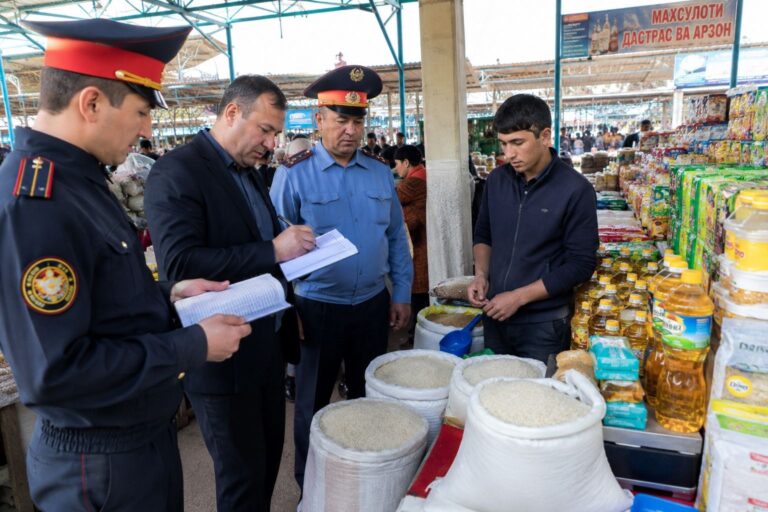
Briefings and explanatory discussions are being conducted with vendors in the capital's markets, and violators face administrative protocols.

Major global investment companies show interest in Tajikistan’s economy

Among them are J.P. Morgan, Loomis Sayles & Company, Morgan Stanley Investment Management, and Global Evolution.

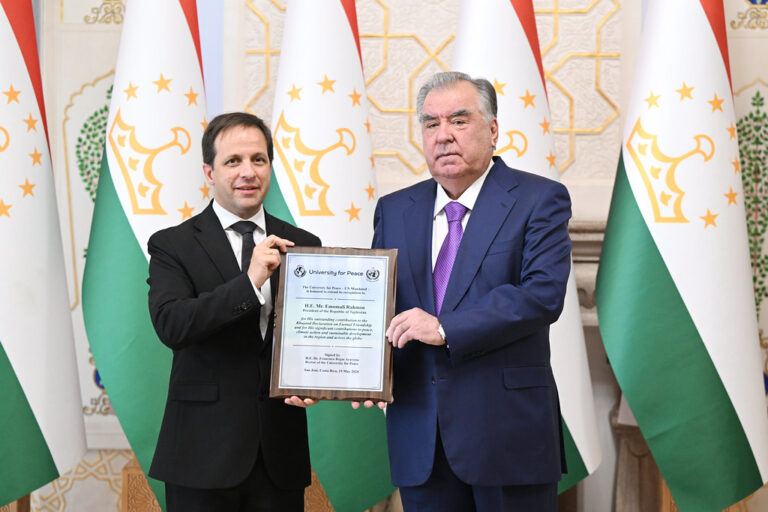
President Rahmon awarded UN University for Peace Certificate of Recognition

He is awarded for "significant contribution to establishing peace, developing regional cooperation, and strengthening mutual understanding between peoples."

Starlink satellite internet becomes available in Kyrgyzstan

And in Tajikistan, it was launched in February of this year.

In Dushanbe, 30 more new electric buses start operating

Each is designed to carry 100 passengers and can travel up to 300 kilometers without recharging.

Who is the man who “increased the Aryan race” and told the President of Tajikistan about it?

Kozie Koziyev, a folk craftsman, built dozens of houses, participated in the construction of a mosque and a kindergarten in Matcha, raised 11 children, and created a true dynasty of builders.

Tajik leader discusses water, climate, and global security issues with UN Deputy Secretaries-General

The parties paid special attention to the "Dushanbe Water Process," parliamentary diplomacy, and the peaceful resolution of conflicts.