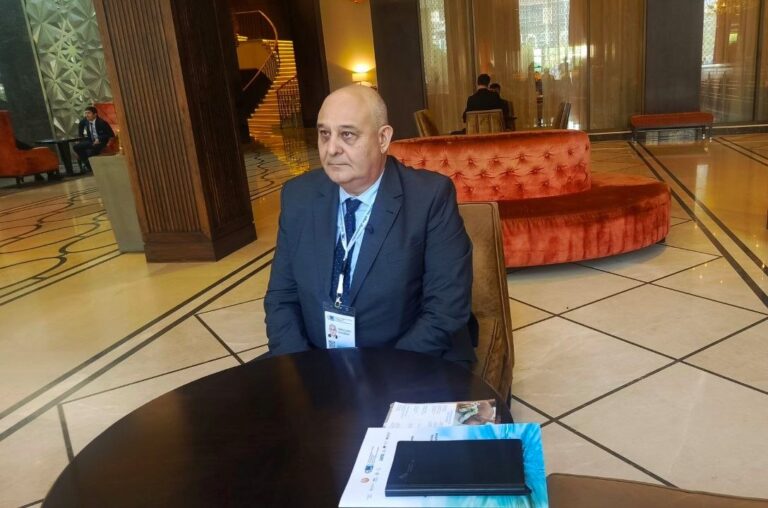
DUSHANBE, April 29, 2009, Asia-Plus — Revival of industry, agriculture and other sectors of economy, as well as implementation of road construction and rehabilitation projects with support of the public sector should become priorities not only for today but also long-run prospects, the Director of the Institute for Strategic Studies within the Ministry of Economic Development and Trade, Dr. Nouriddin Qayumov said.
According to him, the process of deindustrialization of economic sectors and loss of qualification and deintellectualization of society is now going on in the country. Dependence of Tajikistan’s domestic market on economies of foreign countries has been intensifying from year to year and our small and poorest country support economies of other countries exporting their low-quality goods to Tajikistan, he noted.
In his opinion, Tajik government should seek ways to weaken this dependence. “It is time to understand that prosperity of our nation may be provided only through development of our own industrial and agrarian sectors and development of domestic consumer market,” said Professor Qayumov, “No good has come of privatization of industry, conducted by uncivilized methods, and subdivision of agricultural enterprises into dehkan (peasant) farms and it is time to come to our senses and return to state regulation. No other efficient ways of development of economy have been invented by science and practice.”
He also considers that there is direct evidence of complete collapse of monetary-liberal doctrine of management of economy at global scale. According to him, the monetary-liberal doctrine has brought the macroeconomic system to a dead end. “We are witnesses of the decline of age of the monetary-liberal doctrine and an active process of return to Keynesianism is progressing,” Qayumov said.
Keynesian economics (also called Keynesianism and Keynesian Theory) is a macroeconomic theory based on the ideas of 20th-century British economist John Maynard Keynes. Keynesian economics argues that private sector decisions sometimes lead to inefficient macroeconomic outcomes and therefore advocates active policy responses by the public sector, including monetary policy actions by the central bank and fiscal policy actions by the government to stabilize output over the business cycle.