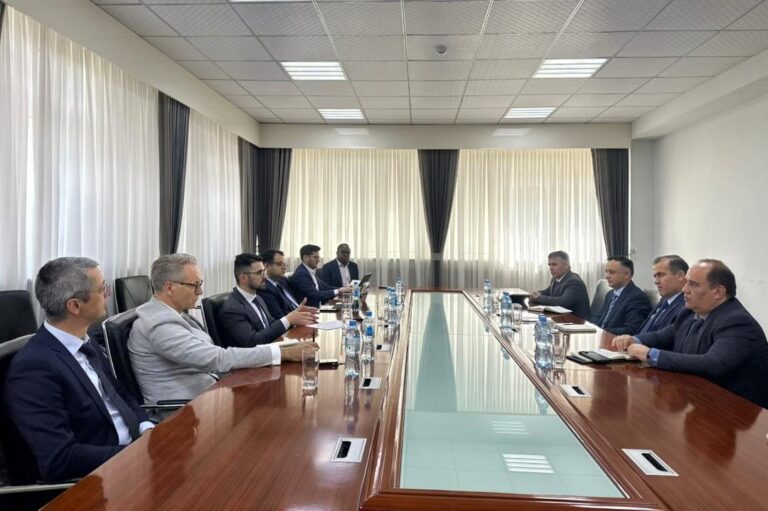
DUSHANBE, December 3, 2009, Asia-Plus — A workshop for Central Asian Countries on Non-Proliferation and International Legal Cooperation against Biological, Chemical and Nuclear Terrorism opened in Ashgabat, Turkmenistan on December 2, press release issued by the United Nations Center for Preventive Diplomacy for Central Asia (UNRCCA) said.
The event is jointly organized by the Terrorism Prevention Branch of the United Nations Office on Drugs and Crime (UNODC) and UNRCCA in cooperation with the Organization for Security and Cooperation in Europe (OSCE).
During two days, prosecutors, law enforcement representatives and judicial experts involved in prosecution of terrorist cases and related international judicial cooperation, are discussing universal conventions and protocols related to nuclear, biological and chemical terrorism and relevant international and regional instruments pertaining to non-proliferation of weapons of mass destruction. Special focus is on international cooperation in criminal matters relating to biological, chemical and nuclear terrorism, including the rule of law aspects of extradition and mutual legal assistance in terrorism related criminal cases.
Opening the workshop, Ambassador Miroslav Jenca, Special Representative of the UN Secretary General and Head of UNRCCA, yesterday noted, “The issues to be discussed during the workshop are directly linked to preventive diplomacy since implementation of respective international commitments in the field of nuclear disarmament and non-proliferation contribute to maintaining global and regional peace and security”.
“Non-proliferation is also an issue of criminality. We need to keep the world”s most dangerous weapons out of the most dangerous hands” underlined Antonio Maria Costa, UNODC Executive Director, from UNODC Headquarters in Vienna.
Experts from Central Asian states, Afghanistan, USA, Russia and Slovak Republic are participating at the workshop. Representatives of eleven international and regional organizations are participating at the workshop, speaking about non-proliferation and combating biological, chemical and nuclear terrorism. They include representatives of the Commonwealth Independent States, International Atomic Energy Agency (IAEA), INTERPOL, the Provisional Secretariat of the Comprehensive Test Ban Treaty Organization (CTBTO), the Organization for Prohibition of Chemical Weapons (OPCW), OSCE, UNODC, and the UN Security Council’s “1540 Committee.”