Norak reservoir’s water reserves practically exhausted, says minister

DUSHANBE, April 7, 2011, Asia-Plus — In a report released at a news conference in Dushanbe, Minister of Energy and Industries Gul Sherali noted on April 7 that the electricity rationing in the country will remain in effect until water flow in the Vakhsh River rises to 600 cubic meters per second. This may happen […]

Payrav Chorshanbiyev

DUSHANBE, April 7, 2011, Asia-Plus — In a report released at a news conference in Dushanbe, Minister of Energy and Industries Gul Sherali noted on April 7 that the electricity rationing in the country will remain in effect until water flow in the Vakhsh River rises to 600 cubic meters per second.

This may happen only after April 20, the minister noted.  “According to the weather forecast, temperatures will rise to plus 30 degrees Celsius after Aril 20,” Gul Sherali said.

According to him, the water flow in Vakhsh River is currently at 250-260 cubic meters per second, while last April, the water flow in the river was at 400-450 cubic meters per second.

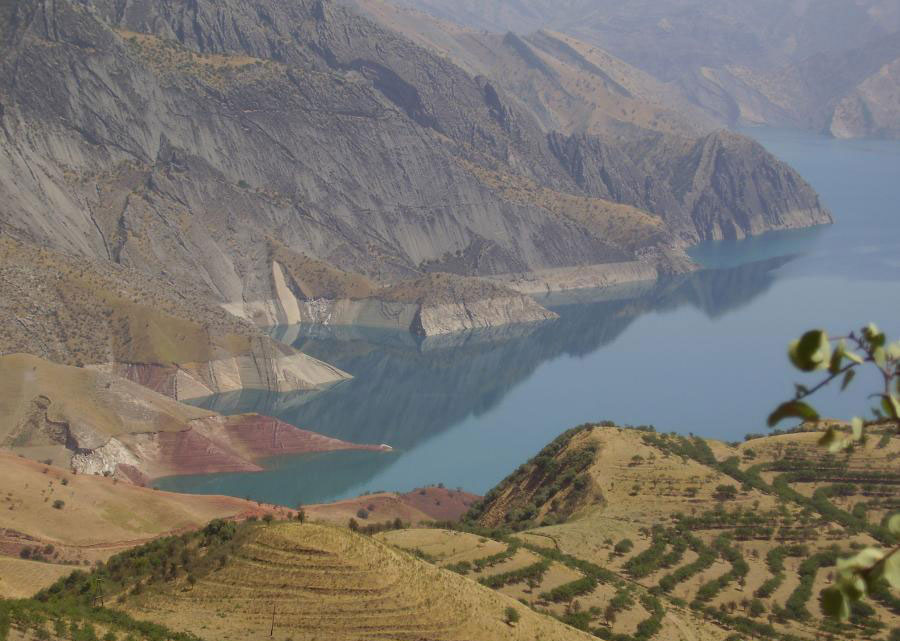
Water reserves of the reservoir powering the Norak hydroelectric power plant (HPP) have practically been exhausted and only 1.8 meters remain to the critical point, after which use of water may lead to technical malfunction at the plant, the minister said.

Gul Sherali attributes current hard power supply situation to a cold snap that hit the country in early March.

In the regions, only district administrative centers now have electricity for one and half hours per day, while villages do not have electricity now.  Electricity rationing was imposed on Dushanbe as well; electricity supply to residential customers in the city is now cut off from 11:00 pm to 5:00 am.

The country’s power plants now generate 29.9 million kWh of electricity and 16 million kWh of this amount are supplied to the Tajik Aluminum Plant (TALCO).

“Only several industrial enterprises now receive electricity regularly,” said the minister, “Cement plants and canneries have been shifted to coal, while the remaining enterprises receive electrical power according to the established regime.”

Gul Sherali stressed that such a weak water inflow in the Vakhsh River was reported in 1992, 1999 and 2002.  “But in those years, our power supply system had been connected to Central Asia’s unified power system,” he noted.  
Article translations:

Related Articles

Оби зулол

Most Read

Join us on social media!

Recent Articles

Emomali Rahmon accepted the credentials from new ambassadors

Nine countries have sent new diplomats to Tajikistan.

Russia evacuated 27 Tajikistan citizens from Iran

They worked at the Bushehr nuclear power plant, built by the Russian Federation in Iran.

Baku to host WUF13: shaping the future of sustainable urbanization

Baku, the capital of Azerbaijan, is set to host...

How the Energy Industry Began in Tajikistan 100 Years Ago

We have prepared a historical photo series for you.

Tajikistan and Belarus to establish a joint laboratory for radiation monitoring and nuclear safety

An agreement was signed by the Tajikistan Agency for Nuclear and Radiation Safety and the Belarusian National Technical University.

Former Press Secretary of Emomali Rahmon Sent a Letter to the President Requesting Support for Media Workers

Zafar Sayidzoda believes it is necessary to establish a Media Support Fund, which should operate in the interests of all media — both state and private.

Neither War nor Peace: What Will Be the Next Step for Iran and the US After the Failure of Negotiations?

Tajik experts say that Iran has another leverage that could pose a serious threat to the Trump administration.

In Dushanbe, a criminal group issuing SIM cards and bank cards to fictitious persons was exposed

Through illegally issued plastic cards, the suspects were withdrawing money from an online casino game.

The eKhonish program, an analogue of eDonish, launched in Bokhtar

Now parents and education representatives will be able to remotely monitor students' attendance and academic performance.

#AP30/Experts. Rashid Ghani Abdullo: “Asia-Plus” has become a brand of Tajikistan

A well-known Tajik political scientist expressed his opinion on the role of our media in the informational space of the country and the region.