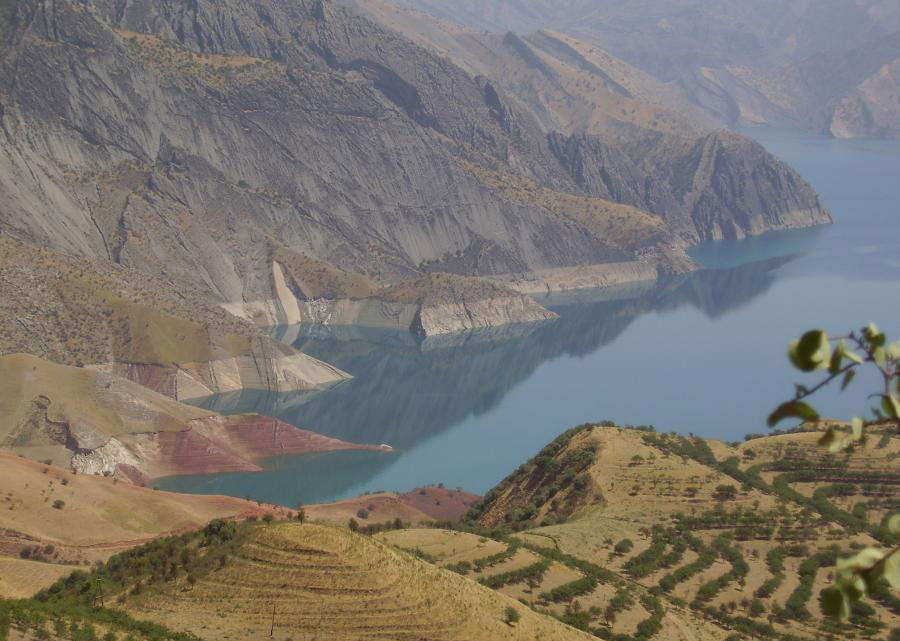
DUSHANBE, April 7, 2011, Asia-Plus — Water levels at the reservoir powering the Norak hydroelectric power plant (HPP) have fallen to 856.88 meters, which is below the minimum level, Nozirjon Yodgori, a spokesman for Barqi Tojik power holding, told Asia-Plus today.
“On April 6, water flow in the Vakhsh was 250 cubic meters per second, while in early April of 2010, water flow in the Vakhsh River was 440 cubic meter per second,” he said.
According to him, abnormally weak water flow has been reported across the whole region this year. “Kyrgyz power engineering specialists say water flow in the Nary River, on which a number of hydropower plants are located, was 282 cubic meters per second yesterday, while during the same period last year, it was 384 cubic meters per second,” Yodgori noted.
In the connection, the Barqi Tojik spokesman noted that it is still premature to speak about ending electricity rationing in the country. He added that electricity rationing measures would not be toughened.
In the meantime, weathermen forecast temperatures drop in upper reaches of the Vakhsh River over the next week,” Yodgori said.
We will recall that Yodgori told Asia-Plus on April that following late frosts and snowfalls in the upper reaches of the Vakhsh River water inflow into the reservoir powering the Norak hydroelectric power plant (HPP) has decreased from 390 cubic meters per second to 289 cubic meters. According to him, water levels at the Norak reservoir were at the level of 857.22 meters and “only little more than one meter remains to the critical point.”
In the spring and summer, Tajikistan’s hydropower plants generate a huge amount of electricity that is exported to neighboring countries, but in the autumn and winter, especially if the summer was dry and water levels in reservoirs are low, electricity rationing is introduced in the country.
Electricity rationing is usually introduced in Tajikistan in November and lasts through April next year. Measures seeking to curb the country’s rising electricity consumption are usually introduced in all regions except Dushanbe. In addition to curbing rising consumption, the move also stems from a decline in the water level in the Norak reservoir.
This year, electricity rationing was imposed on the Tajik capital as well. Since March 25, electricity supply to residential customers in some areas of Dushanbe has been cut off from 24:00 to 5:00 am; there are no limitations on power to strategic buildings in the city. In the meantime, rural residents now have electricity for only two or three hours per day.