Prison officers appeal against sentence passed on them

DUSHANBE, April 15, 2011, Asia-Plus  — The appeals court of the Supreme Court is currently considering appeals lodged by officers from the pretrial detention facility of the State Committee for National Security (SCNS) against the Supreme Court military board’s verdict against them. Nasim Hasanov, a judge with the Supreme Court, told reporters on Aril 15 […]

Nargis Hamroboyeva

DUSHANBE, April 15, 2011, Asia-Plus  — The appeals court of the Supreme Court is currently considering appeals lodged by officers from the pretrial detention facility of the State Committee for National Security (SCNS) against the Supreme Court military board’s verdict against them.

Nasim Hasanov, a judge with the Supreme Court, told reporters on Aril 15 that the case consists of 17 volumes and it will take several days to consider it.

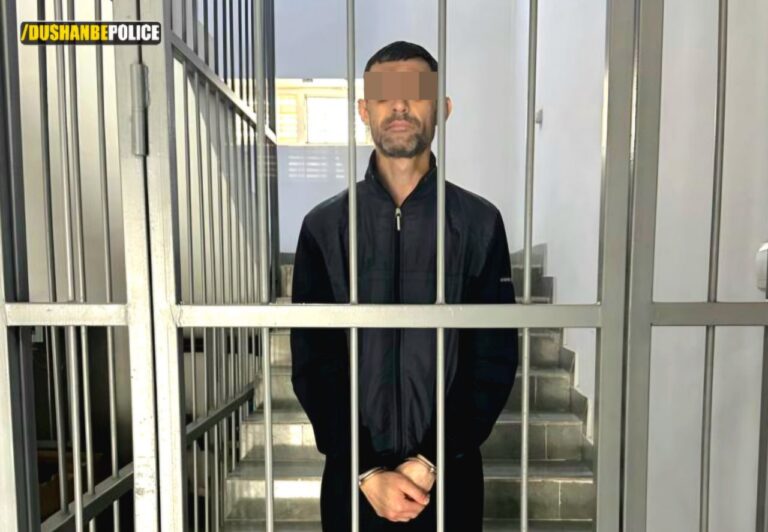
Tajik national TV channel, Shabakai Avval (Channel One), reported on April 4 that the Supreme Court military board has sentenced four prison officers to between two and 8½ years in prison.  The sentenced followed their conviction on charges of negligence that led to a mass jailbreak in Dushanbe in August 2010.

Ex-chief of the SCNS-run pretrial detention facility Saydullo Berdyev and the SCNS prison guard Saidali Saidov were sentenced to 8½ years in prison each.

Another SCNS prison guard Suhrob Akbarov got a jail term of two years and prison officer from the detention facility of the Ministry of Justice Qobiljon Kacirov was sentenced to five years in prison.

The trial was held behind closed doors.

We will recall that 25 convicts serving long jail terms escaped from the SCNS-run detention facility in Dushanbe in the early hours of morning of August 23 2010, killing three prison guards.  Dressing in camouflage, the escapees fled toward eastern Tajikistan.  The majority of the fugitives were among 46 people convicted by the Supreme Court on August 19, 2010 of terrorism, drug trafficking, and seeking the forcible overthrow of the government.  The escaped prisoners include six Russian citizens, four Afghans, and two Uzbeks.  Most were accused of participating in the 2009 armed rebellion in Tavildara.

Three fugitives have been killed when resisting arrest and fourteen more have been recaptured, mostly in the Dushanbe suburbs, eastern Tajikistan and in Afghanistan.  The remaining eight are still at large.
Join us on social media!

Article translations:

Related Article

Оби зулол
Оби зулол
Tenisi

Most Read

Коммерсбонк Точикистон

Recent Articles

The number of migrants from Central Asia, including Tajikistan, has increased in Poland — expert

Many migrants from Central Asian countries are increasingly reluctant to work in Russia and are exploring new destinations.

Tajikistan to transfer rural water utilities to a unified digital platform

The task is to integrate all 500 drinking water supply organizations in the country into one system.

Dushanbe authorities tighten price controls ahead of the Eid al-Adha holiday

Briefings and explanatory discussions are being conducted with vendors in the capital's markets, and violators face administrative protocols.

Major global investment companies show interest in Tajikistan’s economy

Among them are J.P. Morgan, Loomis Sayles & Company, Morgan Stanley Investment Management, and Global Evolution.

President Rahmon awarded UN University for Peace Certificate of Recognition

He is awarded for "significant contribution to establishing peace, developing regional cooperation, and strengthening mutual understanding between peoples."

Starlink satellite internet becomes available in Kyrgyzstan

And in Tajikistan, it was launched in February of this year.

In Dushanbe, 30 more new electric buses start operating

Each is designed to carry 100 passengers and can travel up to 300 kilometers without recharging.

Who is the man who “increased the Aryan race” and told the President of Tajikistan about it?

Kozie Koziyev, a folk craftsman, built dozens of houses, participated in the construction of a mosque and a kindergarten in Matcha, raised 11 children, and created a true dynasty of builders.

Tajik leader discusses water, climate, and global security issues with UN Deputy Secretaries-General

The parties paid special attention to the "Dushanbe Water Process," parliamentary diplomacy, and the peaceful resolution of conflicts.