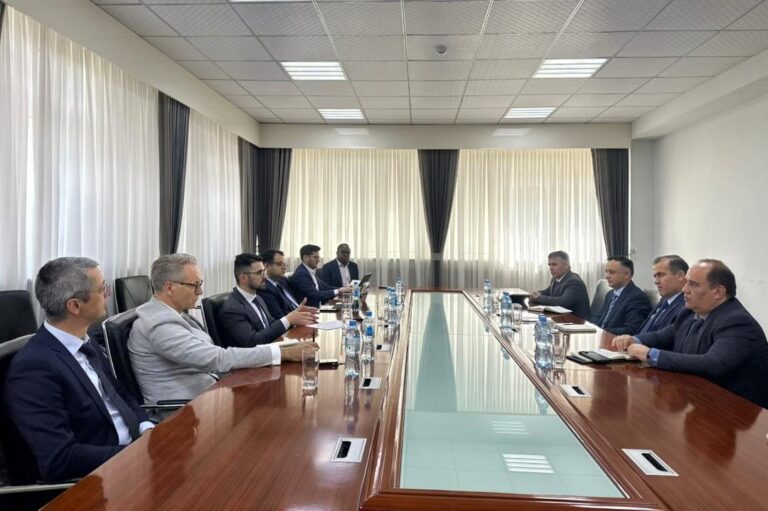
DUSHANBE, November 22, 2011, Asia-Plus — The European Bank for Reconstruction and Development (EBRD) and the Asian Development Bank (ADB) have agreed to work together on a range of projects to build capacity and promote public-private partnerships across the Caucasus and Central Asia, EBRD reported on November 21.
A Memorandum of Understanding signed in London by Thomas Mirow, the President of the EBRD, and Haruhiko Kuroda, the President of the ADB, aims to strengthen and deepen cooperation in the two organisations’ common countries of operation: Armenia, Azerbaijan, Georgia, Kazakhstan, Kyrgyz Republic, Mongolia, Tajikistan, Turkmenistan and Uzbekistan.
“Both our institutions are strongly committed to helping unlock the region’s vast economic potential by supporting market-oriented, private sector development, boosting public-private partnerships and building the road, rail and energy networks necessary to facilitate growth in trade and commerce,” Mr. Mirow said.
“This framework for cooperation in countries we both serve is good for our clients and our two institutions,” Mr. Kuroda said at the signing ceremony. “The framework will encourage us to continue to work closely together, as we have been doing in the recent past, both with the private and public sectors.”
The ADB and EBRD are partners in the Central Asian Regional Economic Cooperation (CAREC) program. Over the past decade, the CAREC partnership has developed energy networks and transport corridors worth some US$17 billion, connecting member countries to one another and to the booming markets of East and South Asia, Europe and Russia.
Examples of CAREC’s work include Afghanistan’s new railway linking the northern city of Mazar-e Sharif with Uzbekistan, and a range of free trade and customs harmonization agreements to speed trade and reduce bottlenecks across the region.
The EBRD was founded in 1991 and has become the largest financial investor in a region of operations stretching from central Europe and the Western Balkans to Central Asia. It is owned by 61 countries and two intergovernmental organisations, with headquarters in London. With the ability and willingness to bear risk on behalf of its clients, it helps countries in the region to become democratic, market economies.
The ADB, based in Manila, is dedicated to reducing poverty in Asia and the Pacific through inclusive economic growth, environmentally sustainable growth, and regional integration. Established in 1966, it is owned by 67 members – 48 from the region.