Green policies would boost Tajikistan’s overall wealth by up to 10 percent, World Bank says

Reducing environmental degradation would provide substantial economic benefits for a country like Tajikistan where the cost of environmental degradation expressed as percentage of GDP equivalent is currently estimated at about 10 percent, according to a new World Bank study. Titled “Inclusive Green Growth: The Pathway to Sustainable Development,” the report estimates that land degradation alone, […]

Silk Road Newsline

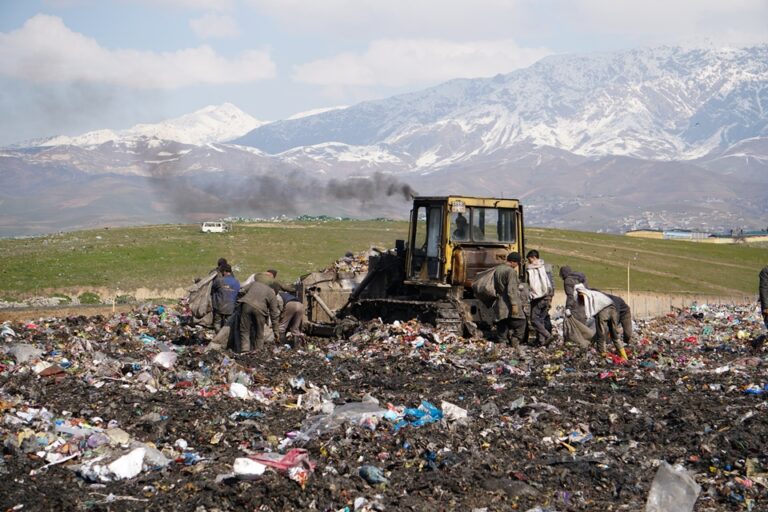
Reducing environmental degradation would provide substantial economic benefits for a country like Tajikistan where the cost of environmental degradation expressed as percentage of GDP equivalent is currently estimated at about 10 percent, according to a new World Bank study.

Titled “Inclusive Green Growth: The Pathway to Sustainable Development,” the report estimates that land degradation alone, including soil erosion and salinity, results in Tajikistan loosing 3.7 percent of its GDP annually.

“Green policies can contribute to growth and boost a nation’s overall wealth. And they help to reduce the damage done by environmental degradation, which is costly for an economy: equivalent to 8 percent of GDP across a sample of countries representing 40 percent of the developing world’s population,” the report said.

The study also provides an analytical framework and priority steps for designing public policies and inducing investments needed to strengthen green growth and improve standards of living in rapidly developing countries.

“Green growth” strategies are designed to break the pattern of environmental degradation and natural resource depletion that are too often the consequence of economic growth and to avoid locking growing economies into unsustainable patterns. Economic activity that imperils future environmental viability and fails to efficiently utilize natural resources cannot be sustained, the World Bank said.

On the other hand, as a result of green policies, benefits may well outweigh the costs, the study says, adding that $900 billion to $1,700 billion of green investments in land, water, and energy could yield economic returns of around $3 trillion per year.

“There’s no denying that our current economic system is enormously inefficient because we don’t put a value on resources that are finite. We have today a looming crisis of food security, water security and energy security. And in that context we have to build economic systems that force us, and encourage us, to be more resource efficient,” Rachel Kyte, World Bank Vice President for Sustainable Development, said in a statement.

“It’s a myth that green growth is a luxury that only the rich can afford. Fragile countries, poor countries, fast growing economies from the developing world all face planning decisions today that will either lock in an irreversible use of resources for the long term, or which will free countries from that,” she said.

Join us on social media!

Article translations:

Related Article

Tenisi
Оби зулол
Оби зулол

Most Read

Коммерсбонк Точикистон

Recent Articles

Major global investment companies show interest in Tajikistan’s economy

Among them are J.P. Morgan, Loomis Sayles & Company, Morgan Stanley Investment Management, and Global Evolution.

President Rahmon awarded UN University for Peace Certificate of Recognition

He is awarded for "significant contribution to establishing peace, developing regional cooperation, and strengthening mutual understanding between peoples."

Starlink satellite internet becomes available in Kyrgyzstan

And in Tajikistan, it was launched in February of this year.

In Dushanbe, 30 more new electric buses start operating

Each is designed to carry 100 passengers and can travel up to 300 kilometers without recharging.

Who is the man who “increased the Aryan race” and told the President of Tajikistan about it?

Kozie Koziyev, a folk craftsman, built dozens of houses, participated in the construction of a mosque and a kindergarten in Matcha, raised 11 children, and created a true dynasty of builders.

Tajik leader discusses water, climate, and global security issues with UN Deputy Secretaries-General

The parties paid special attention to the "Dushanbe Water Process," parliamentary diplomacy, and the peaceful resolution of conflicts.

Tajikistan completes the spring military draft target ahead of schedule

There is still a week left until the end of the conscription campaign.

Custodian of non-written languages and builder of academic bridges; philologist Khusrav Shambezoda turns 70

He could have devoted himself exclusively to the study of classical heritage, but he chose the challenging path of preserving the living word — and Tajik-Russian science gained in him a brilliant sociolinguist whose name became synonymous with dedication.

Tajikistan ranks among the top three leading trade reformers in Europe and Central Asia

The country has shown progress in the digitalization of trade procedures, the reduction of paper barriers, and the enhancement of transparency for exporters.

China to send workers to Tajikistan for modernization of the Kulma BCP

This is the only land border crossing point between Tajikistan and China.