DUSHANBE, November 2, 2012, Asia-Plus – The 10th meeting of the Interstate Commission for Military and Economic Cooperation (ICMEC) of the Collective Security Treaty Organization (CSTO) took place in Astana, Kazakhstan on November 1.
The CSTO Secretariat took note of the importance to strengthen international cooperation in the military and economic area as an instrument of high-tech development of the CSTO defense and industrial complexes, prepare the military and economic cooperation program through 2015 and improve the mechanism of military product supplies.
Issues related to the role of standardization in the defense industry for securing competitive ability of the military industry within the CSTO area and enhancement of the activity of the ICMEC Business Council were among major topics of the meeting, which was presided over by Igor Karavayev, State Secretary and Deputy Minister of Trade and Industry of Russia.
The meeting participants reportedly endorsed the draft list of enterprises and organizations whose specialization should be preserved in interest of military and economic cooperation.
They also considered and endorsed the program of military and economic cooperation between the CSTO member-nations designed for the period until 2015.
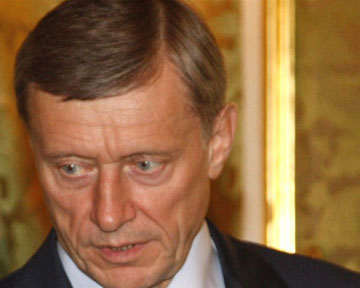
Speaking at the meeting, the CSTO Secretary-General Nikolai Bordyuzha, in particular, noted that military and economic cooperation and military and technical cooperation were among main directions of the CSTO activities.
The regional security organization was initially formed in 1992 for a five-year period by the members of the CIS Collective Security Treaty (CST) — Armenia, Kazakhstan, Kyrgyzstan, Russia, Tajikistan, and Uzbekistan, which were joined by Azerbaijan, Georgia, and Belarus the following year. A 1994 treaty “reaffirmed the desire of all participating states to abstain from the use or threat of force,” and prevented signatories from joining any “other military alliances or other groups of states” directed against members states. The CST was then extended for another five-year term in April 1999, and was signed by the presidents of Armenia, Belarus, Kazakhstan, Kyrgyzstan, Russia, and Tajikistan. In October 2002, the group was renamed as the CSTO.
Uzbekistan became a full participant in the CSTO on June 23, 2006; and its membership was formally ratified by the Uzbek parliament on March 28, 2008. Uzbekistan, however, suspended its membership in the organization on June 28, 2012.
The CSTO is currently an observer organization at the United Nations General Assembly.