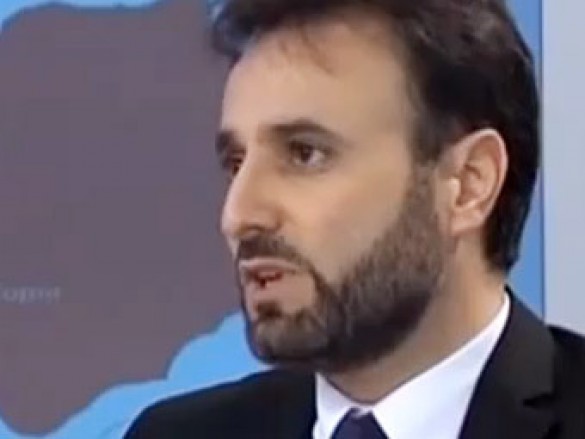
DUSHANBE, March 27, 2013, Asia-Plus – Umarali Quvvatov wanted by the Tajik authorities for an alleged US$1.2 million fraud has reportedly been found in a single confinement cell.
Nikolai Nikolayev, an aide to Umarali Quvvatov, told Asia-Plus this on March 27. “Umarali is being held in the single confinement cell in a full information blockade,” said Nikolyaev. “According to him, he was removed to the single confinement cell for two mutually exclusive reasons – for security reasons and at request of the Tajik authorities”
We will recall that Nikolai Nikolayev noted on March 19 that Quvvatov was removed from his cell on March 17 and his whereabouts are unknown. Nikolayev also said the Quvvatov may have been taken away by Tajik security officials.
Nikolayev earlier noted that the UAE authorities adjourned Umarali Quvvatov extradition case hearing until April 10. According to him, Umarali Quvvatov extradition case hearing was adjourned on March 10 until April 10.
Meanwhile, Tajik Ministry of Interior (MoI) has noted that allegations made by Nikolayev are “baseless.”
According to information posted on MoI’s website, relevant bodies of Dubai has reportedly answered an inquiry made by Interpol’s Office in Tajikistan and noted that Umarali Quvvatov is being held at detention center in Dubai and the next extradition hearing will take place on April 7.
The Tajik authorities insist on extradition of Umarali Quvvatov. Tajik Prosecutor-General, Sherkhon Salimzoda, told journalists on January 9 that Tajikistan has sent an official extradition request to the Dubai law enforcement authorities for Umarali Quvvatov. The Agency for State Financial Control and Combating Corruption has instituted criminal proceedings against Umarali Quvvatov, Tajik chief prosecutor noted.
Umarali Quvvatov was arrested in Dubai, United Arab Emirates (UAE) on December 23, 2012 at the request of Tajik authorities. He is being accused of illegally obtaining about US$1.2 million through fraudulent business activities.
His supporters, however, consider that his arrest might be politically motivated.
Quvvatov reportedly set up the Group 24 opposition movement last summer. The group has publicly criticized the widespread corruption under the head of state of Tajikistan, President Rahmon. The group recently called for President Rahmon’s resignation and questioned the likelihood of the upcoming Presidential elections being democratic and fair. The group also criticized President Rahmon’s handling of the military conflict in Gorno-Badakhshan Autonomous Province in summer 2012.
Radio Liberty’s Tajik Service reports that Quvvatov has denounced the fraud case against him and accused Tajik President Emomali Rahmon of running a “totalitarian regime.” In an open letter smuggled out of the detention center where he is being held, Umarali Quvvatov said the accusations leveled against him were “a direct consequence” of his battle against the “oppression of the Tajik people” by Rahmon”s government.
A statement released by Amnesty International on January 11 says that Tajik businessman Umarali Quvvatov risks extradition to Tajikistan by the United Arab Emirates’ (UAE) authorities, where he would be at risk of torture or other ill-treatment. Amnesty International believes that if returned to Tajikistan, Umarali Quvvatov will be at serious risk of grave human rights violations, in particular incommunicado detention, torture and other ill-treatment, and unfair trial. “If Umarali Quvvatov is extradited, the UAE authorities will be violating their obligations under the absolute prohibition of torture and other ill-treatment under international law,” the statement said.