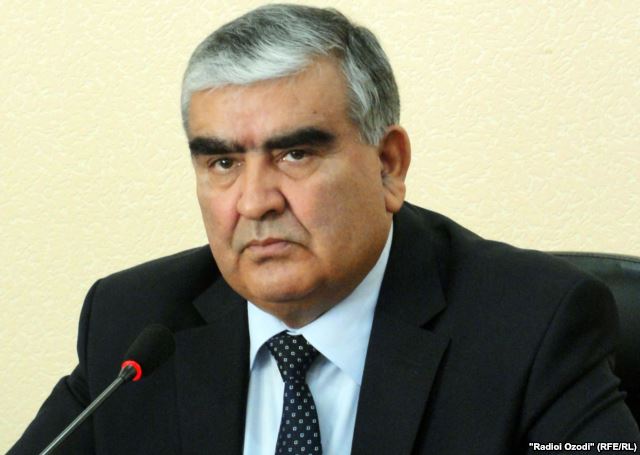
DUSHANBE, May 31, 2013, Asia-Plus — Establishment and expansion of mutually beneficial cooperation with countries of the Asia-Pacific region is one of priorities Tajikistan’s policy, Tajik Minister of Energy and Industries, Gul Sherali, noted at the Asian and Pacific Energy Forum (APEF 2013) in Vladivostok, Russia on May 30.
According to the Ministry of Energy and Industries (MoEI) press center, Gul Sherali noted that Tajikistan’s power system has undergone considerable changes since 1990. He noted that the government had given priority to energy security and sustainable use of energy.
Implementation of energy projects has allowed increasing a total electrical generating capability of the country’s power system by 1000 megawatt, the minister said.
“Increase in electrical generating capability aims at decreasing the country’s power deficiencies during autumn-winter period,” the minister noted, adding that during autumn-winter period, Tajikistan power deficiencies reach some 4 billion kWh, while in summer, Tajikistan electricity surplus amounts to 5-7 billion kWh.
Organized by the United Nations Economic and Social Commission for Asia and the Pacific (ESCAP), with the support of the Government of the Russian Federation, the Asian and Pacific Energy Forum kicked off on May 27 and ran through May 30.
The main objective of APEF 2013, which is the first region-wide intergovernmental ministerial conference of its kind to bring together member states and associate members from the Asia-Pacific region on energy, was in promoting regional cooperation for enhanced energy security and the sustainable use of energy.
The Forum reportedly brought together 140 delegates from 32 countries across the Asia-Pacific region. It provided a unique platform for the exchange of views on all vital aspects of the region’s energy challenges, as well as offered an opportunity for joint development of corresponding solutions that are acceptable for all ESCAP member and associate member nations. Energy security issues in Asia and the Pacific were the focus of APEF’s deliberations.
The forum participants adopted the APEF Ministerial Declaration and Plan of Action on regional cooperation for enhanced energy security and the sustainable use of energy, with both regional-level and subregional-level activities for implementation.
Outcomes from APEF 2013 are expected to play an important role in defining Asia and the Pacific’s participation and leadership in achieving the goals of the upcoming Decade of Sustainable Energy for All.