DUSHANBE, March 17, 2014, Asia-Plus — If judicial authorities invalidate the contract on establishment and privatization of Tajik fertilizer plant, TojikAzot, it will pass into ownership of the state, an official source at the Agency for State Financial Control and Combating Corruption told Asia-Plus Monday afternoon.
According to him, the anticorruption agency has applied to Khatlon Economic Court asking for invalidating the contract on establishment of Closed Joint-Stock Company (CJSC) TojikAzot.
“This contract was signed in 2002, when Zayd Saidov was Minister of Industry of Tajikistan,” said the source. “Besides, TojikAzot top managers are suspected of embezzlement of funds and illegal sale of the plant equipment.”
“If judicial authorities invalidate the contract on establishment and privatization of TojikAzot, it will pass into ownership of the state,” the source said, adding that inspection of the activity of TojikAzot is under way.
The debt-ridden and loss-making fertilizer plant has not been in operation since 2008 due to lack of natural gas supplies.
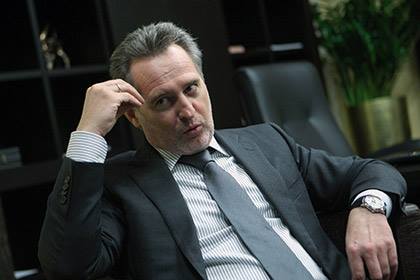
TojikAzot is partly state owned, with the government controlling a 25 percent stake in the troubled enterprise. Cypriot-registered Highrock Holdings Ltd, owned by Ukrainian oligarch Dmitry Firtash, controls the remaining 75 percent of the enterprise.
Over the last 15 years Firtash has become one of the leading investors in the power sector and chemical industry in Central and Eastern Europe. His plants and companies are present in Ukraine, Germany, Italy, Cyprus, Tajikistan, Switzerland, Hungary, Austria and Estonia. The international group of companies Group DF (‘The Firtash group of companies’) founded by Firtash in 2007 consolidates assets in the chemical industry, power sector and real estate.
Mr. Firtash, 48, one of Ukraine’s richest men with assets in media, banking, energy and agriculture, was arrested by the organized crime unit of the Austrian police in Vienna on March 12 after a US federal court issued an arrest warrant following an eight-year investigation by the FBI.
The Financial Times
notes that Firtash is regarded as having close links with Russia and is a key player in the Russian-Ukrainian gas trade.
Group DF, Mr. Firtash’s holding company, described his arrest as a “misunderstanding” that should be “resolved in the very near term.”
The group claimed that Mr. Firtash’s arrest “was not connected with the situation in Ukraine, or the group’s activity in Europe and America, but involved an investment project from 2006.”
Meanwhile, international media sources reported on March 15 that an Austrian court has ruled to release Ukrainian oligarch Dmitry Firtash on a 125 million euros bail, but ordered him to stay in the country pending US extradition.