DUSHANBE, March 27, 2014, Asia-Plus — Tajik authorities have toughened electricity rationing for rural areas again following heavy snowfalls that hit Tajikistan on March 21-22, according to Barqi Tojik (Tajik state-controlled power supplier).
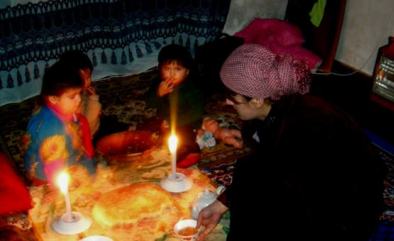
“Since March 22, resident of rural areas have had electricity only four hours per day – two hours in the morning and two hours in the evening,” an official source at Barqi Tojik told Asia-Plus in an interview on March 27.
According to him, heavy snowfalls on March 21-22 resulted in rivers becoming covered with ice and the water level in the Norak HPP reservoir falling to a critical level.
We will recall that electricity rationing was introduced in rural areas of Tajikistan on October 26 and it resulted in the supply of daily electrical power in rural areas being reduced to eighteen hours – from 5:00 am to 11:00 pm.
Electricity rationing has not affected Dushanbe as well as the cities of Khujand, Qurghon Teppa, Kulob, Tursunzoda, and Chkalovsk as well as the majority of districts of the Gorno Badakhshan Autonomous Region (GBAO).
In GBAO, Tajikistan’s only private power company, Pamir Energy Company (Pamir Energy), operates. This company is responsible for electricity deliveries in the region and the majority of districts in Gorno Badakhshan now have regular power supply.
In November, Tajik authorities reportedly toughened electricity rationing for rural areas.
From November 1, 2013 to February 28, 2014, they had electricity only nine hours per day – four hours in the morning (from 5:00 am to 9:00 am) and five hours in the evening (from 5:00 pm to 10:00 pm).
The power rationing was reportedly toughened in order to provide stable water inflow into the reservoir powering the Norak hydroelectric power plant (HPP).
On March 1, electricity rationing was eased and the supply of electricity was increased in daylight.
Measures rationing electricity supplies are usually introduced in all regions except Dushanbe and seek to curb the country”s rising electricity consumption. The rationing is introduced in October or November and lasts through March or April next year. The rationing results in the supply of daily electrical power being reduced to 12 or 10 hours. In addition to curbing rising consumption, the move also stems from a decline in the water level in the country”s reservoirs powering the main hydroelectric power plants.